




Introduction
Running a cleaning business involves more than just spotless floors and fresh-smelling offices. Behind every successful cleaning operation lies a complex web of responsibilities — especially when it comes to managing environmental and chemical waste. This is where Pollution Liability Insurance becomes vital.
Pollution incidents — such as chemical spills, improper disposal of cleaning agents, or airborne toxins — can lead to costly lawsuits and fines. Whether you manage a small janitorial crew or a large industrial cleaning company, understanding and investing in pollution liability insurance can safeguard your business’s financial stability and reputation.
(Alt Text: Cleaning service worker handling chemical waste safely with proper equipment)
Why Pollution Liability Insurance Matters for Cleaning Services
Pollution liability insurance covers environmental damage or contamination caused by business operations. For cleaning services, this means coverage for accidents related to:
- Use of cleaning solvents and chemicals
- Accidental spills damaging property or water systems
- Improper waste disposal leading to pollution claims
- Employee exposure or third-party injury from fumes
Unlike standard general liability insurance, pollution liability specifically protects your business from eco-related claims, which can otherwise be excluded from general policies.

Related post: Learn more about protecting your staff with Workers’ Compensation for Cleaning Staff Explained
Key Features of Pollution Liability Insurance
- Third-Party Bodily Injury & Property Damage – Coverage for injury or damage caused by pollutants.
- Cleanup Costs – Covers environmental cleanup after an incident.
- Legal Defense – Pays for legal fees and settlements.
- Onsite & Offsite Coverage – Protects both your facility and client locations.
- Business Continuity Support – Helps keep your cleaning contracts active post-incident.
(Alt Text: Pollution liability insurance coverage diagram showing cleaning services protection)
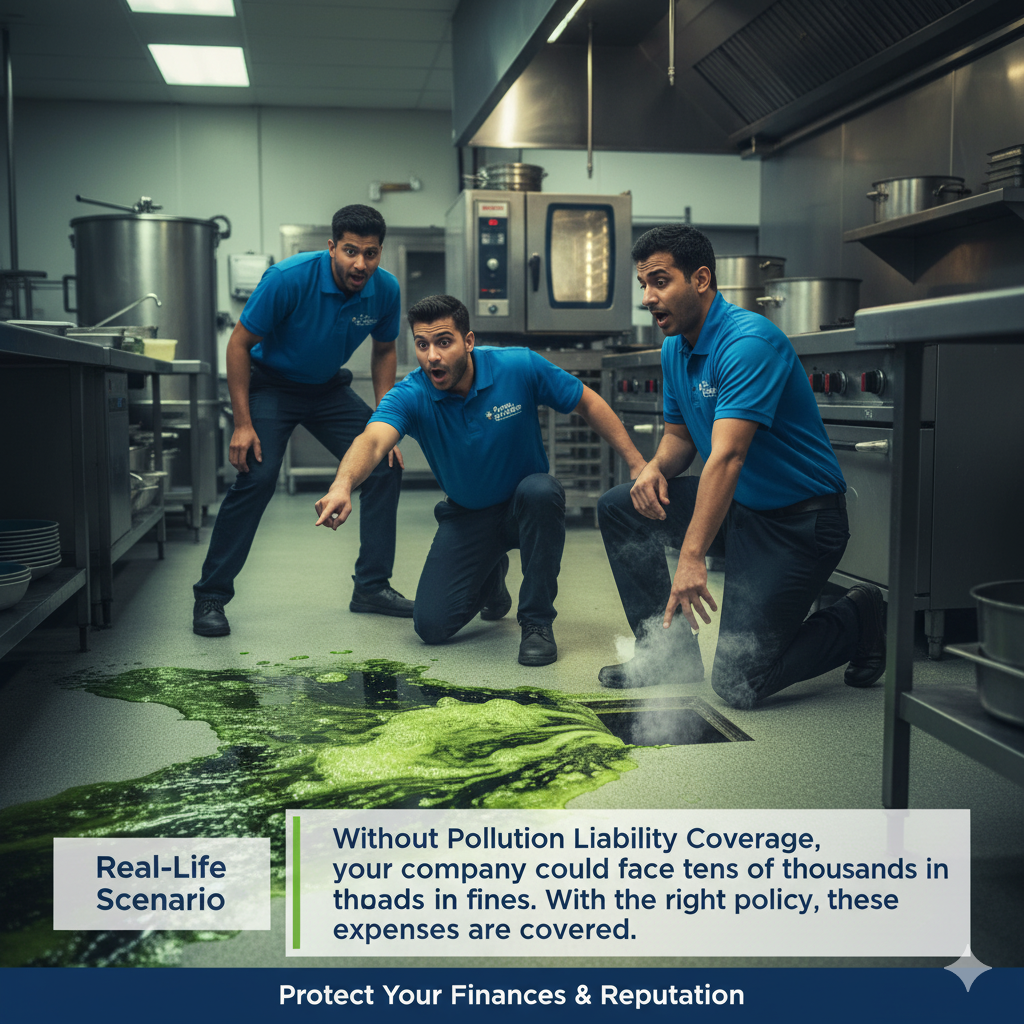
Real-Life Scenario
Imagine a janitorial team using strong degreasers in an industrial kitchen. A spill leads to a chemical reaction that damages flooring and contaminates nearby drains. Without pollution liability coverage, your company might face tens of thousands of dollars in environmental fines and repair costs.
With the right insurance policy, these expenses are covered — protecting both your finances and business reputation.
Who Needs Pollution Liability Insurance in the Cleaning Industry
- Commercial cleaning companies
- Industrial and factory cleaners
- Carpet and upholstery cleaners
- Medical facility sanitation services
- Pressure washing and window cleaning businesses
Even eco-friendly cleaners can accidentally cause pollution through product misuse or disposal errors.
Benefits of Pollution Liability Insurance
- Shields your business from unpredictable chemical incidents
- Meets client and government contract requirements
- Protects your brand reputation
- Provides peace of mind to your clients and employees

Pollution Liability vs. General Liability Insurance
| Feature | Pollution Liability | General Liability |
|---|---|---|
| Chemical Spills | ✅ Covered | ❌ Not Covered |
| Airborne Contamination | ✅ Covered | ❌ Excluded |
| Environmental Cleanup | ✅ Included | ❌ Excluded |
| Legal Defense | ✅ Included | ✅ Included |
ow to Choose the Right Policy
When comparing pollution liability insurance providers, look for:
- Broad pollution definitions
- Coverage for all cleaning products you use
- Fast claims processing and defense support
- Option to bundle with general or professional liability
Source: Check pollution liability coverage options on The Hartford Business Insurance
Cost of Pollution Liability Insurance
On average, cleaning companies pay between $800 – $2,500 per year, depending on:
- Type of cleaning services
- Use of chemicals
- Location and risk level
- Policy limits and deductibles
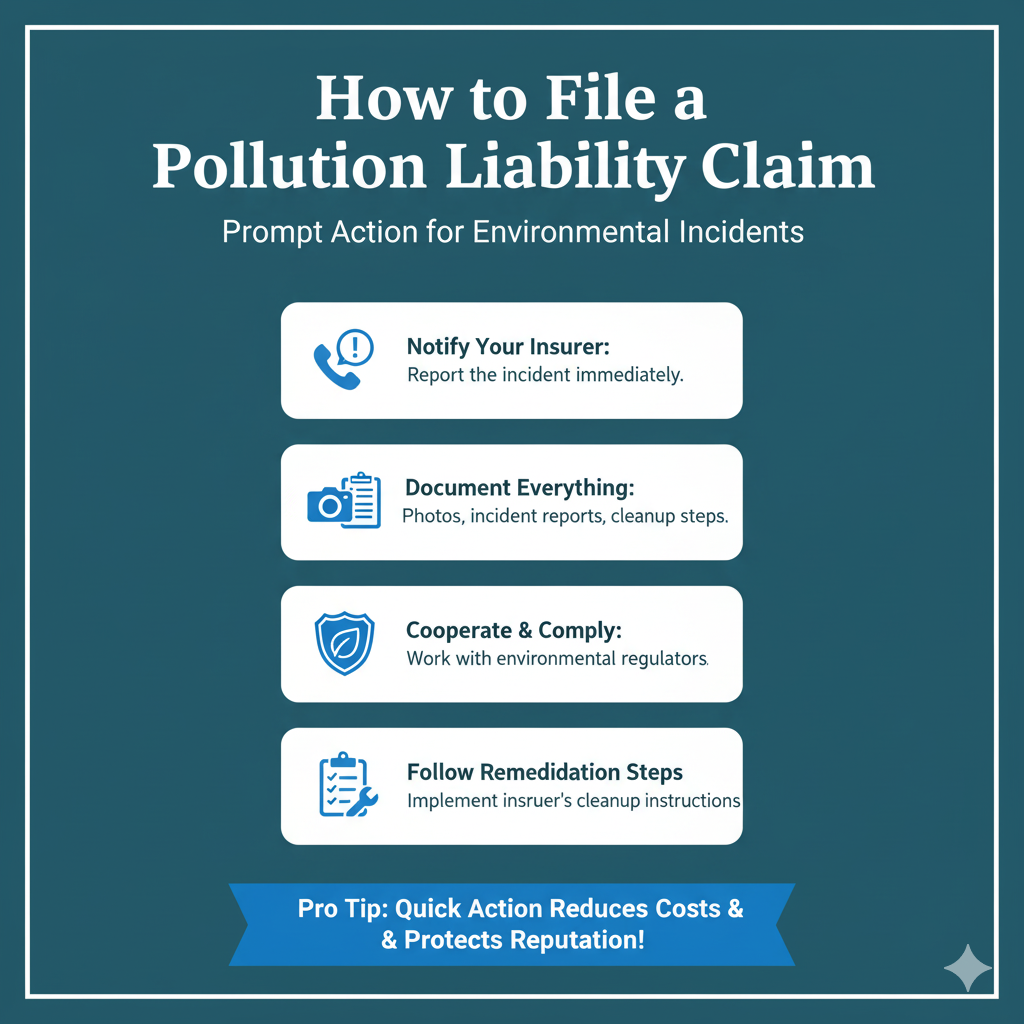
How to File a Pollution Liability Claim
- Notify your insurer immediately about the incident.
- Document the event — photos, reports, and cleanup steps.
- Cooperate with environmental regulators.
- Follow insurer instructions for remediation.
Prompt action often reduces the cost of environmental damage and maintains your credibility with clients.
Internal Link Example 2:
Discover how to handle business risks in our guide on General Liability Insurance for Cleaning Companies
For industry standards, visit the EPA Small Business Environmental Compliance Guide
Expert Advice:
Pollution liability insurance isn’t just for heavy industries — it’s a critical shield for modern cleaning services. With stricter environmental laws and clients demanding eco-responsibility, this coverage can mean the difference between staying in business or shutting down after an incident.
By investing in pollution liability protection, you ensure your cleaning company remains sustainable, trustworthy, and compliant.
FAQ –
1. What is pollution liability insurance for cleaning companies?
It protects cleaning businesses from environmental damage claims caused by chemical use or waste.
2. Why do cleaning services need it?
Because cleaning agents and waste can lead to environmental contamination, which general liability doesn’t cover.
3. What does it cover?
Bodily injury, property damage, cleanup costs, and legal defense related to pollution incidents.
4. Does general liability include pollution coverage?
No, it typically excludes chemical or environmental damage.
5. How much does it cost?
Between $800 and $2,500 annually depending on business size and risk.
6. Is it required by law?
Not always, but many contracts and clients require it.
7. Can small cleaning companies afford it?
Yes, affordable plans are available for small and eco-friendly cleaning services.
8. What happens if I skip pollution insurance?
You may face large fines or lawsuits for accidental pollution events.
9. Which industries need this coverage most?
Industrial, commercial, and medical cleaning companies.
10. Can I bundle this with other insurances?
Yes, most insurers offer bundle options with general liability or property coverage.




3 Comments