






How to File an Insurance Claim for Cleaning Businesses (Focus: Cleaning Insurance Claim)
Introduction
Accidents happen — even in the most well-managed cleaning businesses. From chemical spills damaging client property to slip-and-fall incidents, your company could face unexpected costs or legal claims.
This is where understanding how to file an insurance claim becomes crucial. Filing correctly can mean the difference between a quick payout or a costly denial.
This guide walks you through 7 smart steps to file a cleaning insurance claim the right way — while keeping your business protected and professional.

🧾 Step 1: Understand What Your Cleaning Insurance Covers
Before filing a claim, know what’s actually covered. Typical cleaning insurance includes:
- General Liability – Covers property damage or injuries to others.
- Workers’ Compensation – Covers employee injuries or illnesses.
- Pollution Liability – Covers chemical spills and environmental damage.
- Property Insurance – Protects your cleaning equipment and office.
👉 Tip: Always read your policy declaration page to understand exclusions.
Related Topic: If your staff handles chemicals, you’ll also need Pollution Liability Insurance for Cleaning Services
Step 2: Notify Your Insurance Provider Immediately
As soon as an incident occurs — a damaged carpet, chemical spill, or injured employee — notify your insurer. Delays can lead to denied claims.
Information you’ll need:
- Policy number
- Date and time of incident
- Description of damage or injury
- Photos or video evidence
👉 Use your insurer’s online portal or call their 24/7 claim line.
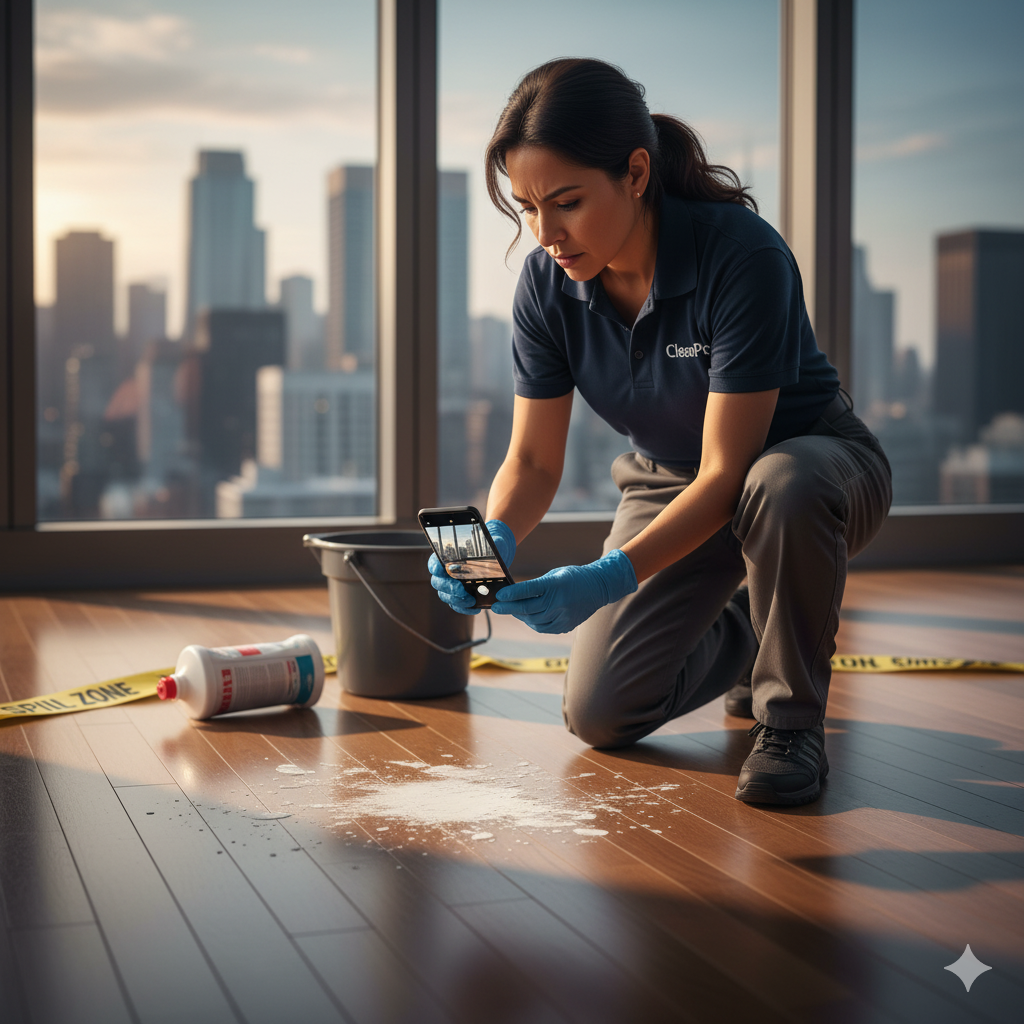
📸 Step 3: Document Everything
Documentation is your strongest defense. Take photos of the damage, record witness statements, and keep copies of all communications.
Create a digital claim folder that includes:
- Photos & videos of the damage
- Written incident reports
- Client statements
- Repair or replacement estimates
🧑💼 Step 4: Complete the Claim Form Accurately
Most insurers require you to submit a claim form. Fill it out carefully — incomplete details can delay approval.
Include:
- Type of incident (property damage, injury, theft, etc.)
- Cause and estimated loss
- Affected parties (clients, employees)
Source:
You can find sample claim forms on the U.S. Small Business Administration Insurance Resources
Step 5: Cooperate with the Insurance Adjuster
After filing, an insurance adjuster will contact you to verify the claim. They may visit the site, interview employees, or review your reports.
👉 Be transparent and professional — hiding information can result in denial.

Pro Tip:
Keep records of every communication with your adjuster (email, phone, or chat).
💵 Step 6: Review Settlement Offers Carefully
Once approved, the insurer will send a settlement offer. Review it closely — it should cover repair, replacement, or compensation costs.
If the amount seems low:
- Ask for a detailed cost breakdown.
- Provide more evidence (invoices, expert opinions).
- Negotiate professionally with your insurer.
Source 2:
See how to negotiate claims effectively with The Hartford Small Business Insurance

Step 7: Prevent Future Incidents
After settling your claim, take preventive actions:
- Train staff on chemical handling and safety
- Maintain equipment regularly
- Update your insurance policy yearly
- Keep all incident records organized
Related Topics:
You can also strengthen your business protection with our guide on Workers’ Compensation for Cleaning Staff Explained

Common Reasons Cleaning Claims Get Denied
- Missing deadlines for filing
- Lack of proper documentation
- Using excluded cleaning chemicals
- Poor client communication
- Misreporting or exaggerating damages
Always double-check your policy before you start work at any new client site.
📈 Benefits of Filing Properly
- Faster claim approval
- Better insurance reputation
- Financial stability
- Legal protection
- Improved client trust

📚 FAQ Section
1. How do I file a cleaning insurance claim?
Report the incident, gather documentation, complete the claim form, and cooperate with your adjuster.
2. How long does a cleaning insurance claim take?
Most claims are processed within 7–30 days, depending on complexity.
3. What documents are required?
Photos, invoices, policy number, client statement, and proof of damage.
4. What if my claim is denied?
You can appeal with additional evidence or seek mediation.
5. Does insurance cover accidental damage at client sites?
Yes, if your general liability policy includes property damage coverage.
6. Should I file small claims?
Yes, but consult your insurer — frequent small claims may affect premiums.
7. Can independent cleaners file claims?
Yes, as long as they hold an active business insurance policy.
8. Is employee injury covered under cleaning insurance?
Yes, through workers’ compensation insurance.
9. How can I prevent future claims?
Provide regular training, use safe chemicals, and document all procedures.
10. How do I contact my insurer after hours?
Use their 24/7 hotline or claim portal (check your policy card).
11. Are environmental damages covered?
Only if you have pollution liability coverage.
12. What’s the biggest mistake when filing a claim?
Failing to document damage immediately after an incident.
13. Will my premiums go up after a claim?
Possibly — but many insurers offer discounts for safety programs.
14. Can I get help filing a claim?
Yes, your insurance agent or broker can assist with documentation.
15. Do clients need proof of my insurance claim history?
Sometimes — especially in government or commercial contracts.
Expert Advice:
Filing an insurance claim for your cleaning business doesn’t have to be stressful. By following these 7 smart, strategic steps, you can ensure fast claim approval and maintain trust with your clients and insurers alike.
Remember — every claim is a learning opportunity. Strengthen your safety procedures, keep clear documentation, and choose insurers who specialize in cleaning business insurance. That’s how you build a resilient, professional, and trusted brand.




One Comment