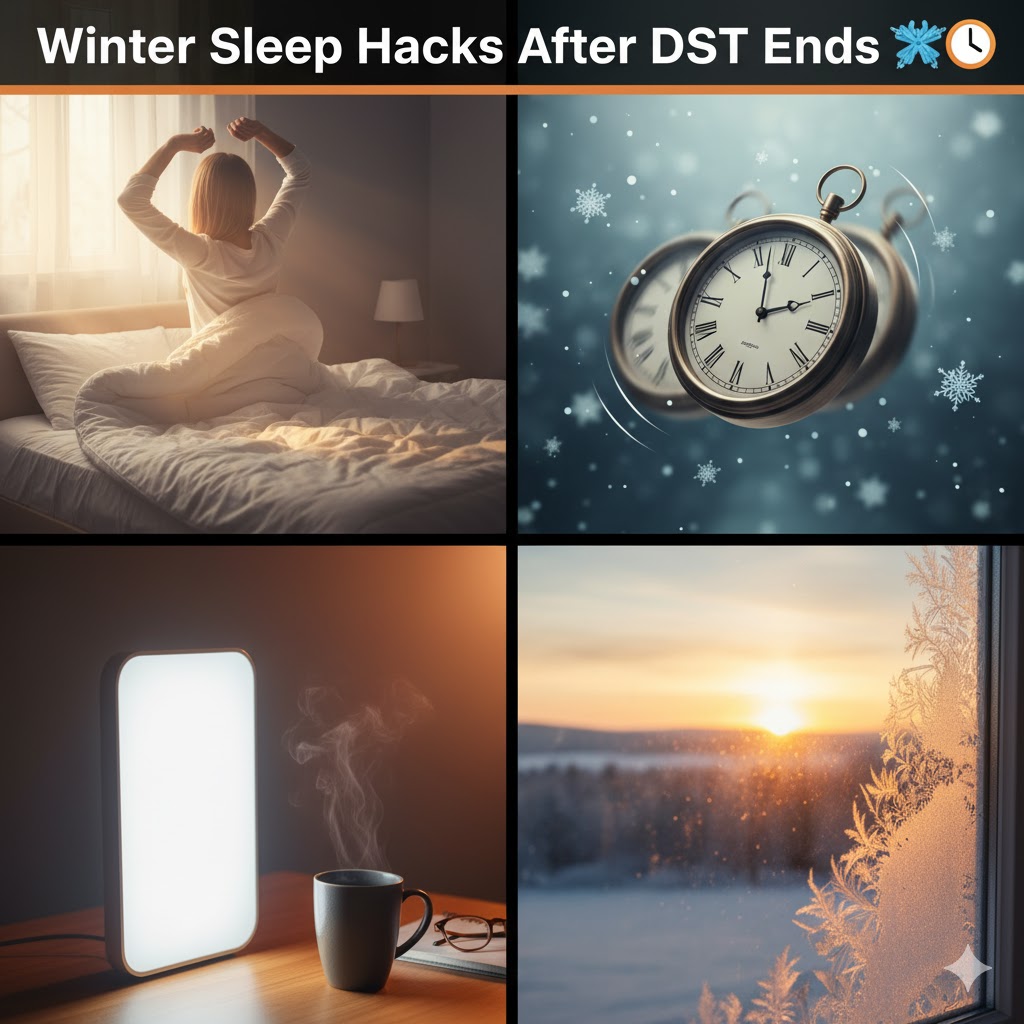






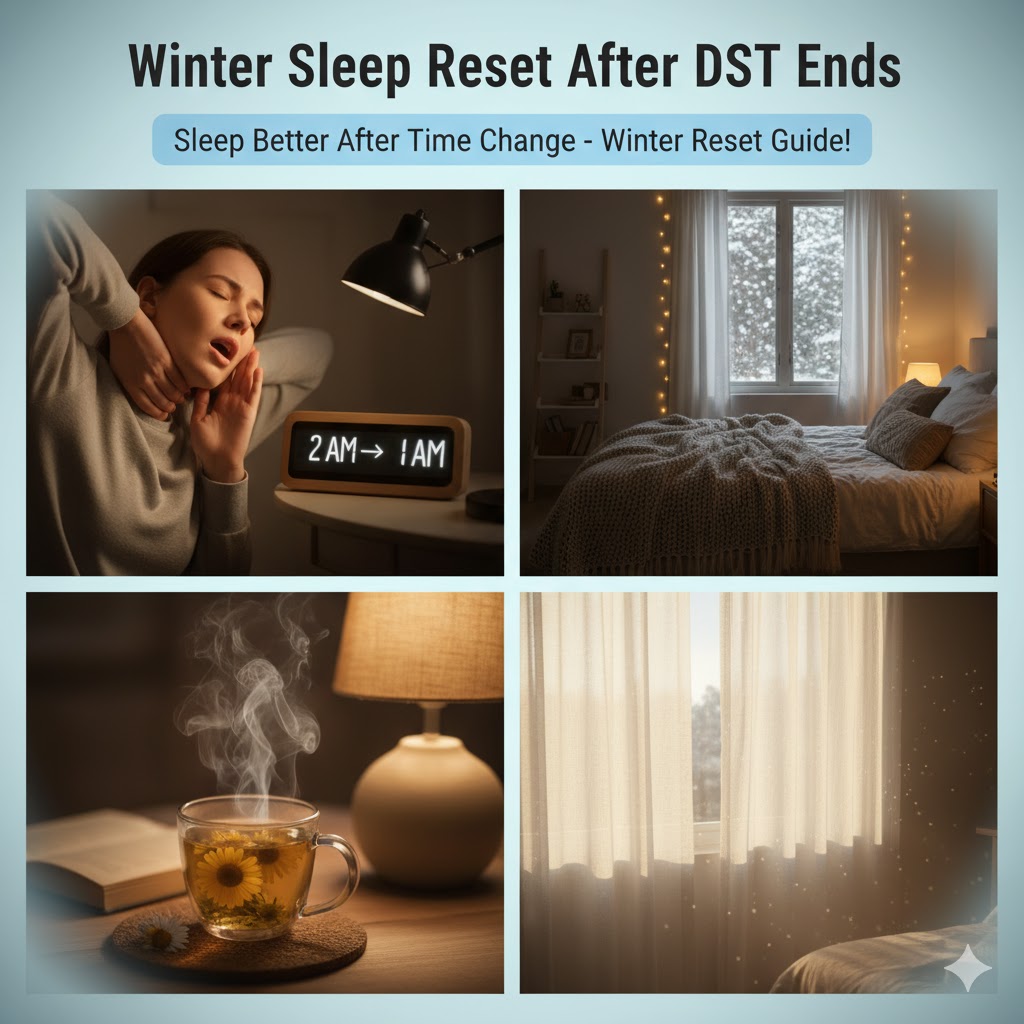
Introduction – Winter Sleep Tips
When daylight saving time ends and the clocks “fall back,” millions struggle with disrupted sleep, groggy mornings, and sluggish winter moods. This shift may only be an hour, but it deeply impacts your circadian rhythm — your internal body clock that regulates rest, energy, and alertness.
This article breaks down 10 practical and science-backed winter sleep tips after daylight saving time to help you reset, recharge, and truly rest through the colder months.

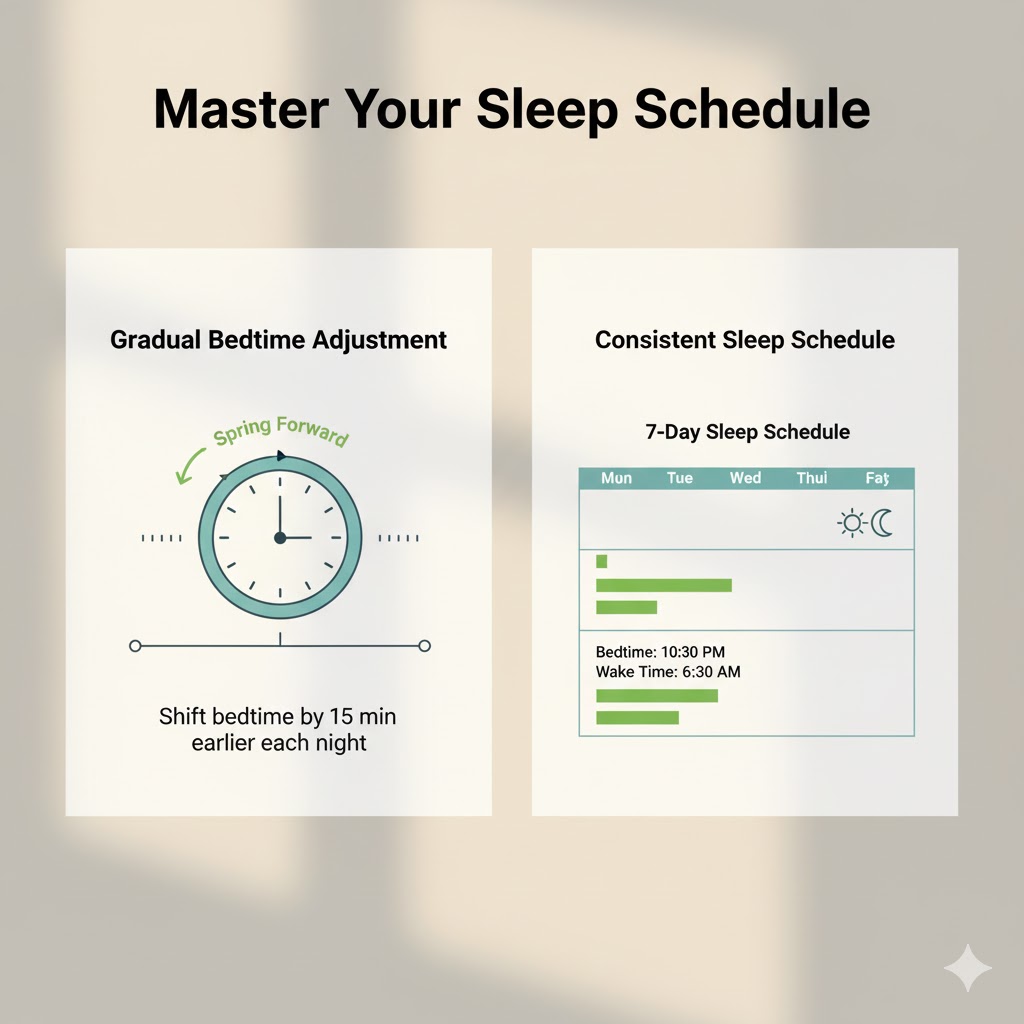
1. Gradually Adjust Your Sleep Schedule
Don’t wait until the time change day to make adjustments. Begin shifting your bedtime by 10–15 minutes each night a few days before clocks fall back. This smooth transition prevents shock to your body clock and reduces morning grogginess.
2. Maximize Natural Morning Light Exposure
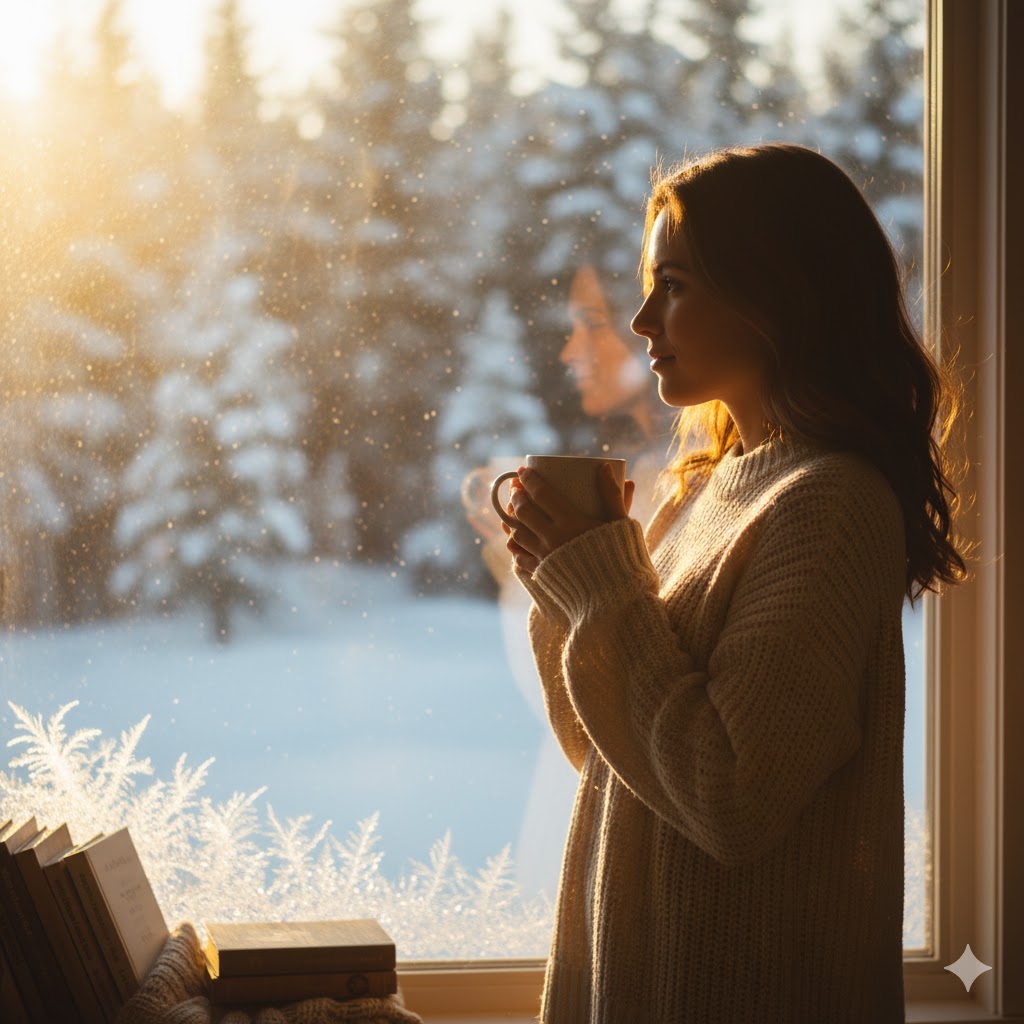
Winter days are shorter, and light exposure becomes vital for circadian balance. Try to open curtains as soon as you wake up, step outside for 10–15 minutes, or have your breakfast by a window.
Morning light signals your brain to halt melatonin production, boosting alertness naturally.
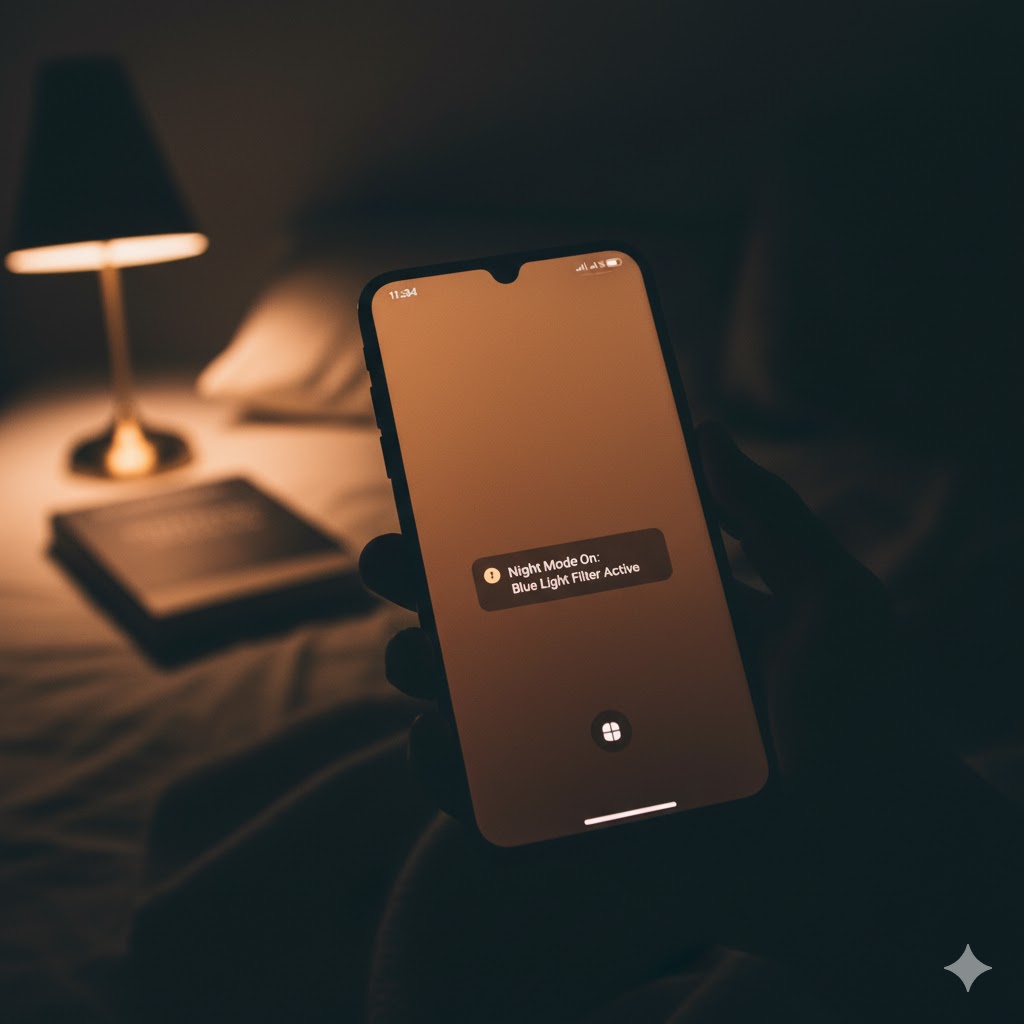
3. Limit Blue Light in the Evenings
Exposure to blue light from phones, TVs, and laptops can confuse your brain into thinking it’s still daytime. Use night shift modes, or wear blue-light-blocking glasses in the evening. It helps your body produce melatonin for better sleep onset.
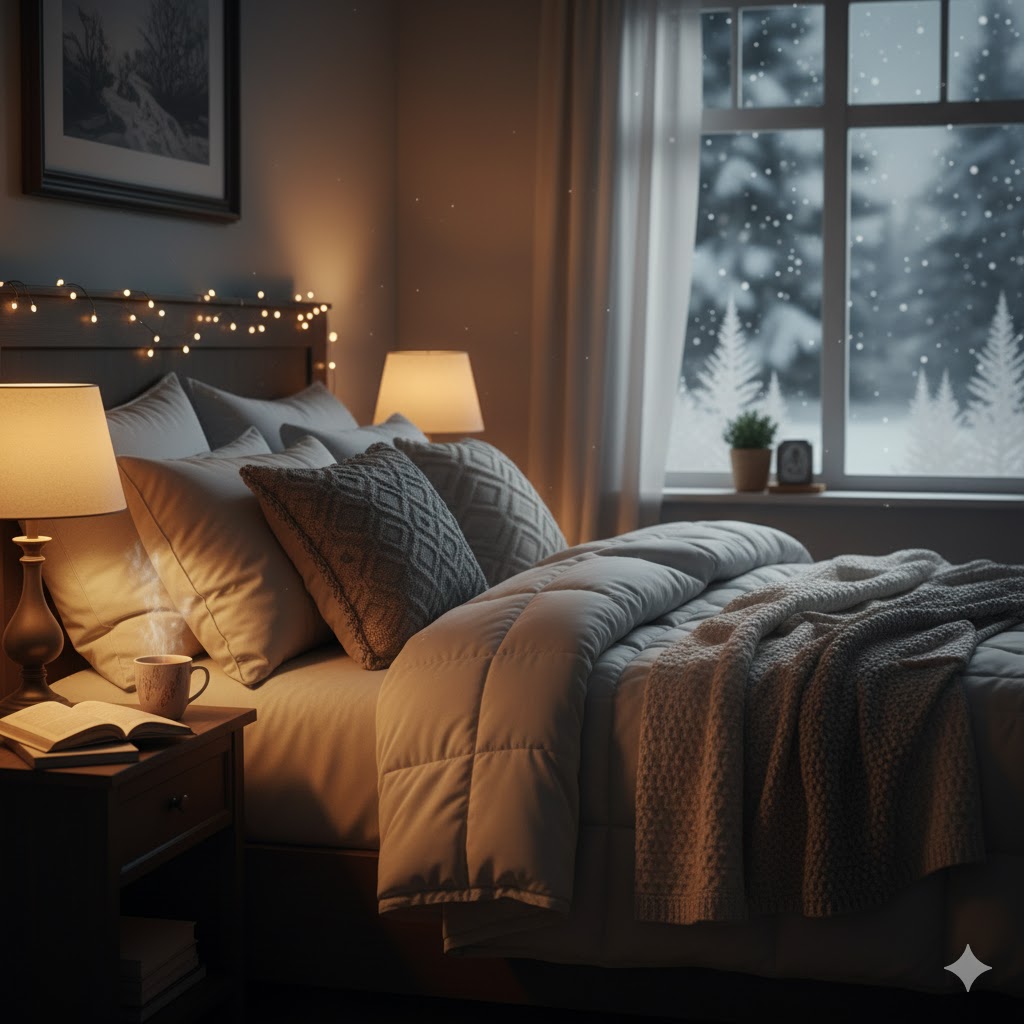
4. Create a Cozy, Cool Bedroom Environment
A warm but well-ventilated bedroom supports deeper sleep. Keep the temperature between 60–67°F (15–19°C). Add flannel sheets, thicker blankets, and use blackout curtains to block winter street lights.
5. Stick to a Consistent Sleep-Wake Schedule
Even on weekends, wake up and go to bed at the same time. This trains your body to sleep efficiently and minimizes winter fatigue. Consistency is the foundation of quality sleep during seasonal transitions.
6. Optimize Your Bedroom for Sleep Hygiene
Keep your room dark, quiet, and clutter-free. Avoid using your bed for work or scrolling on your phone. Consider aromatherapy with lavender or chamomile oils to calm your senses before bedtime.

7. Stay Physically Active (But Not Too Late)
Exercise improves sleep quality, but timing matters. Engage in light workouts like yoga or brisk walking before 6 PM. Late-night workouts increase adrenaline and make falling asleep harder.

8. Limit Caffeine and Heavy Meals Before Bed
Cut caffeine after 2 PM. Avoid spicy or heavy meals at dinner to prevent discomfort and reflux. Opt for warm herbal teas like chamomile or lemon balm instead to promote calmness.

9. Manage Winter Stress and Mental Health
Shorter days can trigger seasonal affective disorder (SAD) or winter blues. Practice relaxation rituals—deep breathing, reading, journaling, or gratitude reflection—to unwind before sleep.
10. Try Light Therapy for Better Sleep Regulation
If you live in northern regions like Canada or northern US, where daylight hours drop drastically, consider using a light therapy lamp. It helps simulate natural sunlight, reset your body clock, and improve energy.

Frequently Asked Questions (FAQs)
1. Why does daylight saving time affect sleep so much?
Because it shifts your circadian rhythm, confusing your body’s natural light-dark cues and temporarily disrupting hormone balance.
2. How long does it take to adjust after daylight saving ends?
Most people adjust within 3–7 days, but consistent sleep and morning light help speed up adaptation.
3. Do we gain or lose sleep when clocks go back?
When clocks “fall back,” you gain an extra hour of sleep — but your body may still take time to adapt.
4. What foods can help improve winter sleep?
Foods rich in magnesium, tryptophan, and melatonin—like almonds, turkey, and tart cherries—support natural sleep regulation.
5. Should I nap during winter days?
Short power naps (20–30 minutes) can help restore alertness, but avoid long naps that interfere with night sleep.
6. Is it okay to use a heater overnight?
Yes, but ensure safety and ventilation. Keep the temperature moderate to prevent dehydration or overheating.
7. How can I fight winter fatigue?
Stay active, hydrate well, and get morning sunlight exposure daily to boost serotonin and reduce sleepiness.
8. Are weighted blankets effective for better winter sleep?
Yes, they promote calmness by applying gentle pressure that stimulates relaxation hormones.
9. How can I keep my sleep consistent during travel or holidays?
Maintain your bedtime ritual and avoid caffeine or alcohol close to sleep, even across time zones.
10. What’s the best way to reset sleep after the clock change?
Start adjusting your bedtime gradually, maintain consistent light exposure, and avoid overstimulation before bed.
Conclusion
Transitioning through daylight saving time can easily disturb sleep, especially as winter sets in. But with the right habits—light exposure, temperature control, mindful eating, and consistent routines—you can enjoy restful, healthy sleep even when days grow shorter.
Follow these Winter Sleep Tips After Daylight Saving Time to wake energized, balanced, and ready to take on the cold months ahead.