






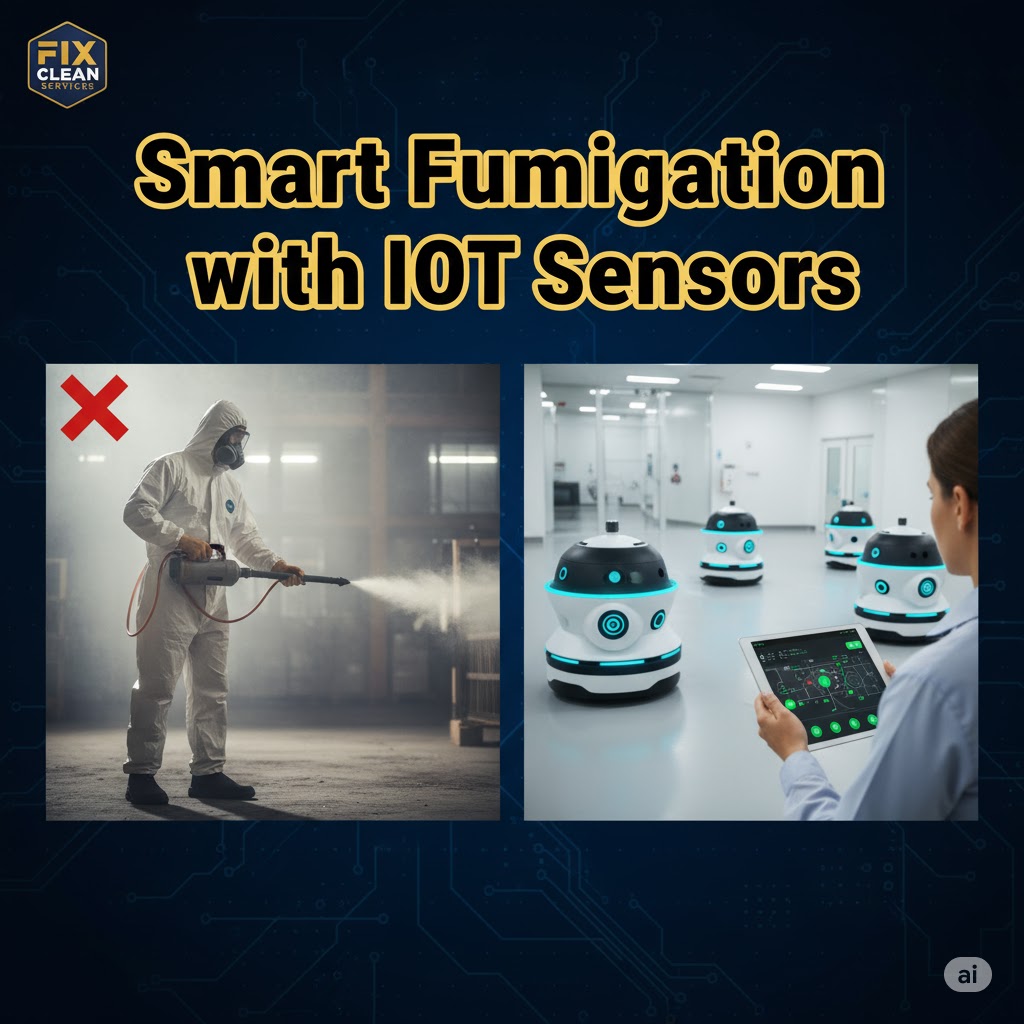
Introduction: From Manual Sprays to Smart Fumigation
Traditional pest control in Pakistan and most developing markets relies on manual fogging and toxic chemicals — often inefficient and unsafe.
Enter Smart Fumigation with IoT Sensors, a game-changer in the global pest control industry.
These smart systems monitor pest activity, measure air quality, and control chemical sprays automatically, reducing waste and ensuring precise treatment.
Example: In Dubai and Singapore, pest control firms now use smart IoT nodes to monitor rodent activity and trigger automatic sprays — saving time, money, and the environment.

1. What is Smart Fumigation with IoT Sensors?
Smart fumigation combines Internet of Things (IoT) technology with automated pest control systems.
IoT sensors detect:
- Pest movement (via sound or vibration)
- Gas or chemical concentration levels
- Temperature and humidity changes
- Pest infestation density
These readings are transmitted in real-time to a cloud dashboard, allowing technicians to control fumigation devices remotely.
In short: IoT turns pest control into an intelligent, data-driven system — not just guesswork.
Must See: Learn how automation is changing cleaning industries in our guide on “Deadly Mistakes in High-Rise Window Cleaning (2025).”

2. How IoT Sensors Detect Pests
IoT devices use infrared, ultrasonic, or vibration sensors to detect pest activity.
For example:
- Ultrasonic Sensors: Detect rodent movements behind walls.
- Thermal Cameras: Capture heat signatures of termites or insects.
- Acoustic Sensors: Identify the sound frequencies of termites chewing wood.
Once detected, the system alerts the fumigation unit to activate localized spraying — minimizing human exposure and chemical usage.
Source: See IoT Pest Monitoring by ResearchGate for technical applications.
3. How Smart Fumigation Systems Work Step-by-Step
Here’s how a smart fumigation network operates:
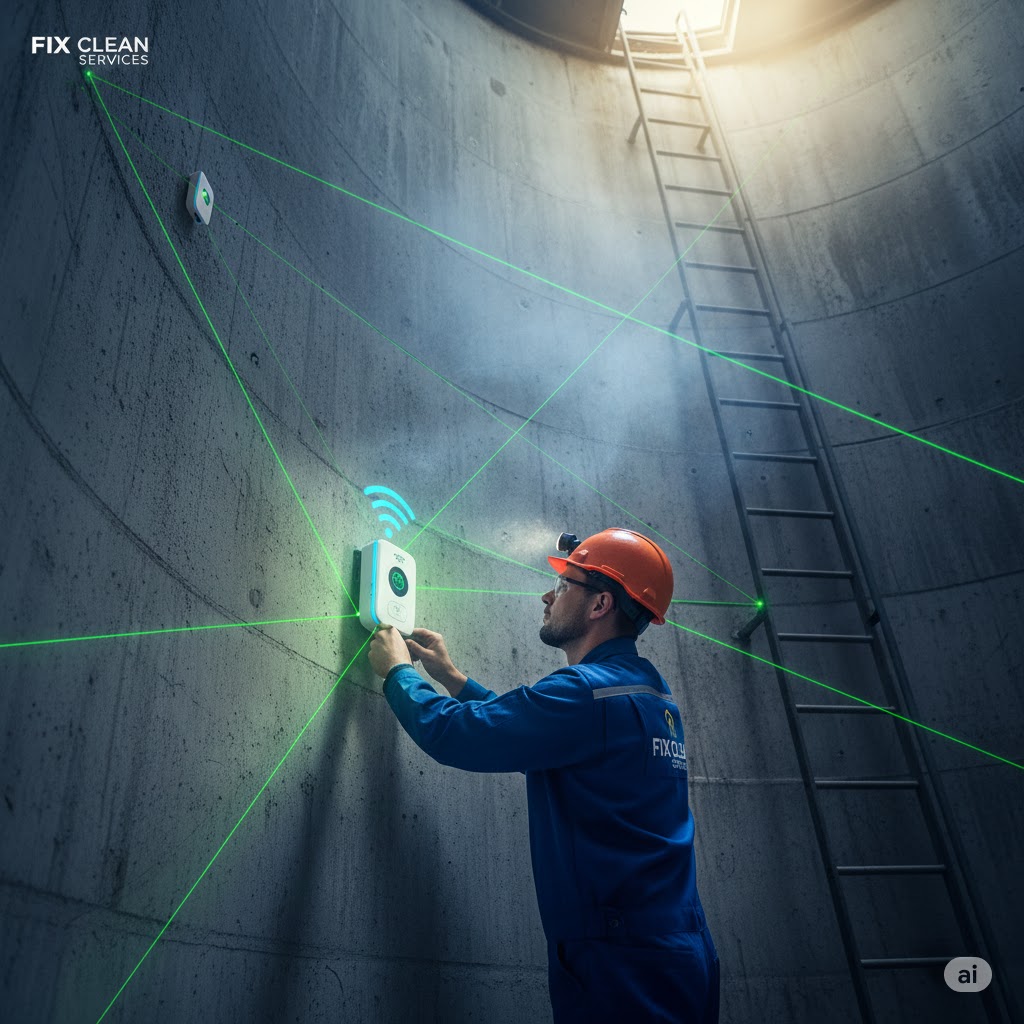
- Sensors Installed: IoT nodes placed around warehouses, homes, or crops.
- Data Transmission: Sensors send live data to a central dashboard.
- AI Analysis: Machine learning identifies infestation patterns.
- Automated Response: Chemical dispensers activate only in infected zones.
- Performance Reports: Technicians receive data summaries on efficiency.
This system ensures eco-friendly fumigation with minimal human intervention.

4. 🌍 Advantages of Smart Fumigation with IoT Sensors
| Benefit | Description |
|---|---|
| Precision Control | Targets pests only where they exist, reducing chemical waste. |
| Real-Time Monitoring | Data dashboards show live infestation maps. |
| Safety & Compliance | Minimizes human exposure to hazardous gases. |
| Sustainability | Lowers chemical runoff and protects biodiversity. |
| Cost Efficiency | Reduces repeated visits and over-application of chemicals. |
| Predictive Analytics | AI predicts pest outbreaks before they happen. |
| Smart Integration | Works with HVAC, cleaning, and building management systems. |
5. Industrial Applications
Smart fumigation with IoT sensors can revolutionize:
a) Agriculture
Sensors in grain silos detect insect larvae before they destroy crops.
Farmers can automate safe fumigation based on real-time thresholds.
b) Food Processing Plants
IoT systems detect flies, cockroaches, and rodents in production zones, ensuring hygiene compliance.
c) High-Rise Buildings
Smart fumigation networks can be embedded into ventilation systems, keeping offices pest-free without manual spraying.
d) Hotels & Hospitality
Smart pest control guarantees odorless, chemical-free rooms, improving customer satisfaction.

Must Read: Check our previous article “High-Rise Building Window Cleaning with Rope Access” for advanced facility services.
6. Data Analytics in Smart Fumigation
IoT fumigation is not just automation — it’s about data intelligence.
By analyzing collected data, pest control firms can:
- Identify infestation patterns (seasonal or location-based)
- Adjust chemical concentration automatically
- Predict which areas will be infested next
This predictive layer helps save thousands in pest damage annually.
Must Read: Explore how AI-driven analytics is reshaping pest control at TechCrunch AI in Facilities
7. Common Mistakes to Avoid in IoT Fumigation Setup
Even tech-driven systems can fail if implemented carelessly. Avoid these:
- ❌ Ignoring Calibration: Sensors must be regularly calibrated for accurate readings.
- ❌ Overusing Chemicals: Automation doesn’t mean excess — tune the dosage algorithm carefully.
- ❌ Neglecting Data Security: IoT devices need encryption; avoid unprotected networks.
- ❌ Skipping Manual Oversight: Always validate data with periodic physical inspections.
- ❌ Ignoring Maintenance Alerts: Dirty or broken sensors give false readings.
8. Future of IoT-Based Pest Control
Within the next 3–5 years, IoT fumigation will evolve into AI-guided, fully autonomous pest control.
Upcoming innovations include:
- Self-learning drones for aerial fumigation.
- Blockchain-based pest control records for compliance.
- Micro-sensor dusts that detect pest eggs.
- Green chemical cartridges with automatic dosage regulation.
Pakistan’s pest control industry can benefit by adopting this early, gaining a competitive edge in eco-smart services.
Frequently Asked Questions (FAQs)
Q1. What is Smart Fumigation with IoT Sensors?
It’s a system that uses sensors to detect pests and control chemicals automatically, making pest control efficient and eco-friendly.
Q2. How do IoT sensors detect pests?
Through heat, motion, and vibration readings transmitted to a cloud dashboard.
Q3. Is smart fumigation expensive?
The initial cost is higher, but it saves long-term expenses by reducing chemicals and labor.
Q4. Can IoT fumigation work in Pakistan’s weather conditions?
Yes — modern sensors are designed to handle heat and dust in industrial areas.
Q5. How can businesses adopt smart fumigation?
Partner with IoT device suppliers and train staff in cloud-based monitoring.
Q6. Is this system safe for food facilities?
Yes, it ensures minimal residue and full compliance with hygiene regulations.
Q7. What data do sensors collect?
Temperature, humidity, gas concentration, and pest movement metrics.
Q8. Can it integrate with other building systems?
Yes, it connects with HVAC, lighting, and cleaning automation.
Q9. How does predictive pest control work?
AI studies previous infestations to anticipate and neutralize future ones.
Q10. Is it the future of fumigation?
Absolutely — the global market for smart pest control is projected to grow 25% annually through 2030

Expert Advice: smart fumigation with IoT Sensors
Smart Fumigation with IoT Sensors represents the next big leap in sustainable pest management.
By combining automation, data, and eco-awareness, companies can deliver faster, safer, and smarter pest solutions.
In Pakistan and similar markets, early adoption of IoT fumigation could help lead the transition to modern, smart facility management — while boosting trust among clients and environmental authorities.








3 Comments