






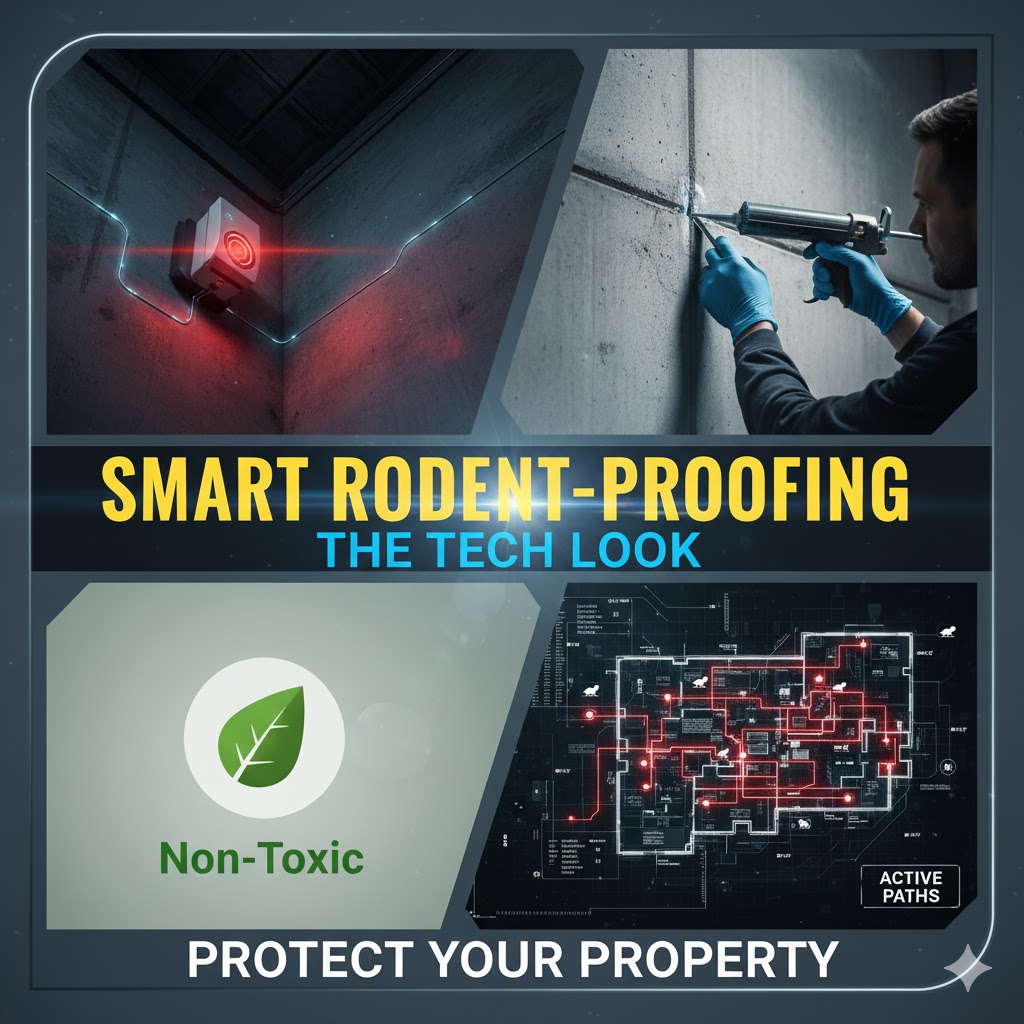
Rodent-Proofing Techniques: Smarter Alternatives to Poisoning
Rodents can cause property damage, electrical fires, and serious health risks — especially in urban buildings. In 2025, the smarter approach is rodent-proofing, not poisoning. This strategy focuses on blocking access, removing attractants, and safeguarding structures using humane and eco-friendly methods.

🏠 Why Traditional Poisoning Fails
Poison-based pest control is outdated and dangerous. Rodents often die in walls, leaving strong odors and bacteria behind. Pets and children are also at risk from accidental ingestion. Moreover, poisoning doesn’t address the real issue — entry points.

🔍 Step 1: Identify Rodent Entry Points
Before you can seal anything, you need to find where rodents are getting in. Common entry points include:
- Cracks around windows or pipes
- Holes in baseboards or vents
- Gaps in the foundation
- Unsealed attic or garage doors
A thorough property inspection using infrared or moisture meters can reveal hidden activity areas.

🧱 Step 2: Seal All Entry Points Properly
Use steel wool, cement mortar, or metal mesh to block holes. Avoid foam sealant — rodents can chew through it easily. For long-term durability, professionals prefer hardware cloth or galvanized metal mesh combined with silicone caulk.
🌿 Step 3: Use Natural Rodent Repellents
Essential oils such as peppermint, eucalyptus, and citronella act as strong deterrents. These can be sprayed along baseboards, attics, or corners weekly. For outdoor protection, plant mint or lavender near wall edges.
💡 Step 4: Eliminate Food and Water Sources
Even the best sealing won’t help if rodents have access to food. Secure trash bins with tight lids and store grains or pet food in sealed containers. Check under sinks for leaks — moisture attracts pests.

🧰 Step 5: Maintain and Inspect Regularly
Rodent-proofing is not a one-time process. Conduct quarterly inspections — especially before winter — to spot new holes or damage. Businesses and warehouses benefit from scheduled IPM (Integrated Pest Management) visits.
🌎 The Eco-Friendly Advantage
Rodent-proofing eliminates poison use, making your home safe for children, pets, and the environment. It aligns with green pest control standards and modern eco certifications like LEED.

💼 B2B Impact: Warehouses, Restaurants & Offices
For B2B clients, especially food storage and logistics companies, rodent-proofing prevents product contamination and compliance issues. Installing door sweeps, floor seals, and wire mesh across ventilation areas helps keep pests out permanently.
⚙️ Advanced Tech: Smart Rodent Sensors
IoT-based pest monitoring systems now detect movement and alert users instantly. These smart traps record rodent activity and help facilities respond before infestations spread.
🧩 Common Mistakes to Avoid
- Relying only on traps or poison
- Ignoring roof or attic gaps
- Using foam sealant without reinforcement
- Forgetting drainage holes and vents
- Not scheduling follow-up inspections
Expert Advice:
Rodent-proofing techniques are the future of pest prevention — sustainable, effective, and toxin-free. Whether it’s your home or business, focusing on sealing and smart monitoring can keep your space pest-free for years without harming the environment.

Read More:
- Learn more about Smart Fumigation with IoT Sensors on our pest-tech insights page.
- Explore Eco-Friendly Carpet Cleaning Solutions for sustainable maintenance tips.
References:
- Visit EPA’s Integrated Pest Management Guide for official green pest control standards.
- Check PestWorld.org for advanced rodent-proofing techniques and case studies.
FAQs — Rodent-Proofing Techniques
1. What is rodent-proofing and how does it differ from poisoning?
Rodent-proofing is a prevention-first strategy that seals entry points, removes attractants, and uses barriers and monitoring rather than toxic baits. It focuses on long-term exclusion and habitat modification instead of short-term killing.
2. How do I find where rodents are entering my house?
Inspect foundations, utility penetrations, vents, rooflines, and door sweeps for gaps larger than 6 mm; use a flashlight and talc or flour to detect footprints. Professional inspections often use infrared cameras and acoustic detectors for hidden routes.
3. What materials work best for sealing rodent entry points?
Use steel wool, hardware cloth (galvanized metal mesh), cement mortar, or metal flashing for durability; avoid plain foam or thin plastic because rodents chew through them. Combine materials (mesh + caulk) to create permanent seals.
4. Are natural repellents like peppermint oil effective?
Essential oils (peppermint, eucalyptus) can help deter rodents temporarily but are not a standalone solution; they work best as a complementary measure while you seal gaps and remove food sources.
5. How often should I inspect and maintain rodent-proofing measures?
Inspect at least quarterly and after severe weather or renovations, focusing on new gaps or wear in seals; B2B sites and warehouses should schedule monthly checks as part of an IPM plan.
6. Can rodent-proofing prevent infestations in warehouses and godowns?
Yes — properly installed door sweeps, sealed loading bays, screened vents, and floor-to-wall seals drastically reduce access for rats and mice and protect stored goods far better than reactive poisoning.
7. What are smart rodent sensors and how do they help?
IoT rodent sensors detect motion, heat, or chewing activity and send alerts to managers, enabling early intervention and reducing the need for broad treatments. They’re especially useful in high-value storage or food facilities.
8. Is exclusion work safe for families and pets compared to traps and poison?
Exclusion is far safer: it prevents accidental poisonings and reduces the risk of carcasses hidden in walls. When traps are used, modern live-capture or enclosed snap traps minimize non-target risk.
9. How much does professional rodent-proofing usually cost?
Costs vary by property size and damage level; small homes may start at a modest fee for basic sealing, while large commercial retrofits are more costly but pay back quickly by preventing losses and compliance fines.
10. If I seal entry points, will rodents still try to come back?
If sealing is thorough and food/water attractants are removed, rodent pressure will drop dramatically. Occasional new breaches can occur — continued vigilance, good sanitation, and periodic inspections keep rodents out long-term.