







Humane Bee Relocation & Beehive Removal: Eco-Friendly Solutions That Save Bees and Homes
Bees are essential pollinators responsible for one-third of our food supply, yet they often find their way into unwanted spaces—walls, attics, or trees near homes. Instead of extermination, humane bee relocation focuses on saving these critical insects while keeping your environment safe. This modern approach ensures sustainable coexistence, benefiting ecosystems and agriculture alike.
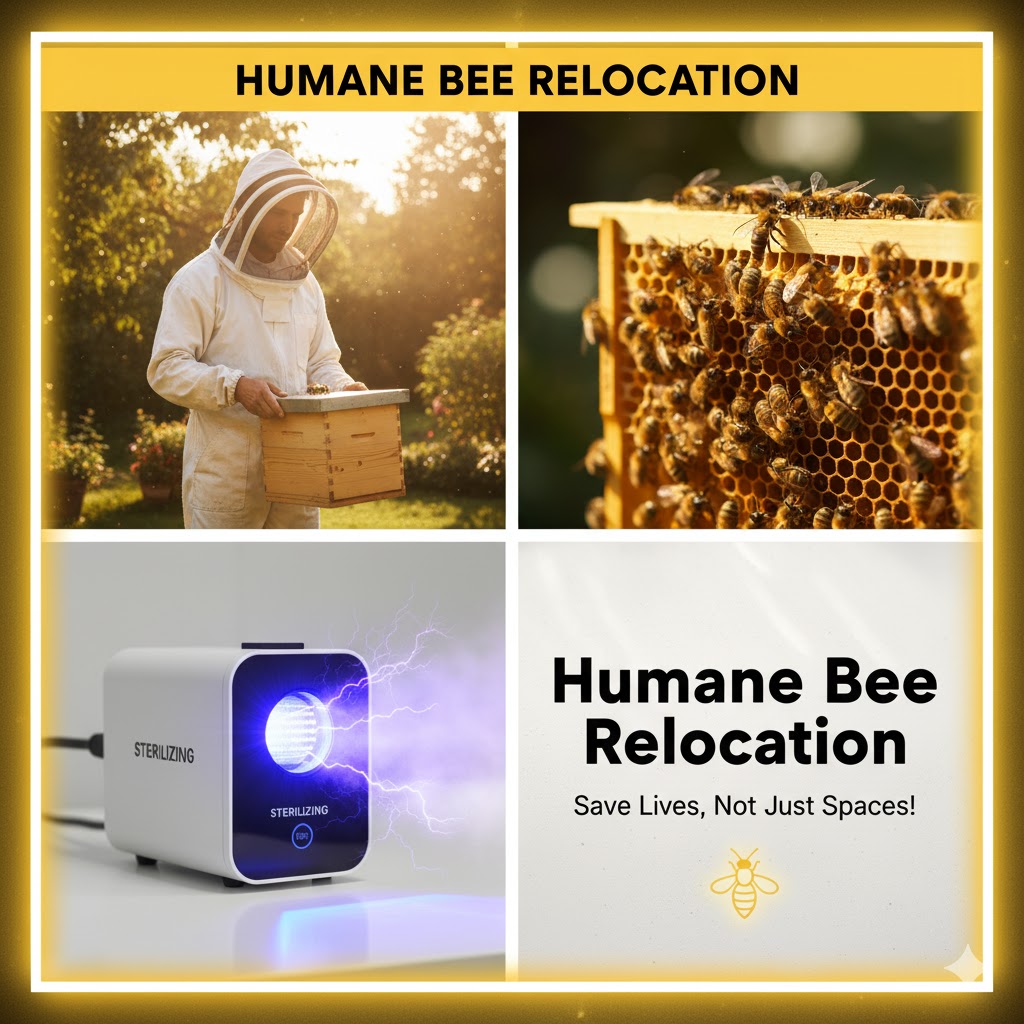
🌿 Why Choose Humane Bee Relocation Instead of Extermination
Traditional pest control methods often kill bees, contributing to declining global populations. Humane relocation, however, involves safely transferring colonies to new habitats where they can continue to thrive. Licensed apiarists use specialized equipment like vacuum chambers, bee boxes, and pheromone lures to move hives without harming the queen or worker bees.

🧭 Step-by-Step Process of Ethical Beehive Removal
- Assessment: A professional inspects the site to determine species type, colony size, and location.
- Containment: Bees are calmed using cool smoke to reduce defensive behavior.
- Hive Extraction: The hive and honeycombs are carefully detached from walls or trees.
- Queen Relocation: The queen is safely transferred to a new hive box, ensuring colony survival.
- Sanitization: The old site is cleaned and treated with eco-safe deterrents to prevent re-infestation.
- Rehousing: The bees are introduced to a managed environment such as a local apiary.

🌸 Benefits of Humane Bee Relocation
- Protects the environment by saving pollinators critical for global food chains.
- Prevents structural damage from honey leakage and wax buildup.
- Complies with eco-laws that prohibit bee extermination in many areas.
- Supports biodiversity and sustainable agriculture practices.

⚙️ Modern Add-Ons: UV & Ozone Disinfection After Beehive Removal
Once a beehive is removed, UV light and ozone treatment can disinfect the affected area. These non-toxic methods kill bacteria, mold spores, and residual pests—without chemicals. It also eliminates any lingering honey scent that might attract new swarms.

🌻 Choosing the Right Bee Relocation Service
When hiring professionals, look for:
- Certified apiarists with experience in live bee removals.
- Eco-conscious practices avoiding pesticides.
- Proper safety gear and removal permits.
- Aftercare support, including hive site cleaning and sealing.
🌎 Eco-Laws & Local Regulations on Bee Removal
In many regions, killing honeybees is illegal due to their declining population. Humane relocation ensures compliance with environmental regulations and supports community apiaries. Always check local wildlife protection laws before attempting DIY removal.
🐝 DIY Precautions (If You Encounter a Beehive)
- Do not spray insecticides or water at the hive.
- Stay calm and maintain a 6–10 meter distance.
- Call a certified bee relocation service immediately.
- Avoid blocking hive entrances; trapped bees may become aggressive.

💬 Real-World Example
In Dubai, a community-led initiative trained pest control teams to perform humane bee relocations from residential towers. Over 15,000 bees were successfully moved to sustainable urban hives, showing how eco-conscious removal can coexist with city life.
Expert Advice: Save Bees, Save the Planet
Humane bee relocation isn’t just a pest solution—it’s an environmental commitment. By choosing eco-friendly removal and sterilization, you protect pollinators, preserve biodiversity, and contribute to a healthier ecosystem. Every hive saved is a small victory for the planet.

❓ FAQ – Humane Bee Relocation & Beehive Removal
1. What is humane bee relocation?
It’s the process of safely moving bee colonies to a new habitat without harming them or the queen.
2. Is bee relocation better than extermination?
Yes, it saves pollinators vital for food crops and complies with environmental regulations.
3. Can all bees be relocated?
Most species can, especially honeybees. Some aggressive types may require specialized handling.
4. How long does beehive removal take?
Professional removals typically take 1–3 hours, depending on hive size and accessibility.
5. Will bees return to the same spot?
Not if the site is properly cleaned and treated with ozone or eco-friendly repellents.
6. Is humane removal expensive?
Costs vary by location but average between $150–$500 per hive depending on complexity.
7. What happens to the bees afterward?
They’re rehomed in managed hives or bee sanctuaries where they continue to pollinate.
8. Can I remove bees myself?
DIY removal is risky. Always contact licensed professionals for safety and legal compliance.
9. Are ozone treatments safe after removal?
Yes, ozone naturally disinfects without leaving harmful residues.
10. Do bees pose a risk to pets or children?
Only if provoked. Once relocated, the area becomes safe for normal use.
11. How do I prevent future hives?
Seal wall gaps, roof vents, and openings with caulk or mesh screens.
12. Do local councils support humane relocation?
Many regions now encourage it through eco-pest programs and wildlife partnerships.
13. How soon can I re-enter the treated area?
Usually within 2–4 hours after UV or ozone sterilization is complete.
14. Can relocation help bee populations recover?
Absolutely—it directly contributes to rebuilding healthy local ecosystems.
15. What time of year is best for relocation?
Spring and early summer are ideal when colonies are active but not yet overpopulated.
Sources:
Must See: Read our guide on Eco-Friendly Pest Control Methods.
References: Visit: https://www.pollinator.org/