





Introduction – The Hidden Truth About Mattress Cleaning
Mattress cleaning is one of the most neglected home hygiene tasks. People vacuum carpets and mop floors weekly, but their mattresses — where they spend one-third of their lives — often go untouched for months. Worse, when they finally attempt cleaning, they make critical mistakes that damage fabric, spread stains, or even void warranties.
In this guide, we’ll explore the most Common Mistakes Mattress Cleaning and provide expert advice to ensure your next deep clean is safe, effective, and long-lasting.
🧴 1. Using Too Much Water – Common Mistakes Mattress Cleaning
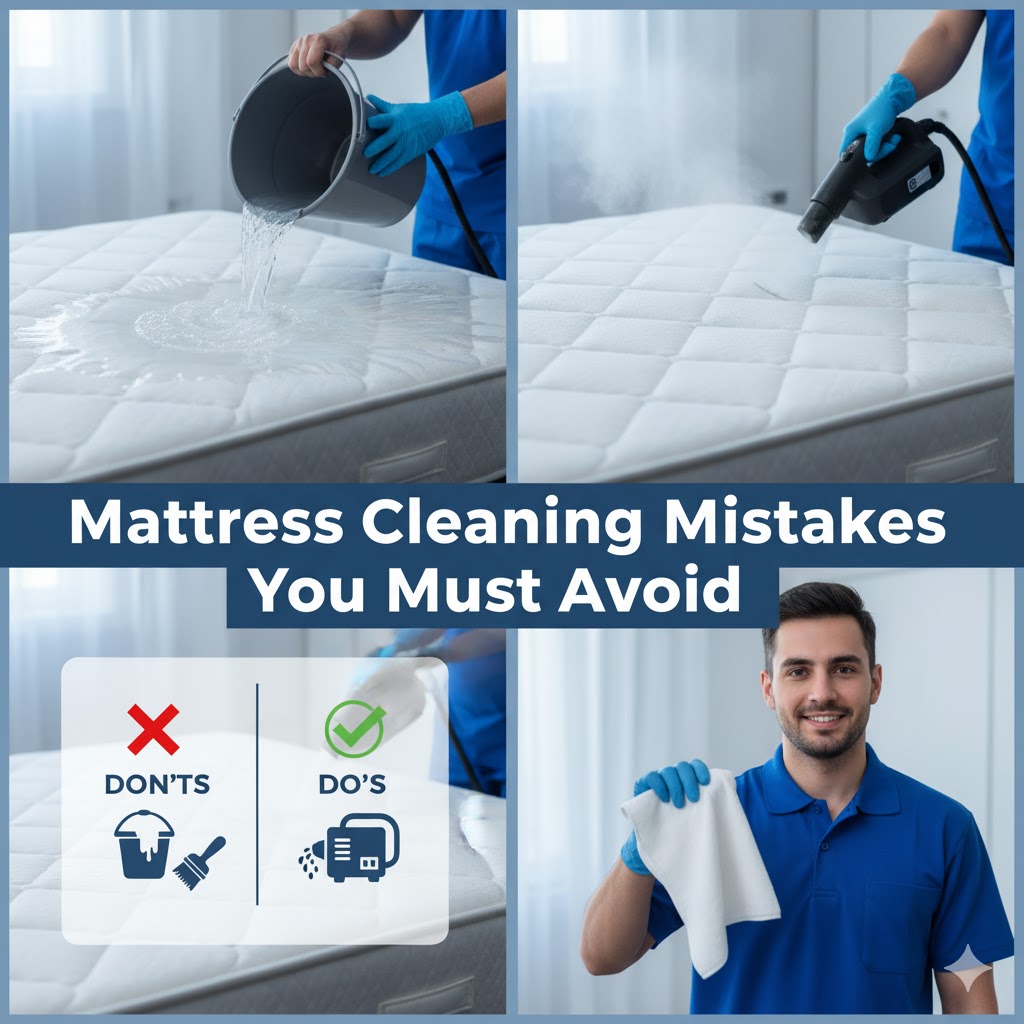
One of the biggest DIY mattress cleaning mistakes is oversaturating the mattress with water or liquid cleaner. Mattresses are thick, absorbent, and difficult to dry completely. Excess moisture seeps deep inside, creating an ideal environment for mold, mildew, and bacteria.
Instead, use minimal moisture and high-temperature steam cleaning or light misting with a spray bottle. Follow with powerful air circulation or a fan to dry quickly.

💨 2. Skipping the Drying Process
People often clean and remake their bed too soon, trapping humidity inside the mattress. This leads to musty odors, mildew growth, and bacteria spread.
Always allow at least 6–8 hours of drying time after cleaning. Position the mattress upright near a sunny window or use a fan or dehumidifier to speed up evaporation.

🧼 3. Using Harsh Chemicals or Bleach
Strong detergents, bleach, or alcohol-based sprays can damage mattress fibers and cause discoloration or skin irritation. Most mattresses aren’t designed for chemical exposure.
Choose mild, non-toxic cleaners — a mix of baking soda, vinegar, and water is often enough. For stains, enzyme-based cleaners work gently without ruining fabric integrity.

🧹 4. Forgetting to Vacuum First
Vacuuming is crucial before wet cleaning. Skipping this step grinds dust, dander, and debris deeper into the fabric, making stains harder to remove.
Use a HEPA vacuum with upholstery attachment to extract dust mites and hair. Vacuum both sides of the mattress, seams, and edges for a thorough prep.

💡 5. Cleaning Only One Side
Mattresses collect dust and moisture on both surfaces, even if one side isn’t used. Cleaning just the top leaves the bottom as a breeding ground for bacteria.
Flip the mattress and clean both sides every time. This not only keeps hygiene balanced but also extends mattress lifespan and maintains shape evenly.
🧴 6. Ignoring Stain Pre-Treatment
Many people directly scrub or steam over stains, spreading them further. Without pre-treatment, stains like sweat, urine, or blood embed permanently.
Apply stain removers or natural enzyme sprays 10–15 minutes before main cleaning. Dab gently with a microfiber cloth instead of rubbing to prevent smearing.
⚡ 7. Using Steam Incorrectly – Common Mistakes Mattress Cleaning
Steam cleaning is powerful but must be used wisely. Using too much steam or holding the nozzle too close can soak the mattress. Improper use leaves moisture trapped or damages delicate layers like memory foam.
Keep a 5–6 inch distance and use quick, sweeping motions. Always ensure full drying afterward.

🧽 8. Neglecting Odor Neutralization – Common Mistakes Mattress Cleaning
Mattresses can trap sweat and body oils, leading to lingering odors even after cleaning. Many people skip deodorizing because the mattress looks clean, but odors often hide deep inside fibers.
After cleaning, sprinkle baking soda across the surface, let it sit for at least 2 hours, then vacuum it off. For a fresh scent, mix a few drops of essential oil.
🧠 9. Using Wrong Cleaning Tools – Common Mistakes Mattress Cleaning
Scrub brushes, rough sponges, or heavy vacuums can tear delicate fabric or seams. Always use soft brushes, microfiber cloths, and upholstery-safe attachments.
Investing in proper tools like a handheld extractor or steam vacuum ensures deep cleaning without damage.
🔄 10. Not Cleaning Regularly
Many homeowners clean their mattress only when they notice stains or odors, allowing bacteria and dust mites to build up over months.
Schedule deep cleaning every 6 months or every 3 months if you have pets, allergies, or humid conditions. Routine cleaning prevents long-term damage and improves sleep hygiene.
🌿 11. Forgetting About Eco Safety
Even if products claim to be “green,” some still emit volatile organic compounds (VOCs). Skipping safety checks leads to respiratory irritation or allergic reactions.
Always check product certifications (EPA Safer Choice, EcoLogo, or Green Seal) before applying any cleaner. Natural alternatives like vinegar, baking soda, or citrus oil work just as effectively.

🧺 12. Not Protecting Mattress After Cleaning
Many people forget the final step — protection. A clean mattress without a protector quickly attracts dust again.
Use a breathable waterproof mattress cover after every deep cleaning. It prevents recontamination from sweat, spills, and allergens while keeping fabric fresh longer.
📉 13. Ignoring Manufacturer Instructions
Every mattress type (latex, memory foam, hybrid, spring) has unique cleaning rules. Using universal methods can void warranties or damage material integrity.
Always read the manufacturer label or check the brand’s care guide online before cleaning.
💬 Expert Advice: Clean Smart, Not Hard
According to professional cleaning experts, knowledge is key. Most mattress issues stem from misinformation or quick hacks found online. Certified cleaners use temperature control, low-moisture extraction, and neutral pH cleaners — principles homeowners can replicate safely.
Dr. Melissa Grant, an environmental hygienist, says:
“Mattresses are biological sponges — treat them with precision, not force. Small mistakes can create years of microbial buildup.”

🧠 Pro Tips for Perfect Mattress Cleaning
- Always test cleaners on a small corner first.
- Never oversaturate — less is more.
- Clean both sides and edges.
- Vacuum before and after wet cleaning.
- Use sun exposure whenever possible.
- Apply natural deodorizer post-cleaning.
- Let the mattress dry completely before covering.

Expert Guide: Common Mistakes Mattress Cleaning
Mattress cleaning isn’t difficult — it’s about doing it correctly. Avoiding these 13 common mistakes ensures you won’t damage fabric, trap moisture, or spread bacteria. Proper techniques like pre-treatment, balanced moisture, and full drying transform your mattress hygiene.
Invest time, use gentle eco-cleaners, and follow a consistent schedule. Clean smart, not hard — and you’ll enjoy a fresh, allergen-free sleep environment for years.

❓ FAQs – Common Mistakes Mattress Cleaning
1. How often should I clean my mattress?
Every 3–6 months for best hygiene. More frequent cleaning is recommended for allergy sufferers or homes with pets.
2. Can I use bleach on mattress stains?
No. Bleach can ruin fibers and cause irritation. Use enzyme-based or oxygen cleaners instead.
3. What’s the safest way to remove urine stains?
Blot first, then apply vinegar and baking soda mixture. Let it fizz and dry before vacuuming.
4. Can steam damage a memory foam mattress?
Yes, excessive steam can warp foam. Use minimal moisture or dry cleaning sprays.
5. How do I dry my mattress faster after cleaning?
Use fans, dehumidifiers, or sunlight exposure. Avoid direct heat sources.
6. What’s the best DIY deodorizer?
Plain baking soda with a few drops of lavender or lemon oil neutralizes odors naturally.
7. Can I flip my mattress after cleaning?
Yes — cleaning both sides prevents bacteria buildup underneath.
8. Should I hire professionals or do it myself?
DIY is fine for light maintenance; hire pros every 6–12 months for deep extraction and sanitization.
9. Why does my mattress smell worse after cleaning?
It may not have dried properly, allowing mold to form inside.
10. Can vinegar damage the mattress?
Not if diluted properly (1:1 with water). Always air dry completely afterward.
11. What’s the best way to prevent dust mites?
Use washable covers, vacuum weekly, and keep humidity low.
12. Can vacuuming alone clean the mattress?
It removes surface dust but not embedded dirt or stains — deep cleaning is still needed.
13. Is sunlight enough to disinfect a mattress?
Sunlight helps kill bacteria but doesn’t remove dirt or oils — use it alongside other cleaning steps.
14. Do essential oils help with odor control?
Yes, lavender, tea tree, and eucalyptus oils are antimicrobial and refreshing.
15. What’s the biggest mistake beginners make?
Overusing water or strong chemicals — both cause long-term mattress damage.
References: Common Mistakes Mattress Cleaning
See More
- Mattress Steam Cleaning vs Dry Cleaning – Which Is Better?
- DIY Mattress Deodorizing Hacks Using Baking Soda & Vinegar
Sources: