






Introduction: Why Bed Bug Heat Treatment Is Revolutionizing Pest Control
The Bed Bug Heat Treatment method has become a global phenomenon — used across the US, UK, Dubai, and Singapore, yet still underused in Pakistan and South Asia.
Unlike traditional chemical methods, this eco-friendly treatment relies on heat, not poison, to completely eliminate bed bugs in all life stages — from eggs to adults.
It’s chemical-free, odorless, non-toxic, and provides instant results within hours, not days.
1. What Is Bed Bug Heat Treatment?
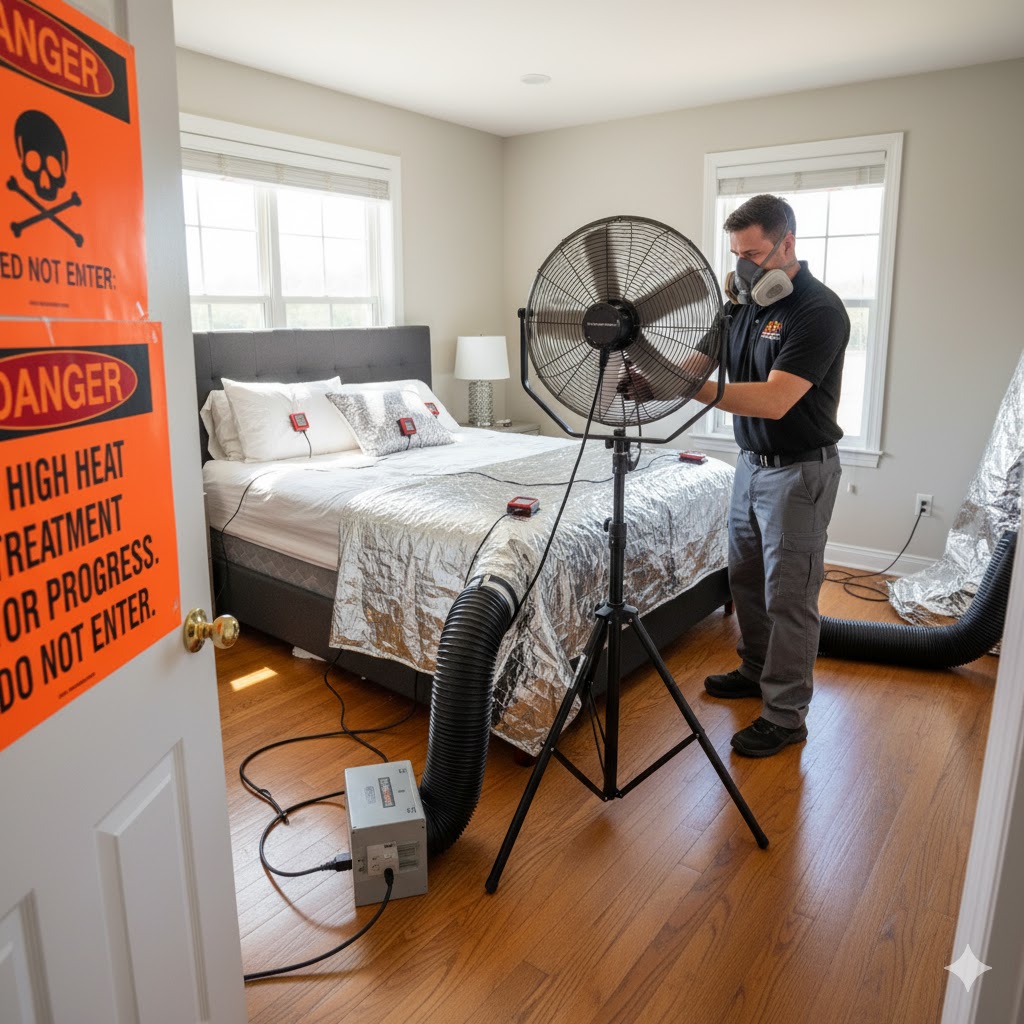
Bed Bug Heat Treatment involves raising the temperature of an infested room to 118–135°F (48–57°C) — the lethal zone for bed bugs and their eggs.
Using industrial heaters and sensors, the entire space is gradually heated and monitored to maintain uniform temperature for several hours.
The result? Complete extermination without a single chemical spray.
Source: EPA Bed Bug Control Overview

2. How Heat Treatment Works (Step-by-Step)
- Inspection & Preparation: The pest team identifies infested areas and removes heat-sensitive items.
- Sealing: Doors, vents, and cracks are sealed to prevent heat loss.
- Heating: Specialized heaters slowly raise the temperature to 118°F+ across all surfaces.
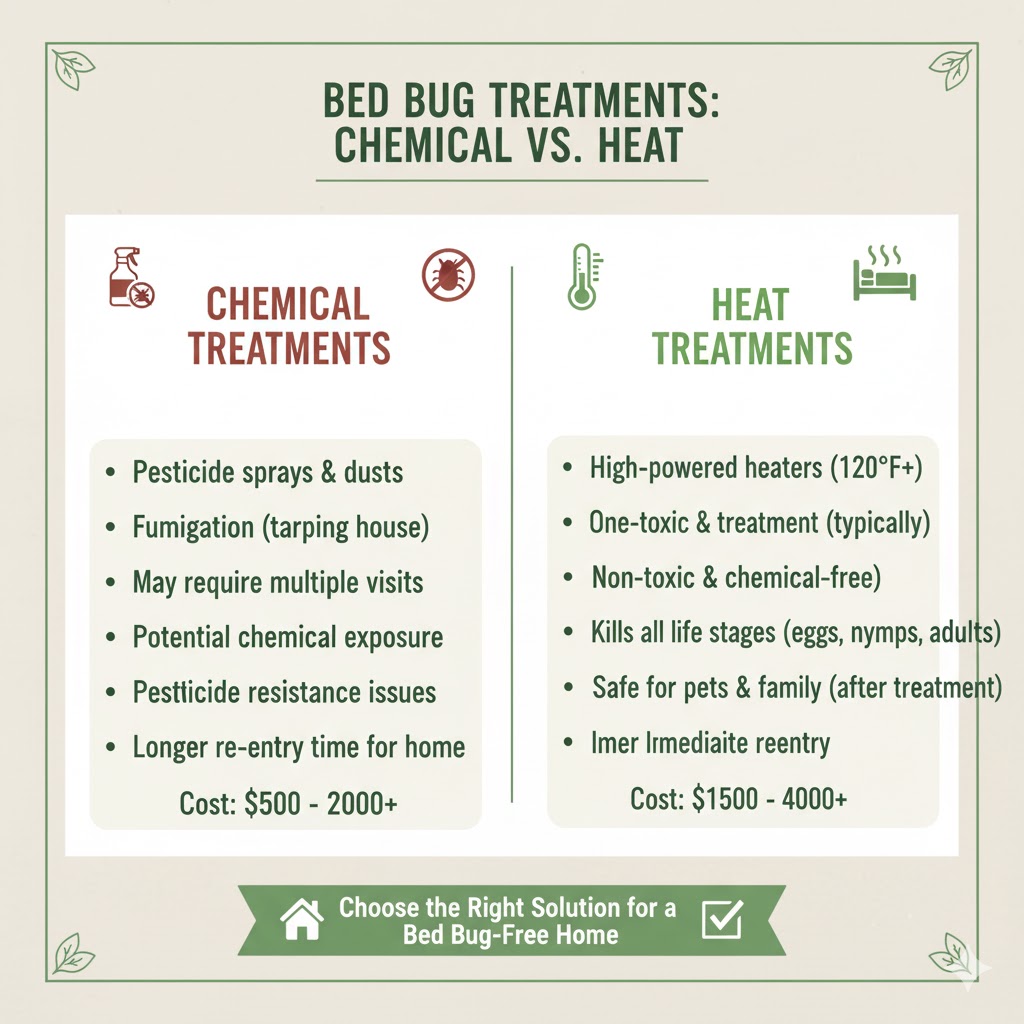
- Monitoring: Wireless thermometers track temperature consistency in every corner.
- Holding Period: Heat is maintained for 3–5 hours — ensuring eggs and larvae are destroyed.
- Cooling & Verification: Rooms are cooled naturally and re-inspected with infrared scanners.
Must Read: Learn: Eco-Friendly Pest Control Technique

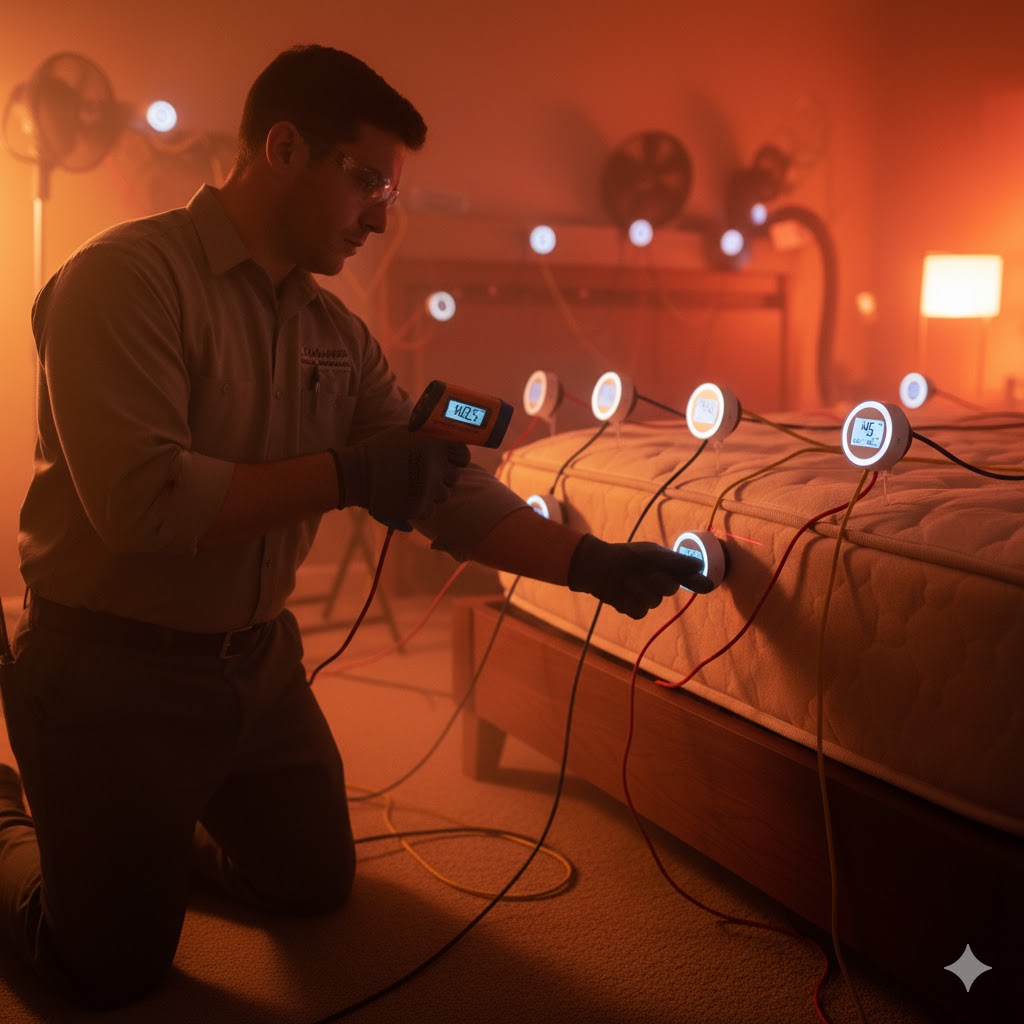
3. Why Choose Heat Over Chemicals?
| Aspect | Chemical Treatment | Bed Bug Heat Treatment |
|---|---|---|
| Effectiveness | Partial (bugs hide/resist) | 100% kill including eggs |
| Toxicity | High – harmful residues | None – safe for kids/pets |
| Duration | Multiple visits | Single 6-hour session |
| Smell | Strong chemical odor | Odorless |
| Eco Impact | Pollutes air & surfaces | 100% eco-safe |
4. The Science Behind Bed Bug Heat Treatment
Bed bugs can survive most insecticides but not heat above 118°F.
At that threshold:
- Eggs die within 90 minutes
- Adults die within 30 minutes
- Entire infestations collapse within hours
Heat penetrates mattresses, wall cracks, furniture joints, and fabrics — areas where chemicals often fail to reach.
Source: NCBI: Thermal Death of Bed Bugs Research Study

5. Ideal Places for Bed Bug Heat Treatment
- Residential bedrooms & apartments
- Hotels, hostels, and guest houses
- Hospital rooms & staff quarters
- Student dormitories
- Public transport (buses, trains)
- Movie theaters and offices
Must See: Read: Commercial Pest Control Packages

6. Equipment Used in Bed Bug Heat Treatment
- Electric or propane heaters – raise room temperature evenly.
- High-volume fans – circulate air to prevent cold spots.
- Temperature sensors – measure every section of the room.
- Insulated ducts – direct airflow efficiently.
- Infrared cameras – detect hidden heat zones.
Each setup is designed to ensure complete, deep heat coverage.

7. Common Mistakes to Avoid During Heat Treatment
- Not removing heat-sensitive items (wax candles, electronics, plastic toys).
- Improper sealing of vents and door gaps.
- Overheating can damage furniture or wallpaper.
- Inconsistent heat distribution leads to partial survival.
- Skipping post-treatment vacuuming — dead insects must be removed.
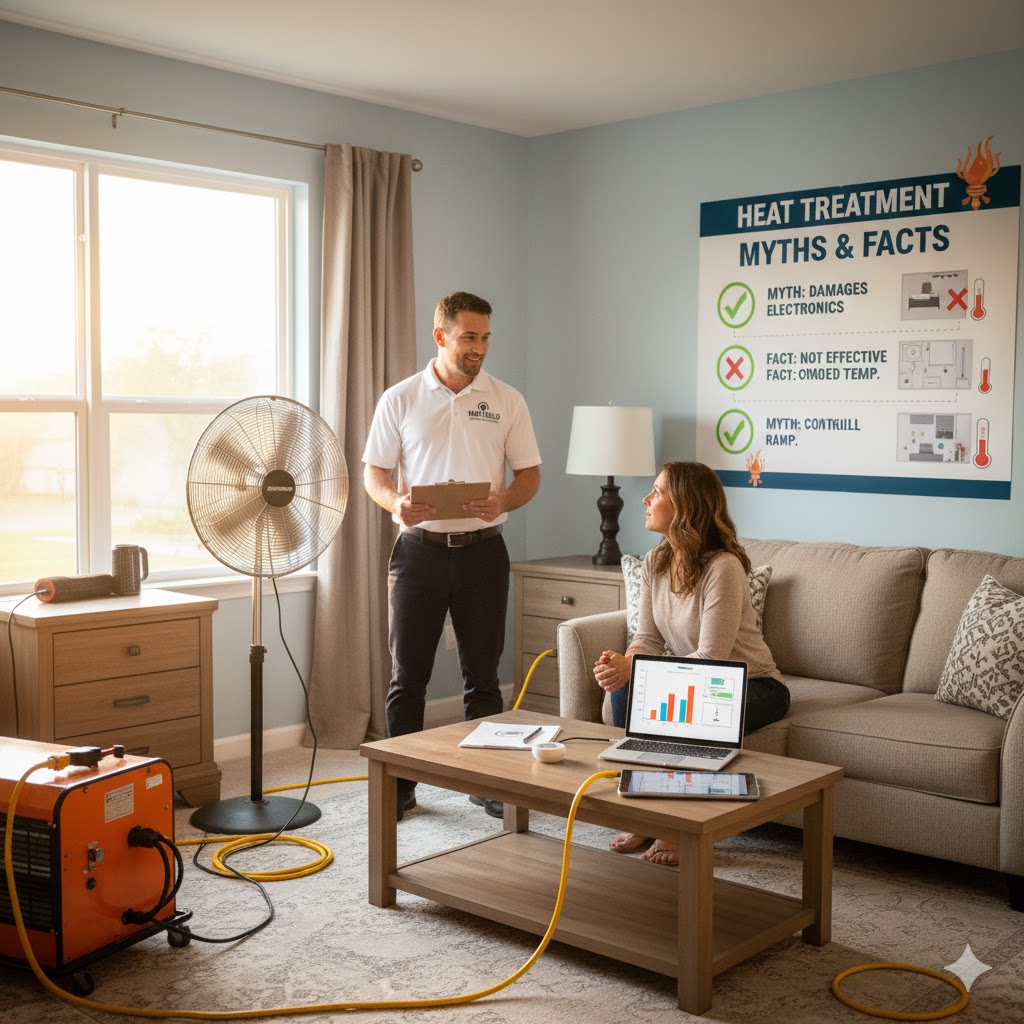
8. Myths About Bed Bug Heat Treatment
- ❌ “It’s the same as steaming.”
→ Steaming treats surfaces; heat treatment penetrates the entire room. - ❌ “Heat damages furniture.”
→ When done professionally, temperatures are controlled to prevent harm. - ❌ “It’s too expensive.”
→ It’s a one-time treatment — no repeat sprays, no re-infestation costs.
9. Environmental & Health Benefits
- No harmful chemical residue
- Safe for children, pets, and asthma patients
- Zero contamination risk for bedding or clothing
- 100% recyclable energy source when powered by electricity
- Complies with global green pest control standards (EPA, ISO 14001)

10. Real-World Success Stories
- Dubai Hotels: Switched to 100% heat-based systems in 2024 due to tourism hygiene laws.
- New York Apartments: Over 90% success rate with single-session heat extermination.
- Singapore Dormitories: Heat treatment reduced re-infestations by 95% in student housing.

11. Pricing Comparison
| Service Type | Cost (USD) | Coverage | Duration |
|---|---|---|---|
| Standard Chemical Spray | $80–$120 | Single room | 2–3 visits |
| Bed Bug Heat Treatment | $250–$400 | Whole apartment | 1 visit (5 hrs) |
12. Aftercare & Prevention Tips
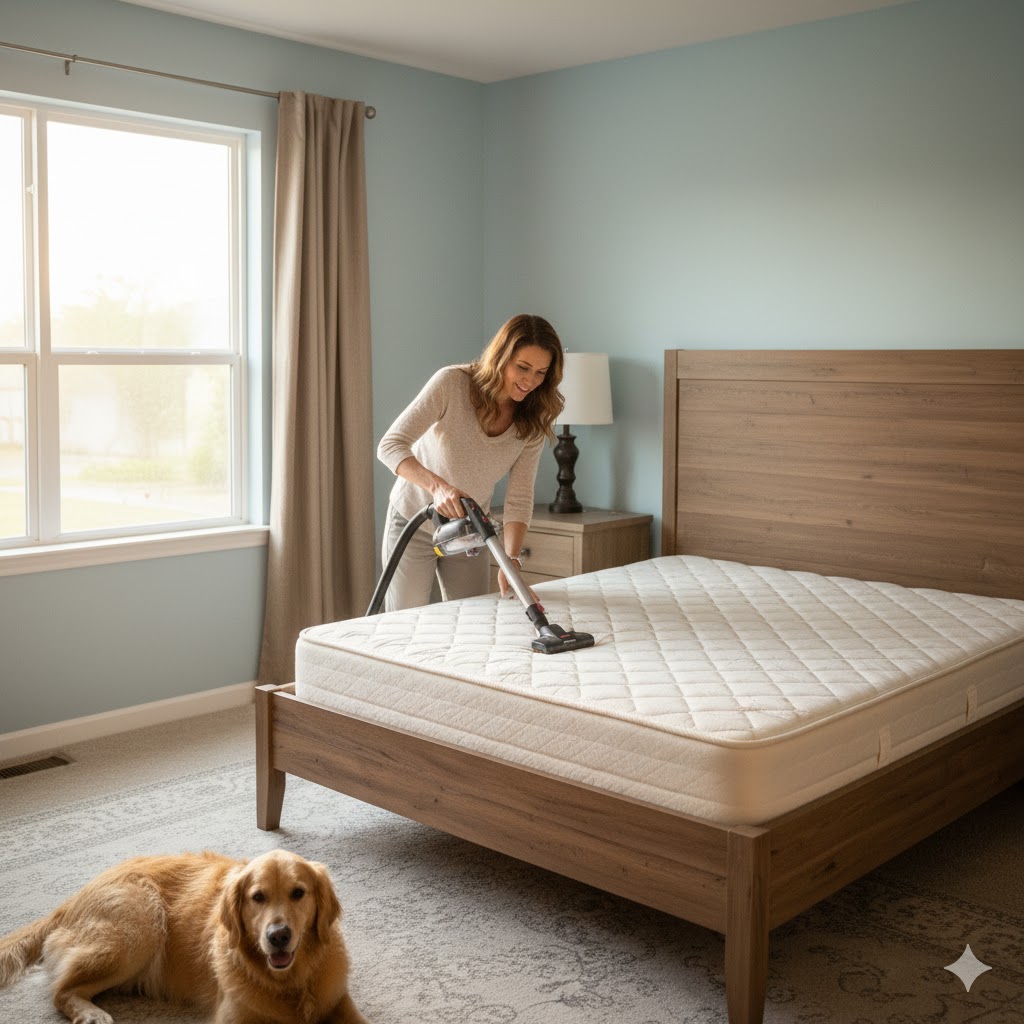
- Vacuum the entire room after cooling.
- Wash all bedding at 60°C or higher.
- Seal cracks and crevices with caulk.
- Use bed bug-proof mattress covers.
- Schedule quarterly inspections.
Source: CDC – Preventing Bed Bugs After Treatment
Expert Advice: Bed Bug Heat Treatment Is the Future of Safe Pest Control
Bed Bug Heat Treatment is the most modern, chemical-free, and eco-safe solution for one of the oldest pest problems. It provides instant, total extermination and fits perfectly into today’s green living standards.
As more countries adopt this innovative approach, it’s time for Pakistan and South Asia to catch up with this global pest control revolution.

FAQs About Bed Bug Heat Treatment
1. What is Bed Bug Heat Treatment?
It’s a process that uses high heat to kill bed bugs and eggs without chemicals.
2. How long does a heat treatment session take?
Usually 4–6 hours per room, depending on the size and infestation level.
3. Is it safe for pets and kids?
Yes — 100% non-toxic and chemical-free.
4. What temperature kills bed bugs?
118°F (48°C) and above ensures complete extermination.
5. Can I do heat treatment myself?
DIY attempts often fail due to uneven heat — always hire professionals.
6. How much does it cost?
Between $250–$400 per room in international markets.
7. Will my furniture be damaged?
No, when handled by trained experts with controlled heating.
8. Do bed bugs return after heat treatment?
Rarely, if preventive measures are followed.
9. What are signs of a failed heat treatment?
Continued bites or live bugs within 7 days post-treatment.
10. Is this method approved internationally?
Yes — recognized by EPA, CDC, and ISO-certified pest control firms.