





Air Duct & HVAC Cleaning Services – Why Pakistan Is Missing Out
When we think about home or office cleanliness, most of us focus on visible surfaces — floors, carpets, furniture. Yet, one hidden area that carries massive health and energy consequences is often ignored: air ducts and HVAC systems.
In countries like the United States, Canada, and parts of Europe, HVAC cleaning is a well-established service industry. In fact, according to the National Air Duct Cleaners Association (NADCA, US), the HVAC cleaning market in America alone is worth billions of dollars annually.
By contrast, in Pakistan and much of South Asia, HVAC cleaning is barely recognized as a professional service. This neglect leads to poor indoor air quality, higher electricity bills, and even health risks.
What Exactly Is Air Duct & HVAC Cleaning Services?
Air duct cleaning involves removing dust, mold, bacteria, and debris from the ductwork of your HVAC system. This includes:
- Supply and return air ducts.
- Registers and grilles.
- Coils and drip pans.
- Fans, motors, and housing.
Professional cleaning uses HEPA vacuums, rotary brushes, and negative air machines to sanitize ducts without contaminating indoor air.

Why It’s Huge in the US But Ignored Locally
1. Awareness Gap
In the US, campaigns by NADCA, EPA, and consumer awareness sites highlight the risks of dirty air ducts. In Pakistan, duct cleaning is not even part of most homeowners’ vocabulary.
2. Regulatory Standards
US building codes often recommend HVAC cleaning every 3–5 years. In Pakistan, there are no official guidelines.
3. Health Consciousness
Americans prioritize indoor air quality because of allergies, asthma, and pollution awareness. Locally, most people only call service providers when AC cooling drops.
4. Service Availability
Thousands of certified HVAC cleaning companies operate in the US. In Pakistan, only a handful of startups in big cities (Karachi, Lahore, Islamabad) offer it — mostly for offices and hotels.

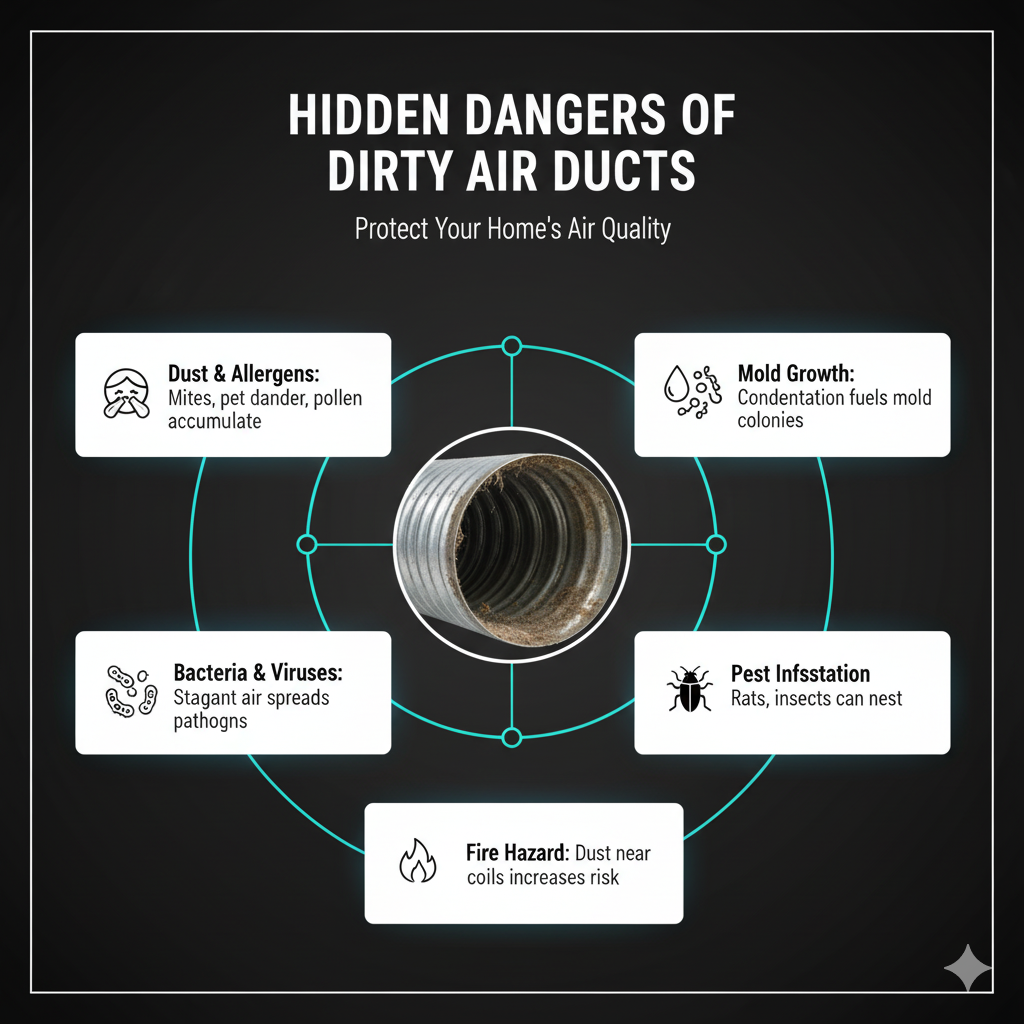
Hidden Dangers of Dirty Air Ducts
- Dust & Allergens: Dust mites, pet dander, and pollen accumulate.
- Mold Growth: Condensation inside ducts fuels mold colonies.
- Bacteria & Viruses: Stagnant air can spread pathogens.
- Pest Infestation: Rats, insects, or cockroaches may nest in ducts.
- Fire Hazard: Thick dust layers near HVAC coils increase risk.
🔗 Source: EPA Guide on Duct Cleaning
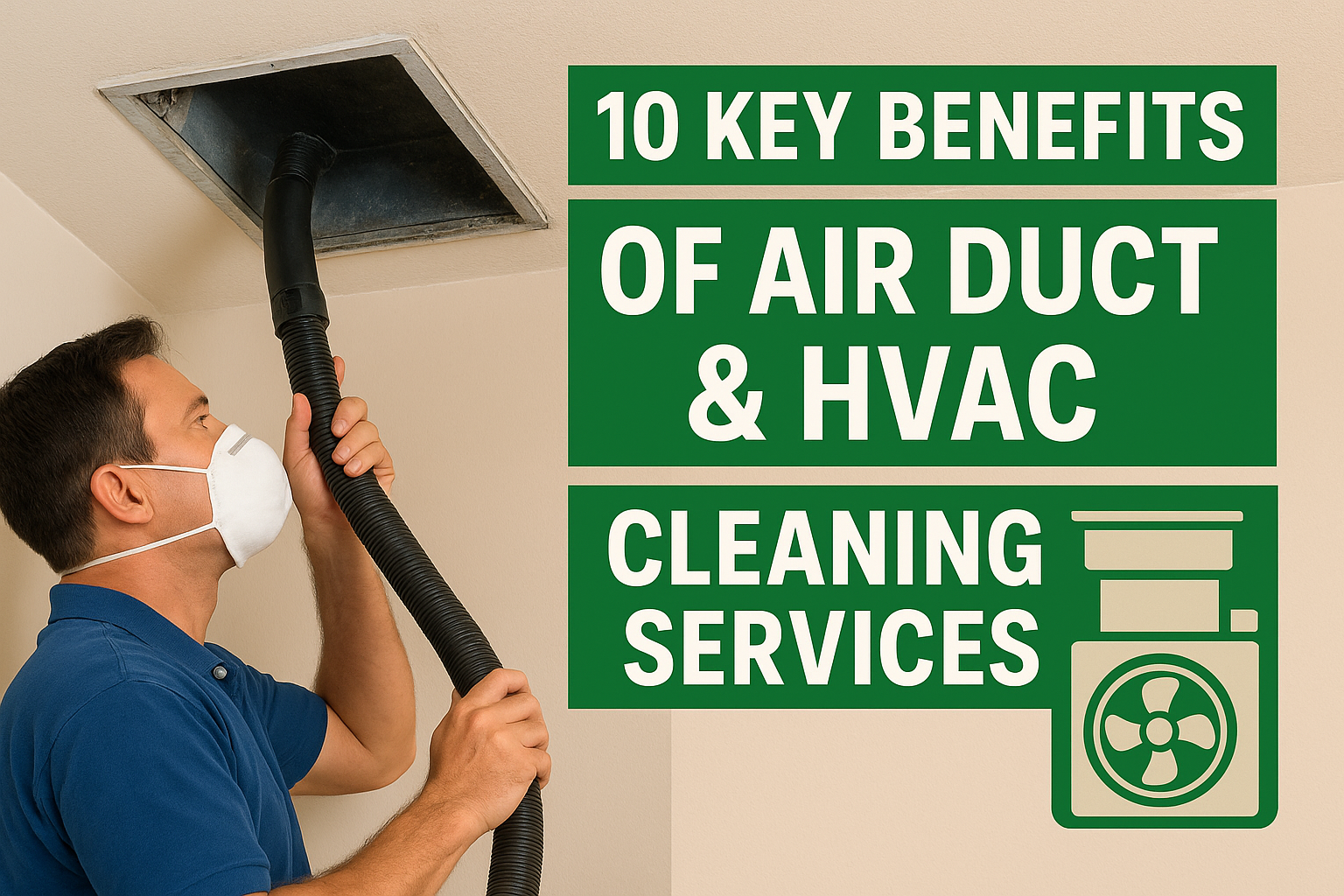
10 Key Benefits of Air Duct & HVAC Cleaning
- Healthier Indoor Air – Removes allergens, reduces asthma triggers.
- Energy Savings – Clean ducts improve HVAC efficiency by 20–30%.
- Odor Elimination – Cigarette smoke, pets, and mildew odors are reduced.
- Longer HVAC Lifespan – Prevents coil corrosion and motor burnout.
- Improved Airflow – Stronger cooling/heating efficiency.
- Pest Control – Eliminates nesting areas for insects and rodents.
- Lower Medical Costs – Fewer respiratory doctor visits.
- Better Sleep & Comfort – Cleaner air boosts sleep quality.
- Environmental Benefits – Less electricity use = lower carbon footprint.
- Increased Property Value – Clean HVAC is attractive to buyers.


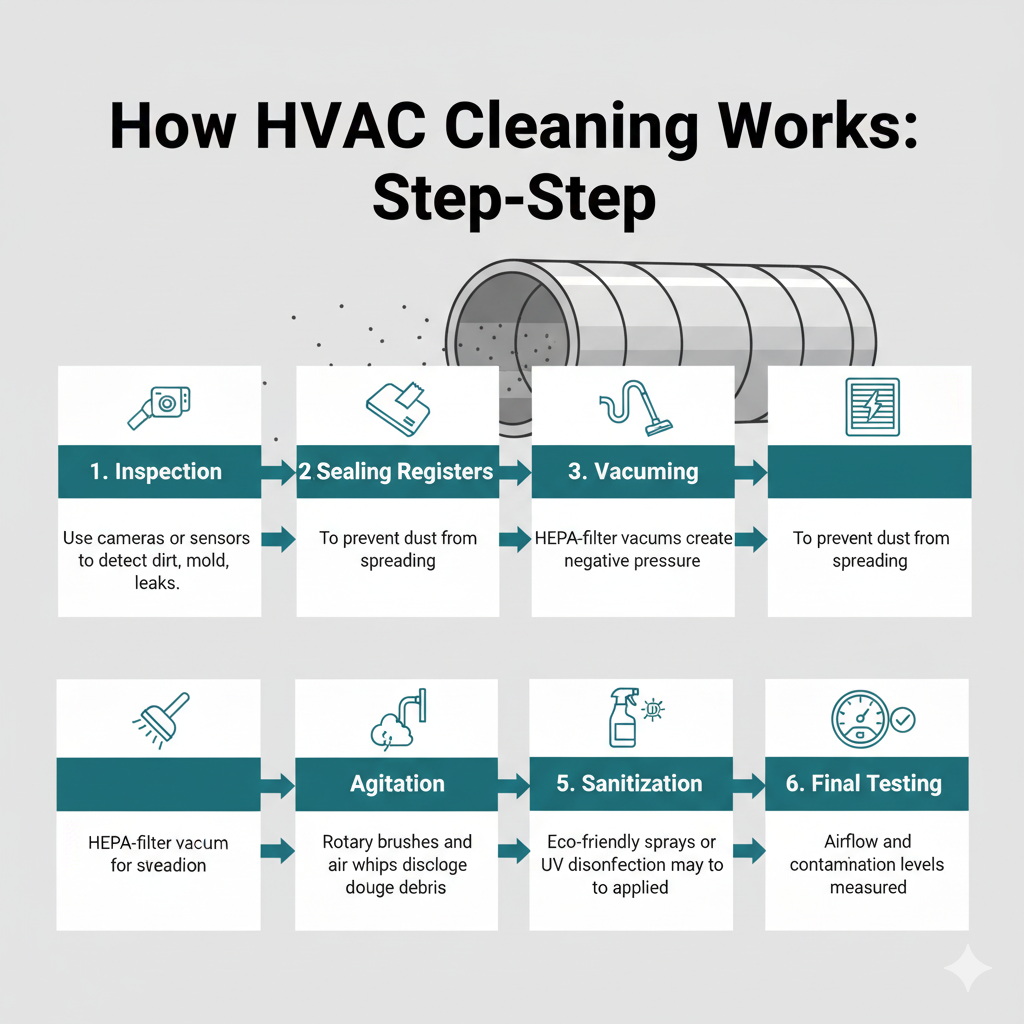
How HVAC Cleaning Works: Step-by-Step
- Inspection – Use cameras or sensors to detect dirt, mold, leaks.
- Sealing Registers – To prevent dust from spreading.
- Vacuuming – HEPA-filter vacuums create negative pressure.
- Agitation – Rotary brushes and air whips dislodge debris.
- Sanitization – Eco-friendly sprays or UV disinfection may be applied.
- Final Testing – Airflow and contamination levels measured.
🔗 Related Topics: “UV Light Disinfection Guide”
Cost Comparison: US vs Pakistan
| Country | Average Cost (Home) | Service Frequency | Certification |
|---|---|---|---|
| USA | $300–$600 | Every 3–5 years | NADCA, EPA guidelines |
| Pakistan | PKR 10,000–25,000 (few providers) | On complaint basis | No official certifications |
In the US, it’s seen as preventive health investment. In Pakistan, it’s considered optional luxury.
DIY vs Professional Cleaning
- DIY: Vacuum vents, change filters, and dust registers. Good for surface cleaning but can’t reach deep ducts.
- Professional: Advanced vacuums, negative air pressure systems, eco-friendly sanitizers. Necessary for mold/pest removal.
Regional Adoption & Future Trends
- US & Canada: Multi-billion dollar industry, tied to real estate inspections.
- Middle East: Growing, due to extreme AC dependency.
- Pakistan: Very limited, but demand will rise as pollution, asthma, and smog awareness grows.
Eco-Friendly HVAC Cleaning Options
- UV Light Sterilization (kills mold/bacteria).
- Plant-Based Sanitizers (non-toxic sprays).
- HEPA Filtration for particle capture.

This is especially important for households with kids, elderly, or asthma patients.
FAQs (Air Duct & HVAC Cleaning Services)
Q1: How often should HVAC ducts be cleaned?
Every 3–5 years, or sooner if you see mold, pests, or heavy dust.
Q2: Does duct cleaning reduce energy bills?
Yes. Studies show a 20–30% drop in energy use after cleaning.
Q3: Can dirty ducts make you sick?
Yes. They worsen allergies, asthma, and may spread bacteria/mold.
Q4: Is duct cleaning common in Pakistan?
Not yet. Only a few professional companies in major cities offer it.
Q5: How do I know if ducts need cleaning?
Signs include weak airflow, bad odors, dust buildup on vents, or allergy flare-ups.
Q6: Is chemical cleaning safe?
Avoid harsh chemicals. Choose eco-friendly or steam/UV sanitization methods.
Q7: How long does a professional service take?
Typically 2–4 hours for a standard home.
Q8: Can I clean ducts myself?
Basic vent vacuuming is possible, but deep cleaning needs professional tools.
Expert Advice: Air Duct & HVAC Cleaning Services
Air duct and HVAC cleaning may not be a trending service in Pakistan today, but with rising pollution, smog, and asthma cases, it’s only a matter of time before people realize its importance.
The US industry proves that this service is not just a luxury — it’s a necessity. Locally, early adopters (service providers and households) can enjoy healthier homes, reduced bills, and a safer environment.
Cleaning the air you breathe daily should never be an afterthought.







One Comment