







Introduction: Why Stored Grain Pest Control Matters More Than Ever
Stored Grain Pest Control is one of the most overlooked areas in the pest management industry, especially across developing markets like Pakistan and Southeast Asia. Warehouses and godowns that store wheat, rice, pulses, and other grains often become hotspots for insects, mites, rodents, and mold — causing major financial losses.
Pests like Tribolium castaneum (red flour beetle), Sitophilus oryzae (rice weevil), and Trogoderma granarium (khapra beetle) can wipe out entire stocks in weeks if not properly managed.

1. The True Cost of Ignoring Stored Grain Pest Control
According to the UN’s Food and Agriculture Organization (FAO), post-harvest losses caused by stored grain pests exceed 20% globally. In countries like Pakistan and India, this number can rise to 30–35% due to poor infrastructure and humidity.
Ignoring stored grain pest control not only reduces profitability but can also:
- Damage brand reputation in export markets.
- Lead to rejected consignments.
- Increase insurance claims and audits.
- Affect workers’ health due to infestation.

2. Understanding Stored Grain Pests
The first step to successful control is knowing your enemy. Common stored grain pests include:
| Pest Name | Common Name | Damage Type |
|---|---|---|
| Sitophilus oryzae | Rice Weevil | Eats into whole grains |
| Tribolium castaneum | Red Flour Beetle | Damages flour & milled grains |
| Trogoderma granarium | Khapra Beetle | Extremely resistant; hard to eliminate |
| Rhyzopertha dominica | Lesser Grain Borer | Turns grain to powder |
| Oryzaephilus surinamensis | Saw-toothed Grain Beetle | Attacks packaged grains |
3. B2B Relevance: Why Warehouses & Godowns Need Specialized Pest Plans
While homeowners focus on cockroaches or termites, businesses need industrial-level fumigation and monitoring systems. For warehouses, stored grain pest control is more than a cleaning job — it’s about maintaining supply chain integrity.
Key B2B benefits include:
- Compliance with ISO 22000 and HACCP standards.
- Reduced spoilage and improved shelf life.
- Strengthened supplier-customer trust.
- Preventing contamination lawsuits and export bans.

4. How Stored Grain Pest Control Works (Step-by-Step Process)
Professional services follow a structured process:
- Initial Inspection & Risk Assessment – Identifying pest type, damage level, and humidity.
- Sanitation & Cleaning – Removing residual grain dust, old stock, and organic matter.
- Chemical / Non-Chemical Treatment – Applying controlled fumigation or natural repellents.
- Monitoring Systems – Installing pheromone traps, temperature & humidity sensors.
- Documentation & Reporting – For regulatory compliance and insurance claims.
5. Advanced Fumigation & Controlled Atmosphere Technology
Modern grain protection uses CO₂ fumigation and nitrogen-rich environments that suffocate pests without leaving harmful residues. IoT-enabled sensors help monitor gas concentration and humidity remotely.
Techniques include:
- Phosphine gas fumigation – traditional, cost-effective.
- Controlled Atmosphere (CA) storage – oxygen depletion to below 2%.
- Modified atmosphere packaging (MAP) – extends product shelf life naturally.

6. Natural & Eco-Friendly Stored Grain Pest Control
The world is moving toward chemical-free pest control, especially for food-grade facilities. Eco options include:
- Neem oil sprays – disrupt insect growth.
- Diatomaceous earth (DE) – kills pests by dehydrating them.
- Lavender & eucalyptus essential oils – natural repellents.
- Solar heating – raises temperatures to lethal pest levels.
7. Common Mistakes During Stored Grain Pest Control
Even experienced warehouse managers make costly errors:
- Ignoring pre-fumigation cleaning.
- Using cheap, expired fumigants.
- Failing to seal godowns completely.
- Mixing infested and fresh grain stocks.
- Not monitoring fumigation levels with sensors.

8. Safety & Legal Compliance
For B2B contracts, stored grain pest control must comply with:
- PSQCA food safety standards.
- FAO and WHO pesticide residue guidelines.
- Local labor safety laws on fumigation.
Companies must train staff, wear PPE, and maintain proper MSDS (Material Safety Data Sheets).
9. Digital Transformation: IoT & Smart Sensors
IoT-enabled warehouses now track pest activity through motion, heat, and humidity sensors. These smart systems:
- Detect infestation early.
- Reduce fumigation costs by up to 40%.
- Create audit-ready digital logs.

10. Cost Analysis & ROI
For warehouses storing 10,000+ tons, annual pest management costs are 0.5–1% of total inventory — yet they prevent 20–25% potential losses.
A professional pest control contract is an investment, not an expense.
Conclusion: Smart Prevention Beats Costly Reaction
Stored Grain Pest Control ensures every ton of food stored is safe, compliant, and export-ready. For Pakistan and neighboring regions, adopting modern B2B pest management will boost food security, trade reliability, and economic value.
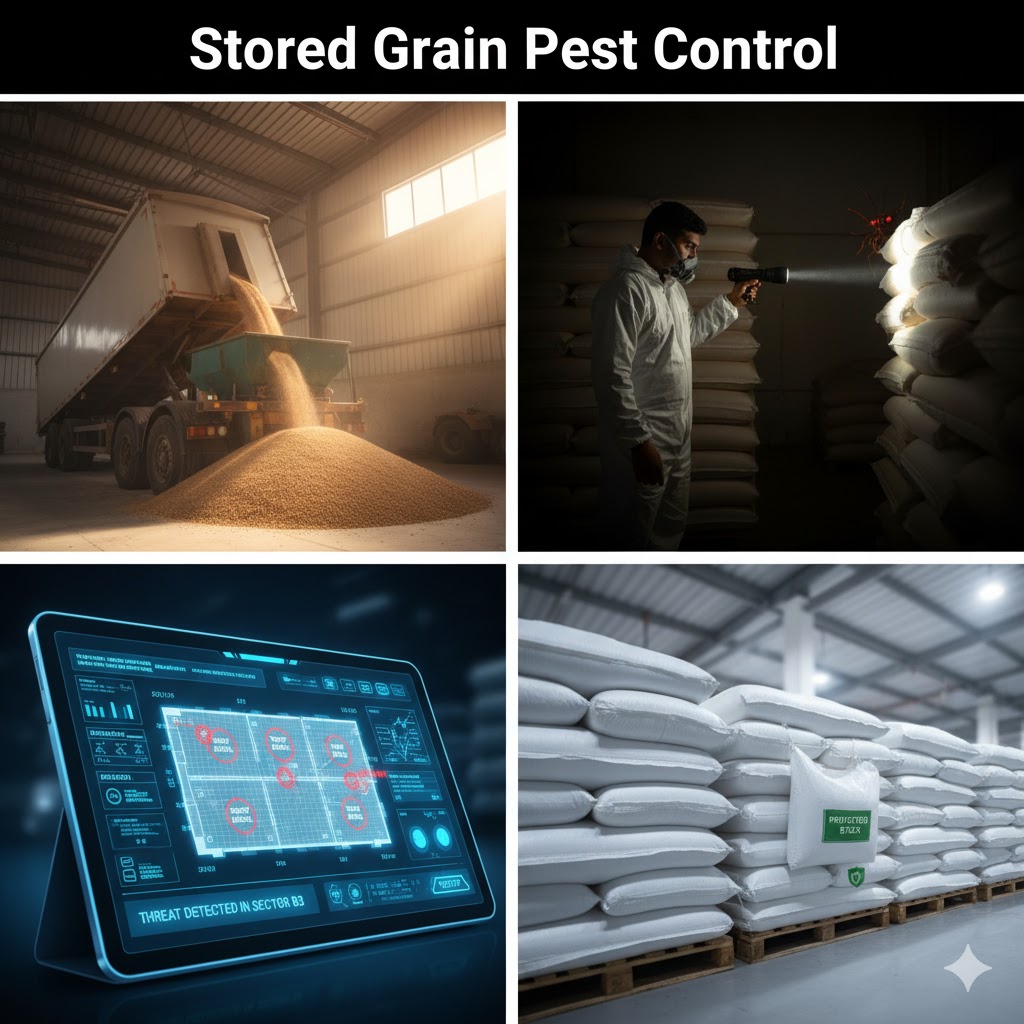
FAQs: Stored Grain Pest Control (2025 Edition)
- What is stored grain pest control?
It’s a process of protecting grains from pests in warehouses or godowns using fumigation and monitoring. - Which are the most common stored grain pests?
Rice weevil, red flour beetle, and khapra beetle. - How often should fumigation be done?
Every 3–6 months or after each grain rotation cycle. - Is chemical fumigation safe for food storage?
Yes, when certified and monitored by professionals. - Can natural pest control methods replace fumigation?
In small setups, yes — neem and DE are effective options. - What is the best temperature to store grains?
Below 25°C with humidity under 60%. - How does IoT help in stored grain pest control?
Sensors track moisture and insect movement for early alerts. - Do warehouses in Pakistan follow global pest control standards?
Few do — but awareness is growing among exporters. - Can pest control affect grain taste or quality?
Properly done fumigation leaves no residue. - What is pre-construction soil treatment in warehouses?
It’s a preventive chemical barrier applied before building to block termite or beetle entry.