





Why Professional Water Tank Cleaning Services Matter Globally
Whether in a home, apartment building, commercial workspace, hospital, hotel, industrial facility, or school—water quality determines health, comfort, and safety.
Even if water appears clean, storage tanks accumulate:
- Sludge
- Sand
- Dirt & debris
- Bacteria & fungus
- Algae
- Rust & scaling
- Harmful contaminants
Globally, millions suffer from waterborne diseases simply because water tanks are not cleaned regularly or properly.

This is where professional water tank cleaning services play an essential role. Unlike DIY cleaning, professional companies use advanced tools, certified technicians, and WHO-approved disinfectants to ensure tanks are 100% safe.
What Are Professional Water Tank Cleaning Services?
Professional water tank cleaning services include deep cleaning, sludge removal, disinfecting, scrubbing, pressure washing, and sanitization for all types of storage tanks such as:
- Overhead tanks
- Underground tanks
- Plastic (PVC) tanks
- Concrete tanks
- Stainless steel tanks
- Industrial reservoirs
These services follow international hygiene standards and ensure stored water is safe for drinking, cooking, bathing, and cleaning.
Why Regular Tank Cleaning Is Important (Global Standards)
According to WHO and EPA guidelines, water should remain free from biological and chemical contamination.
Professional tank cleaning ensures:
✔ Safe drinking water
✔ Prevention of bacterial growth (E. coli, Salmonella, Legionella)
✔ Removal of accumulated sludge
✔ No bad smell or color
✔ Healthier skin and hair
✔ Protection for household appliances
✔ Longer tank lifespan
Worldwide, it is recommended to clean tanks every 6–12 months, depending on water quality and usage.
The Professional Water Tank Cleaning Process (Step-by-Step)
Professional companies use a structured, 6–8 step process:

Step 1: Inspection & Water Quality Assessment
Technicians check:
- Tank condition
- Sludge level
- Entry points
- Water contamination
- Leakages or cracks
Step 2: Draining the Tank
Industrial pumps safely remove water without damaging tank walls.
Step 3: Sludge Removal
Manual and mechanical tools scrape out:
- Sand
- Dirt
- Black sludge
- Settled debris
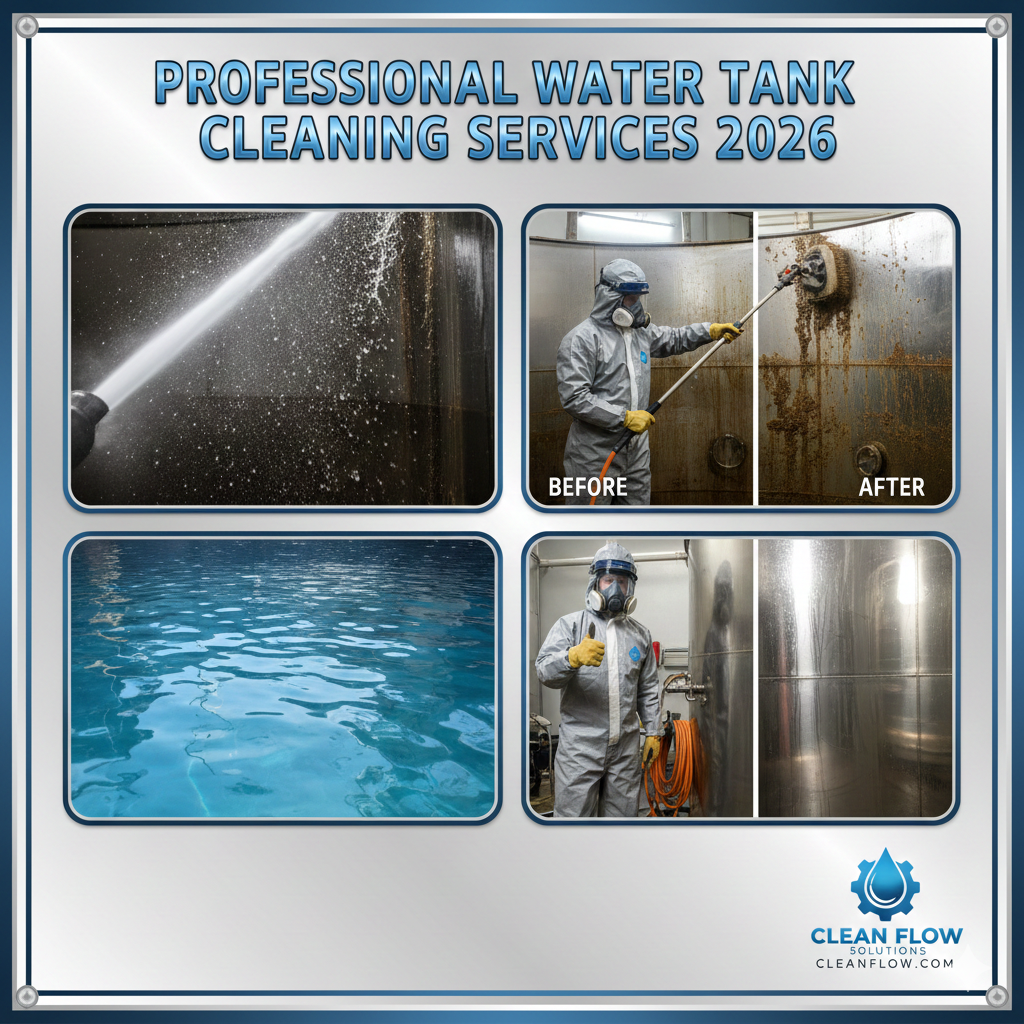
Step 4: High-Pressure Jet Cleaning
Pressure washers eliminate:
- Algae
- Mud
- Bacterial film
- Mineral scaling
Step 5: Vacuum Cleaning
Wet vacuums ensure no residue remains at the bottom.
Step 6: Disinfection & Sanitization
Professional-grade disinfectants are applied:
- Chlorine solution
- UV disinfection
- WHO-approved chemicals
Step 7: Rinsing & Drying
Tanks are triple-rinsed to ensure no chemical traces remain.
Step 8: Final Inspection
Technicians recheck all surfaces before refilling the tank.
Source:
- World Health Organization (WHO) — Drinking-Water Quality Guidelines
- Environmental Protection Agency (EPA) — Drinking Water Standards and Regulations (USA)
Residential Water Tank Cleaning Services
Homes and apartments typically use:
- Plastic tanks
- Fiber tanks
- Concrete underground tanks
Professionals ensure:
- Clean drinking water
- No foul odor
- Healthy showers
- Safe cooking water
For families with children or elderly members, regular cleaning is essential.
Commercial & Industrial Tank Cleaning Services
Businesses require stricter hygiene:
✔ Hotels & restaurants
Prevent food contamination risks.
✔ Hospitals
Maintain sterile water for equipment and use.
✔ Schools & offices
Provide safe water to staff and students.
✔ Factories, warehouses & industries
Remove chemical contaminants and residue.
Global Cost of Water Tank Cleaning Services (Approximate Range)
Costs vary by country, tank size, and service provider:
| Region | Residential | Commercial |
|---|---|---|
| USA | $150–$500 | $500–$3,000 |
| UK | £100–£400 | £300–£2,500 |
| UAE | AED 150–500 | AED 500–2,000 |
| India | ₹500–₹3,000 | ₹3,000–₹15,000 |
| Pakistan | PKR 1,000–5,000 | PKR 5,000–30,000 |
How to Choose the Best Professional Water Tank Cleaning Company
✔ Look for certified technicians
✔ Use of eco-friendly disinfectants
✔ Experience with both small & large tanks
✔ High-pressure jet & vacuum tools
✔ Transparent pricing
✔ Online reviews and ratings
✔ Guarantee of quality
What Chemicals Do Professionals Use?

- Chlorine-based disinfectants
- Hydrogen peroxide
- FDA/WHO-approved sanitizers
- UV sterilization tools
- Eco-friendly solutions
All chemicals used are safe, residue-free, and globally accepted.
DIY Tank Cleaning vs. Professional Cleaning
| Feature | DIY | Professional |
|---|---|---|
| Time | Long | Fast |
| Tools | Limited | Industrial-grade |
| Safety | Moderate | High |
| Disinfection | Basic | Advanced |
| Long-Term Protection | Low | High |
Professional cleaning ensures complete hygiene, safety, and minimal risk.
How Often Should Water Tanks Be Cleaned? (Global Guide)
Every 6 months → Homes
Every 3–4 months → Hotels, restaurants, hospitals
Every 1–2 months → Industries
FAQs
1. How long does professional tank cleaning take?
Usually 45 minutes to 2 hours depending on size.
2. Is the water safe immediately after cleaning?
Yes, once the tank is rinsed and refilled.
3. Are chemicals used harmful?
No. Professionals use safe, approved, residue-free disinfectants.
4. How often should I clean my water tank?
Every 6 months for homes; 3 months for commercial facilities.
5. Do professionals clean all tank types?
Yes—plastic, concrete, steel, fiber, overhead, underground, and industrial tanks.
Final Thoughts
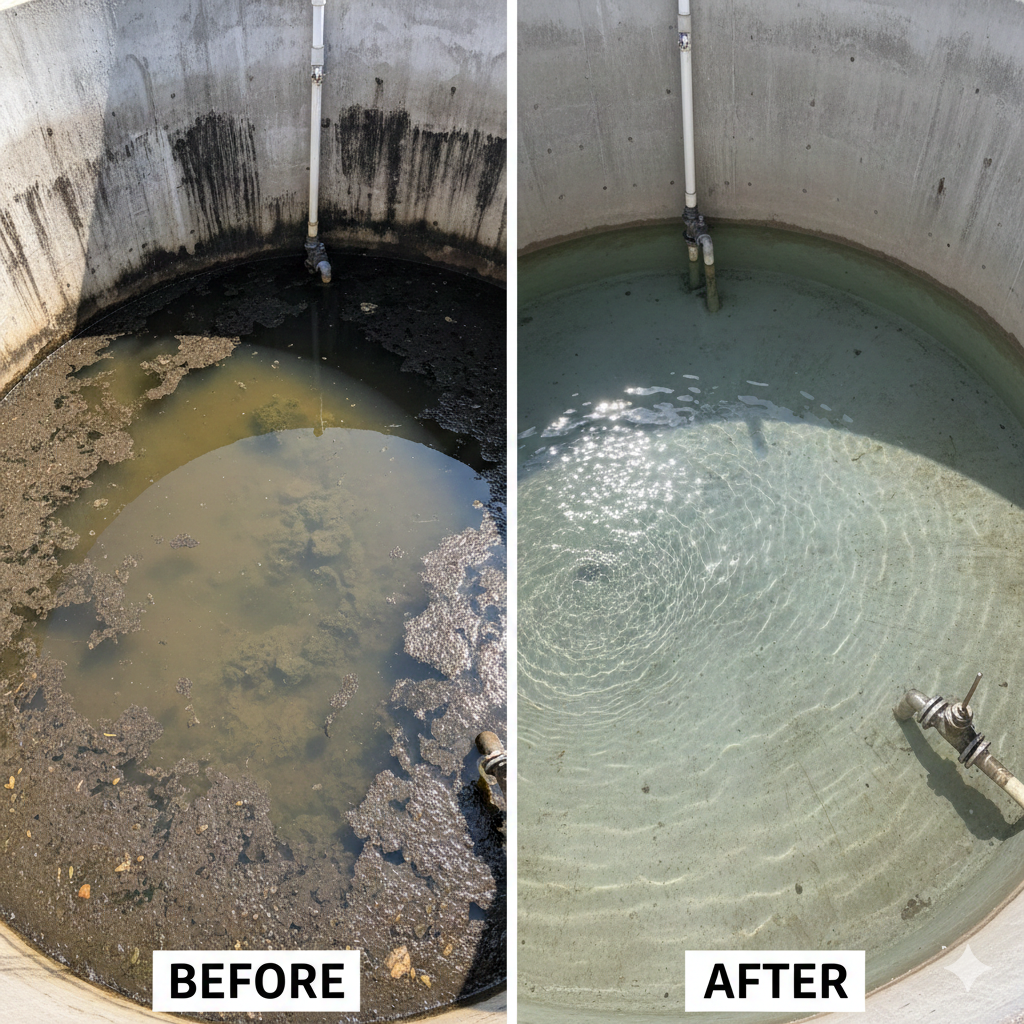
Professional water tank cleaning services are essential worldwide to maintain safe, clean, and hygienic water for homes, offices, hospitals, and industries. With advanced tools, certified technicians, and global hygiene standards, professional cleaning ensures the removal of sludge, bacteria, algae, and harmful contaminants.
Whether you manage a household or a multinational facility, regular tank cleaning is a small investment with huge health benefits.