





Introduction: The New Era of Ceilings Has Arrived
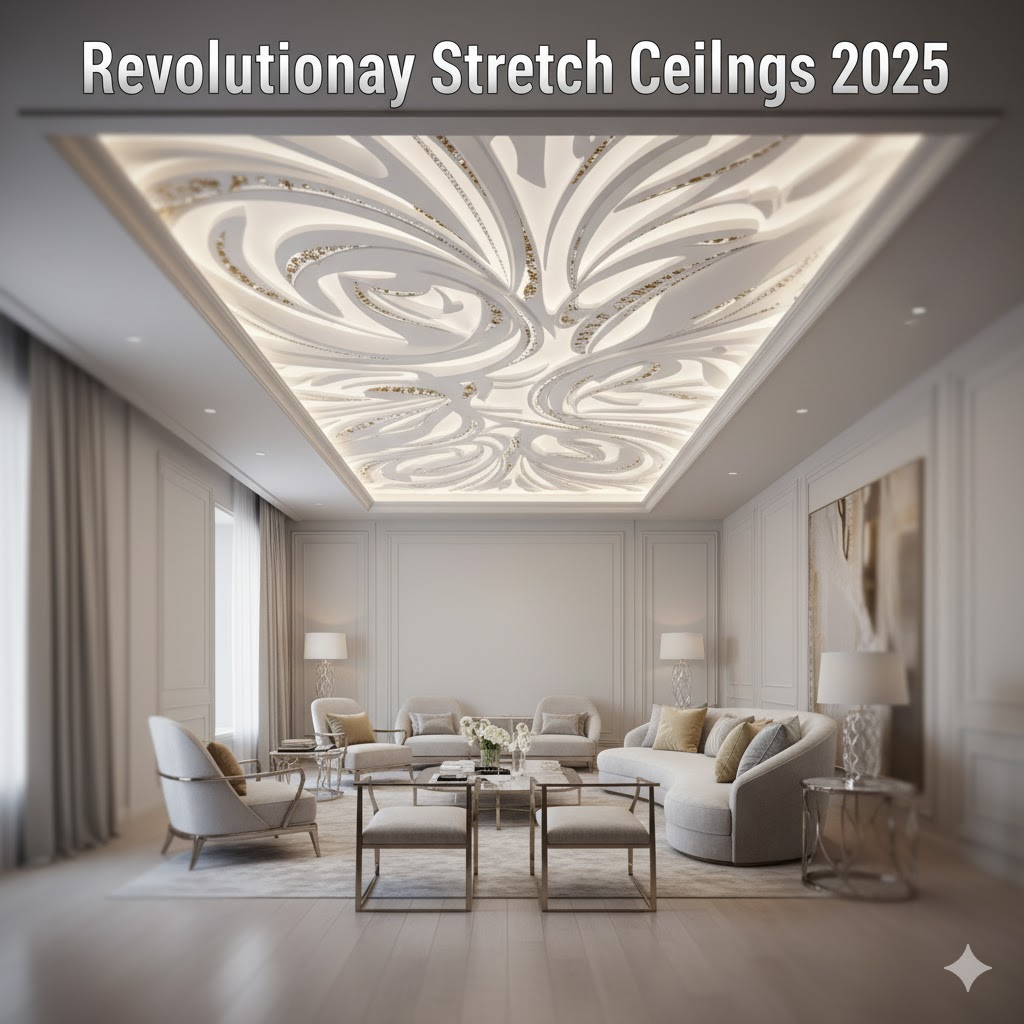
3D printed stretch ceilings are reshaping the way we think about interior design. No longer just a flat surface, ceilings are becoming a canvas for light, color, texture, and artistic expression. The fusion of 3D printing technology and PVC or fabric-based stretch materials has opened a new frontier — where every ceiling can be custom-built, digitally printed, and uniquely illuminated.
This isn’t the future — it’s happening now in 2025. From luxury apartments to commercial showrooms, architects are adopting 3D printed stretch ceilings for their precision, sustainability, and stunning visual appeal.
What Are 3D Printed Stretch Ceilings?
A 3D printed stretch ceiling combines two modern innovations:
- Stretch membrane technology — a durable, flexible material (usually PVC or polyester fabric) stretched across a lightweight aluminum frame.
- 3D printing — high-resolution printing technology that creates intricate visuals, patterns, or textures directly on the stretch film.
The result? A ceiling that isn’t just functional — it’s a piece of art.
Why Designers Love 3D Printed Stretch Ceilings
- Ultra-Customizable: Print any design — from marble and galaxy effects to geometric patterns or brand logos.
- Light Integration: Combine LEDs, fiber optics, and RGB strips for immersive ambient lighting.
- Seamless Installation: Quick, clean, and no mess compared to traditional gypsum ceilings.
- Eco-Friendly: Uses less material and reduces renovation waste.
- Durable & Washable: Resistant to moisture, dust, and stains, making it ideal for restaurants, homes, and offices.

The Technology Behind 3D Printed Stretch Ceilings
3D printing technology in interiors relies on UV-curable inks and large-format printers capable of printing directly onto flexible films. The process includes:
- Creating a digital ceiling model using 3D design software.
- Printing high-definition textures (wood grain, marble, metallic shine, etc.).
- Stretching the printed film over a lightweight aluminum frame.
- Integrating LED panels or backlighting systems for visual depth.
This digital precision ensures color accuracy, symmetry, and seamless finishing — perfect for architects aiming for futuristic yet practical spaces.

Design Versatility: Where Art Meets Architecture
From residential villas to luxury retail stores, the adaptability of 3D printed ceilings is limitless. Here are some popular applications:
- Home Interiors: Living rooms, bedrooms, and kitchens benefit from personalized themes like clouds, constellations, or floral 3D prints.
- Corporate Spaces: Add branding or inspirational graphics to make conference rooms stand out.
- Hospitality Industry: Hotels, lounges, and restaurants love these ceilings for ambiance and aesthetics.
- Wellness Spaces: Printed sky or forest themes enhance calmness in spas or clinics.
🔗 Related Read: Stretch Ceiling Designs 2025: Top Trends in Modern Interiors

Sustainability and Eco-Friendly Benefits
In an era focused on green construction, 3D printed stretch ceilings shine as a sustainable solution:
- Minimal waste during installation.
- 100% recyclable PVC materials.
- Long-lasting (up to 20 years).
- Energy-efficient lighting options.
External certification standards such as LEED Green Building recognize the environmental benefits of such systems.

Aesthetic Impact: Turning Ceilings into Experiences
Imagine walking into a living room where the ceiling displays a galaxy that glows softly at night or a restaurant where waves seem to ripple overhead.
3D printing transforms ceilings into immersive storytelling surfaces, allowing homeowners and designers to align the ceiling design with the room’s emotion, purpose, and brand message.
Installation Process: Precision and Speed
- Measure and digitally design the ceiling layout.
- Print the selected 3D image or texture.
- Mount the perimeter aluminum frames.
- Stretch the membrane under controlled heat.
- Integrate lighting systems.
- Final touch-ups and visual alignment.
Unlike plaster ceilings, this process is clean and quick — typically completed within one to two days.
🔗 Learn More: How Stretch Ceilings Improve Acoustic and Visual Comfort

Cost and Maintenance
Prices vary based on:
- Material quality (PVC vs. fabric)
- Printing complexity
- Lighting integration
- Room size and design
However, the long-term savings are significant — low maintenance, minimal cleaning, and exceptional durability.
External experts like Architectural Digest highlight stretch ceilings as a “smart investment for contemporary interiors.”

Comparison: 3D Printed vs. Traditional Ceilings
| Feature | 3D Printed Stretch Ceilings | Traditional Ceilings |
|---|---|---|
| Design Options | Unlimited digital printing | Limited paint textures |
| Installation Time | 1–2 days | 5–10 days |
| Maintenance | Easy cleaning | Needs repainting |
| Lighting Integration | Seamless LED fit | Complex wiring |
| Durability | 15–20 years | 5–8 years |
Future Outlook: The Ceiling Revolution Continues
In the near future, AI-powered design generators will allow users to upload a room photo and instantly visualize stretch ceiling styles that match it.
This integration of AI + 3D printing will make custom ceilings accessible to every homeowner, not just luxury clients.

🧠 FAQs – 3D Printed Stretch Ceilings
1. What is a 3D printed stretch ceiling?
It’s a digitally printed flexible film stretched over a frame, creating decorative and durable ceiling designs.
2. Are 3D printed ceilings durable?
Yes, they typically last 15–20 years with proper care.
3. Can these ceilings include lighting?
Absolutely — LEDs, fiber optics, and RGB effects can be seamlessly built in.
4. Are they safe for homes?
Yes, they’re made from non-toxic, fire-resistant materials.
5. What designs are possible?
Virtually anything — patterns, sky views, art textures, or custom branding.
6. How much does it cost?
Costs vary, but they’re often cheaper than full false ceiling installations when considering longevity.
7. Can I use 3D printed ceilings in bathrooms or kitchens?
Yes, they’re moisture-resistant and ideal for such spaces.
8. How are these different from painted ceilings?
They offer 3D depth, backlighting, and digital texture precision that paint can’t achieve.
9. Is installation messy?
No — it’s quick, dust-free, and often done in a day.
10. Where can I buy or order them?
Available through modern interior suppliers and online ceiling design specialists.
Expert Review: The Future is Overhead
3D printed stretch ceilings represent more than a design choice — they’re a statement of innovation and creativity.
They merge art, light, and technology into one surface, creating interiors that feel futuristic yet warm.
As sustainability, customization, and digital precision define the future of interior art — the ceiling is no longer an afterthought, but the centerpiece of design itself.