




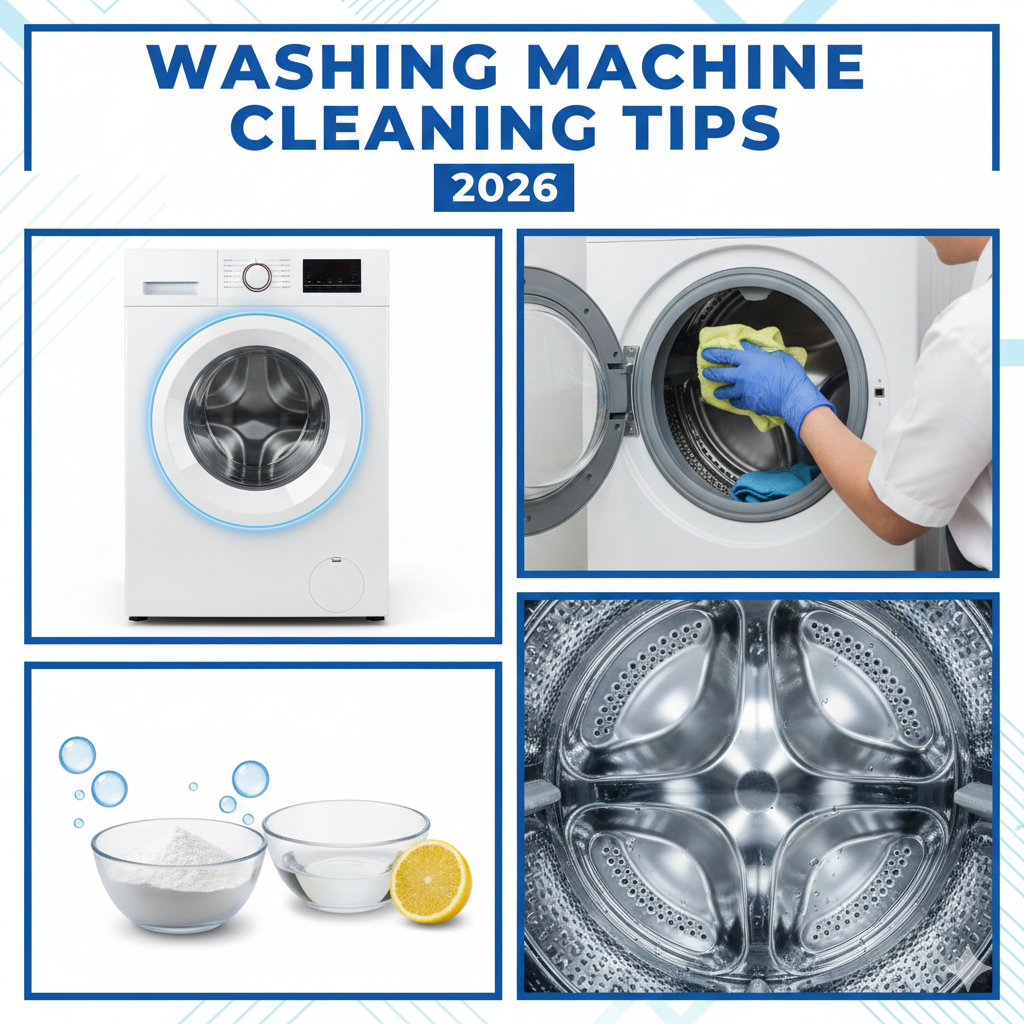
Washing machine cleaning tips are essential to maintain a fresh, odor-free, and highly efficient washer in every home. In 2026, households are increasingly prioritizing hygiene and appliance efficiency, making washer cleaning more important than ever. Whether you use a top-load or front-load machine, regular cleaning helps prevent mold, detergent residue, foul smells, and performance issues.
This comprehensive article explains step-by-step cleaning, expert maintenance techniques, common issues, deep cleaning tricks, and professional recommendations to keep your washing machine running like new.
Why Washing Machine Cleaning Is Essential in 2026
Modern washing machines are designed for convenience, but they accumulate:
- Detergent residue
- Fabric softener buildup
- Mold and mildew
- Bacteria and germs
- Odors from damp clothes
- Hard water deposits
Leaving your machine uncleaned for long periods leads to:

✔ Foul Smells
Moisture and residue cause bacterial growth.
✔ Dirty Clothes
Your clothes won’t smell fresh even after washing.
✔ Higher Electricity Consumption
A dirty machine struggles to function efficiently.
✔ Mold Growth
Especially in front-loaders with rubber gaskets.
✔ Reduced Lifespan
Unclean washers break down more often.
Signs Your Washing Machine Needs Immediate Cleaning
If you notice any of these signs, your washer needs urgent cleaning:
- Damp, musty, or foul smell inside drum
- Clothes smell bad after washing
- Visible black spots on rubber seals
- Water draining slowly
- Thick detergent residue inside the dispenser
- Excessive vibration
- Poor spinning performance
- Increased noise during cycles
- Dirty water marks on clothes
If you notice two or more signs, a deep clean is mandatory.
Simple Daily Washing Machine Cleaning Tips (Fast & Easy)
These habits keep your washer fresh daily:

1. Leave the Door Open After Washing
Prevents moisture buildup and mold.
2. Wipe the Drum with a Dry Cloth
Avoids lingering dampness.
3. Remove Clothes Immediately
Wet clothes produce bacteria within minutes.
4. Clean the Rubber Seal After Every Use
Remove hair, lint, detergent, and soap scum.
5. Shake Out Lint Traps
Especially for top-load machines.
Weekly Washing Machine Cleaning Routine
Perform these steps once a week:
Step 1: Run a Hot Water Cycle
Kills odor-causing bacteria.
Step 2: Use White Vinegar
Add 2 cups of white vinegar into the drum for natural deodorization.
Step 3: Clean the Detergent Tray
Scrub accumulated detergent crystals.
Step 4: Wipe the Rubber Seals
Use a brush or microfiber cloth soaked in warm soapy water.
Step 5: Dry the Machine Thoroughly
A dry washer stays mold-free.
Source:
Monthly Deep Cleaning (2026 Expert Guide)
This is the most effective method to remove stubborn dirt, mold, and detergent sludge.

Step-by-Step Cleaning for Front-Load Washing Machines
Front-load washers need extra attention because of moisture retention.
Step 1: Clean the Drum with Baking Soda + Vinegar
- Add ½ cup baking soda to drum
- Add 2 cups vinegar to detergent tray
- Run the hottest cycle
This combo removes odors, mold, and soap buildup.
Step 2: Scrub the Rubber Gasket
Use:
✔ Warm soapy water
✔ Old toothbrush
✔ Microfiber cloth
✔ Vinegar spray
Remove lint, coins, tissues, detergent scum, and black mold.
Step 3: Clean the Detergent Dispenser
Remove it completely and scrub until residue-free.
Step 4: Clean the Drain Pump Filter
Most people forget this step!
- Locate the filter at bottom front panel
- Remove cover
- Place a tray below
- Open slowly to drain dirty water
- Remove lint, coins, and debris
Step 5: Rinse & Dry
Wipe all surfaces and keep the door open for 12–24 hours.
Step-by-Step Cleaning for Top-Load Washing Machines
Top-load washers are easier to maintain.
Step 1: Fill with Hot Water
Set washer to the highest water level and hottest temperature.
Step 2: Add Vinegar + Baking Soda
- 4 cups vinegar
- 1 cup baking soda
Let soak for 1 hour, then run a full cycle.
Step 3: Clean Under Agitator (if removable)
Hidden dirt often collects here.
Step 4: Scrub Inside Walls
Use a soft brush and dish soap.
Step 5: Rinse Twice
Ensures no residue remains inside.
Best Natural Cleaners for Washing Machines (2026 Edition)
1. White Vinegar
Disinfects and deodorizes.
2. Baking Soda
Removes stains and neutralizes odors.
3. Lemon Juice
Breaks down mineral deposits.
4. Hydrogen Peroxide
Kills mold in seals and gaskets.
5. Tea Tree Oil
Natural anti-fungal cleaner.
Best Commercial Cleaners for Washing Machines (Safe & Effective)
- Affresh Washing Machine Cleaner
- Tide Washing Machine Cleaner
- Oxiclean Washing Machine Booster
- Lysol Laundry Sanitizer
- Clorox Washing Machine Cleaner
Use once a month for deep sanitation.
Washing Machine Maintenance Tips (Expert Advice 2026)
✔ Avoid Using Too Much Detergent
Excess soap causes buildup and mold.
✔ Use High-Efficiency (HE) Detergents
Especially for front-load washers.
✔ Clean the Lint Filter Regularly
Avoids drainage blockages.
✔ Do Not Overload
Strains motor, reduces wash quality.
✔ Check the Inlet Filter
Hard water causes blockages.
✔ Clean the Drain Hose
Ensures proper water flow.
✔ Run a Sanitize Cycle Every Month
Keeps your machine germ-free.
How Often Should You Clean Your Washing Machine?
| Cleaning Task | Frequency |
|---|---|
| Wipe drum + seals | Daily |
| Vinegar quick clean | Weekly |
| Full deep cleaning | Monthly |
| Drain pump cleaning | Every 2–3 months |
| Professional service | Every 6–12 months |
Common Washing Machine Problems & Solutions
1. Bad Smell
Cause: Mold, residue
Fix: Hot water + baking soda + vinegar cycle
2. Black Mold in Gasket
Cause: Moisture
Fix: Hydrogen peroxide + toothbrush scrub
3. Clothes Not Smelling Fresh
Cause: Dirty drum
Fix: Monthly deep cleaning
4. Water Not Draining
Cause: Clogged filter
Fix: Clean drain pump
5. Machine Vibrates Excessively
Cause: Unbalanced load
Fix: Balance clothes properly
Professional Washing Machine Cleaning vs DIY – Which Is Better?
| Feature | DIY Cleaning | Professional Cleaning |
|---|---|---|
| Cost | Free–Low | Higher |
| Deep Mold Removal | Moderate | Excellent |
| Internal Part Cleaning | Limited | Complete |
| Time Required | More | Less |
| Safety | Good | Professional-grade |
For heavily soiled machines, professional cleaning is recommended every 6–12 months.
Also Read: Amazing Microwave Cleaning Service 2026 – Get a Cleaner, Odor-Free Kitchen Fast
Expert Advice

Keeping your washing machine clean is no longer optional in 2026—it is essential for fresh laundry, longer appliance life, and cost savings. By following these washing machine cleaning tips, you can eliminate mold, odors, detergent residue, and performance issues effortlessly.
A clean washer = clean clothes = healthier home.
Whether you choose DIY cleaning or professional service, regular maintenance will keep your washing machine functioning at peak efficiency for years.