





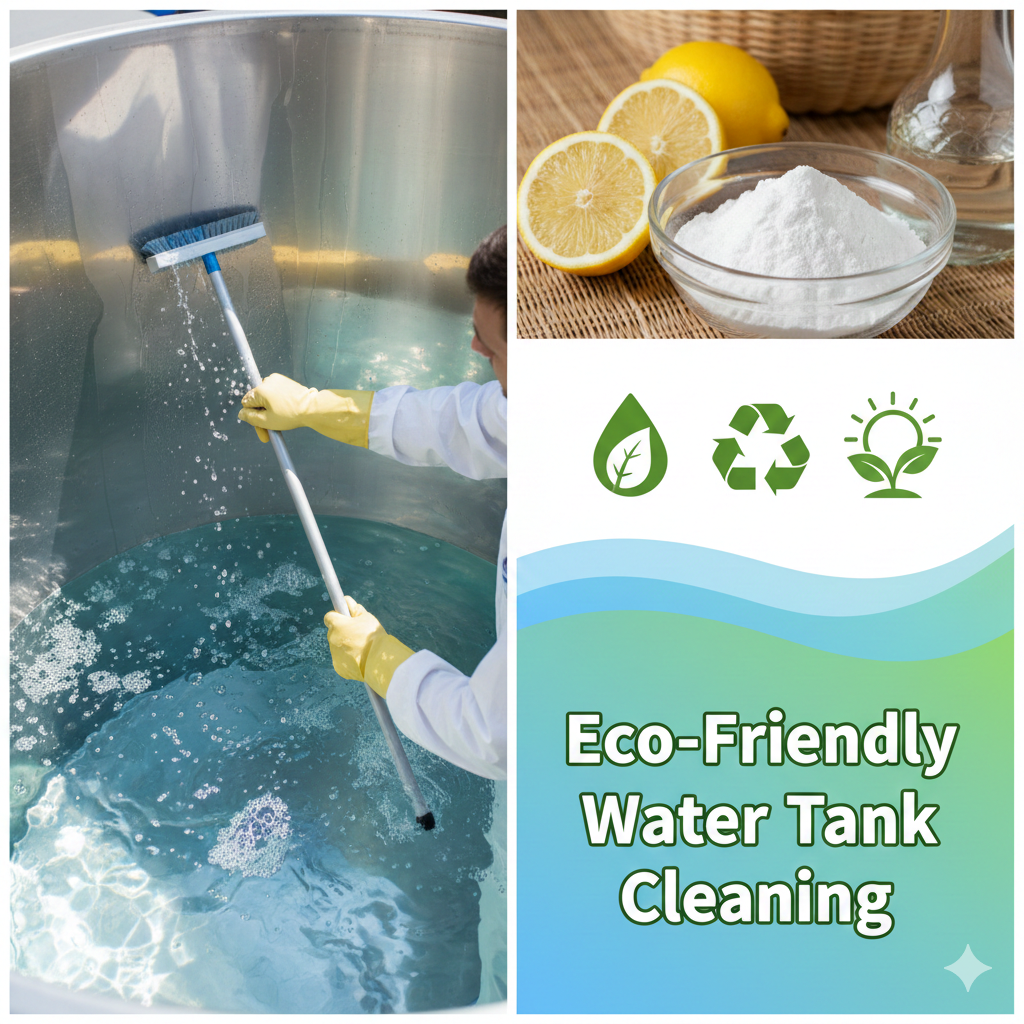
Keeping your home’s water tank clean is essential—but traditional cleaning methods often rely on harsh chemicals, heavy detergents, and toxic agents that can harm your health, damage your tank, and negatively impact the environment. That’s exactly where eco-friendly water tank cleaning comes in.
In this guide, we dive deep into green, safe, sustainable, and chemical-free water tank cleaning methods. Whether you use an underground tank, overhead tank, plastic (PVC) tank, or concrete tank, this article covers all the essentials.
Why Eco-Friendly Water Tank Cleaning Matters
Water is the most used resource in your home. You cook with it, bathe with it, clean with it—and in many households, you even drink it.

Still, water tanks often become contaminated due to:
- Mud, silt, and mineral buildup
- Bacteria, algae, and mold
- Rust and sediment
- Insects or pests
- Organic residue
Traditional cleaning uses chemicals like:
- Bleach
- Acids
- Chlorine
- Toxic detergents
These cleaners may remove dirt, but they leave behind dangerous chemical residue, polluting your water for weeks.
Eco-friendly tank cleaning solves this.
Benefits include:
- Zero toxic residues
- Safe for kids and pets
- Protects your tank’s internal coating
- Reduces environmental impact
- Prevents microbiological contamination naturally
- Works for all tank materials
- Cost-effective + sustainable
Types of Water Tanks That Can Be Cleaned Eco-Friendly
Eco-friendly cleaning methods work for all common tank types:
1. Plastic / PVC Tanks
- Lightweight, smooth surfaces
- Respond well to natural cleaners
2. Concrete Tanks
- Eco-friendly scrubs prevent erosion
- No need for acidic chemicals
3. Underground Water Tanks
- Mold & algae prevention with natural solutions
4. Overhead Water Tanks
- Easy to clean with manual eco-friendly techniques
5. Fiberglass Tanks
- Natural cleaners protect surface integrity
Eco-Friendly Water Tank Cleaning Methods (Step-by-Step)
Here is your deeply detailed, safe, and chemical-free cleaning guide.
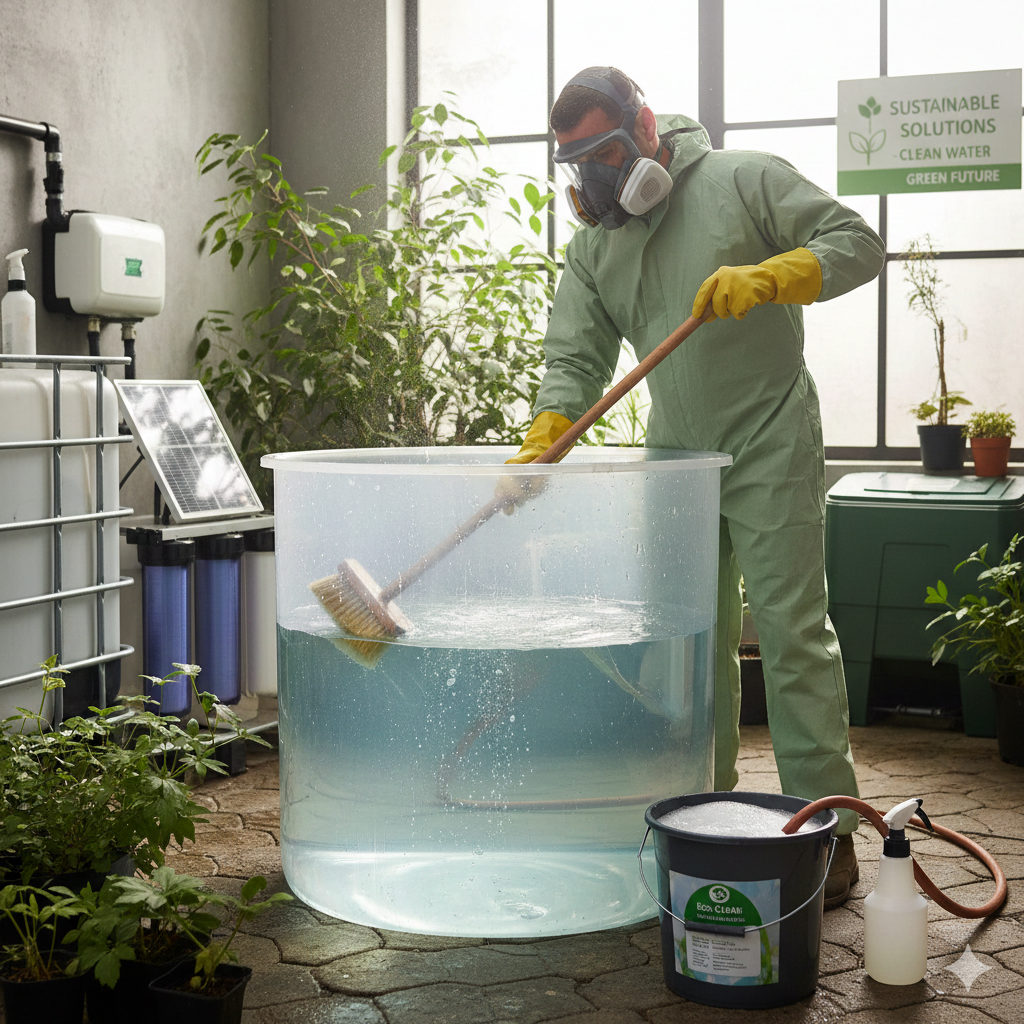
Method 1: Baking Soda + Vinegar Deep Clean (Non-Toxic)
Perfect for plastic, concrete, and cement tanks.
Why it works:
- Vinegar kills bacteria naturally
- Baking soda removes grime & bad odors
You Need:
- 4–6 cups baking soda
- 4–5 liters white vinegar
- Long-handled brush
- Clean microfiber cloth
- Bucket + mug
Steps:
1. Drain all the water
Remove water completely to allow full access to tank walls.
2. Prepare eco-friendly cleaning paste
Mix:
- 2 cups baking soda
- 1 cup water
Apply with a brush.
3. Scrub walls and floor
Use a non-metal brush to avoid scratches.
4. Pour vinegar
As you add vinegar, natural foaming action lifts dirt & bacteria.
5. Let it sit 30–45 minutes
This disinfects the tank gently.
6. Rinse thoroughly
Use clean water 2–3 times.
7. Final sun-dry (optional)
If tank is removable/open, let sunlight kill remaining microbes.
Also Read: Professional Sofa Cleaning Services 2026 – Trusted Experts for Deep Upholstery Care
Method 2: Eco-Friendly Moringa Powder Clarifier (Natural Water Purifier)
A traditional yet scientifically backed method!
Why it works:
Moringa seeds have natural antimicrobial properties.
Steps:
- Mix 2 tbsp moringa powder in 1 liter water
- Pour it into the tank
- Let sit for 20–30 minutes
- Scrub lightly
- Drain and rinse
Perfect for removing clay/mud sediment and organic impurities.
Method 3: Steam Cleaning (Zero Chemicals)
Best for homes using drinking water tanks.
Equipment:
- Portable steam cleaner
- Long steam wand
Process:
- Drain the tank
- Direct steam at walls, corners and base
- Steam melts bio-film, algae & bacteria
- Rinse with clean water
Benefits:
- 99.9% germ removal
- No residues
- Safe for infants, elderly & sensitive skin
Method 4: Lemon + Salt Natural Disinfectant
You Need:
- 10–12 fresh lemons
- 1 kg coarse salt
Steps:
- Cut lemons
- Mix juice with salt to form paste
- Scrub inside walls
- Let sit 10 mins
- Rinse and refill
Perfect for mild cleaning & odor removal.
Method 5: Hydrogen Peroxide Treatment (Eco-Safe Oxygen Cleaner)
Unlike bleach, peroxide is safe—it breaks down into water + oxygen.
Steps:
- Drain tank
- Add 1 liter of 3% hydrogen peroxide per 1000 liters
- Scrub walls
- Rinse thoroughly
- Refill
How Often Should You Clean Your Water Tank?
Here are professional eco-cleaning recommendations:
| Tank Usage | Cleaning Frequency |
|---|---|
| Drinking Water | Every 1–2 months |
| Bathing & kitchen use | Every 2–3 months |
| Underground tanks | Every 6 months |
| Commercial/residential buildings | Every 3 months |
How Eco-Friendly Cleaning Prevents Water Waste
Traditional methods waste up to 400–600 liters during a cleaning cycle.
Eco-friendly techniques reduce this by:

- Requiring minimal rinsing
- Using biodegradable agents
- Eliminating harsh chemical flushes
Eco-Friendly Tools Needed for Water Tank Cleaning
- Coconut fiber scrubber
- Long extension eco-brush
- Bamboo handle brushes
- Reusable microfiber cloths
- Eco-friendly buckets
- Solar drying (natural UV sanitization)
Source:
- EPA Safer Choice Products List
Government-approved green cleaning products
https://www.epa.gov/saferchoice - Environmental Working Group (EWG) Cleaning Guide
Safe household cleaning alternatives
https://www.ewg.org/guides/cleaners/
Should You Hire an Eco-Friendly Professional Cleaning Company?
Professional services are recommended if:
- Tank size exceeds 1,000 gallons
- There is heavy algae contamination
- Foul odors persist despite cleaning
- The tank has not been cleaned in over 6 months
Choose companies that:
- Avoid chlorine/bleach
- Use steam or natural cleaners
- Use vacuum silt removal systems
- Follow EPA Safer Choice standards
FAQs
1. Are eco-friendly water tank cleaning methods safe for drinking water?
Yes—when using vinegar, baking soda, steam, or hydrogen peroxide (3%), it’s entirely safe after proper rinsing.
2. Can eco-friendly cleaners remove algae?
Yes. Vinegar, steam, and hydrogen peroxide effectively kill algae without chemicals.
3. How can I prevent tank contamination naturally?
Keep the lid sealed, clean every 2–3 months, and install a mesh filter on inlets.
4. Is steam cleaning enough for underground tanks?
Yes, steam is one of the strongest chemical-free disinfection methods.
5. Do lemons really disinfect the tank?
Lemon contains citric acid, which kills bacteria and removes odor naturally.
Go Green, Stay Safe

Switching to eco-friendly water tank cleaning is a powerful decision for your home, your health, and the planet. With natural ingredients, safe techniques, and sustainable tools, you can maintain fresh, clean, and chemical-free water throughout the year—without harming the environment.