





When it comes to running a clean, hygienic, and professional commercial space, industrial carpet and upholstery cleaning becomes absolutely essential. High-traffic areas such as offices, factories, hotels, restaurants, hospitals, and airports accumulate tremendous amounts of dust, grease, stains, odor, bacteria, and allergens.
This is where industrial carpet and upholstery cleaners—both the machines and the cleaning solutions—play a vital role in restoring your workspace, improving indoor air quality, and extending the lifespan of your furniture and flooring.
In this ultimate guide, you’ll learn everything you need to know about industrial carpet and upholstery cleaning, including:
- Types of industrial cleaning machines
- Best cleaning chemicals
- Deep-cleaning methods
- Maintenance tips for long-lasting carpets & furniture
- How to choose professional cleaning services
- Safety and compliance considerations
- Cost breakdowns and ROI
- FAQ
What Is Industrial Carpet & Upholstery Cleaning?
Industrial cleaning refers to heavy-duty cleaning processes designed for large commercial or industrial environments, including:
- Corporate offices
- Warehouses
- Manufacturing plants
- Hospitals & clinics
- Shopping malls
- Restaurants & cafés
- Hotels & resorts
- Schools & institutions
Industrial carpet and upholstery cleaning involves specialized:
✔ Strong chemical formulas
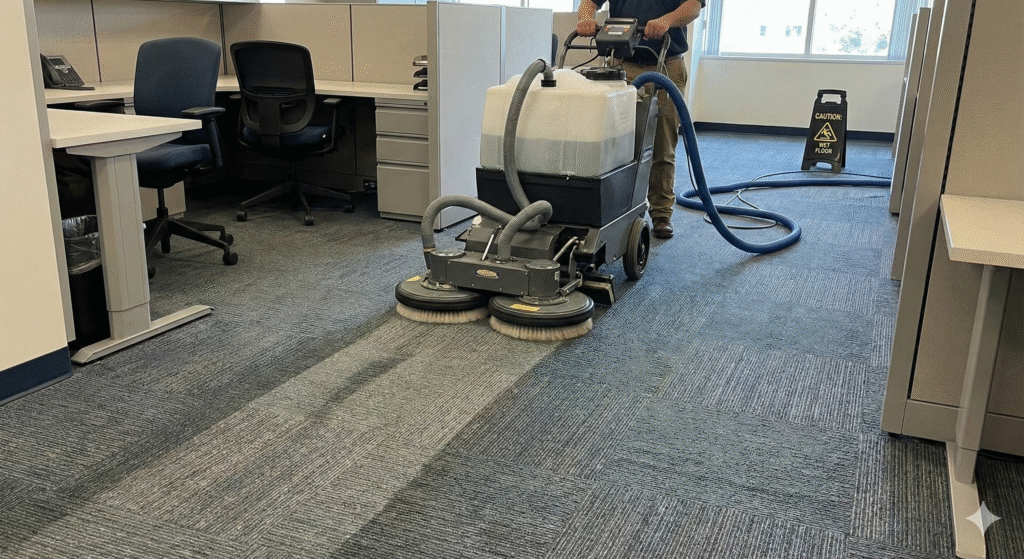
✔ High-pressure extraction machines
✔ Industrial vacuums
✔ Steam cleaners
✔ Scrubbers and rotary machines
Unlike home cleaning, industrial cleaning:
- Removes deeper stains and contaminants
- Handles high-traffic wear and tear
- Eliminates industrial oils, grease, and dust
- Restores fabric integrity
- Meets hygiene and compliance requirements (like OSHA)
Why Industrial Carpet & Upholstery Cleaning Matters
1. Improves Indoor Air Quality
Dust, allergens, mold spores, and bacteria accumulate in fabric surfaces. Industrial cleaning removes pollutants from deep within fibers.
2. Extends the Lifespan of Carpets & Furniture
Professional equipment prevents premature wear and tear.
3. Removes Stubborn Industrial Stains
Oil, chemicals, food spills, and heavy dirt require industrial-grade extraction.
4. Creates a Professional Image
Clients judge your workplace cleanliness instantly.
5. Improves Worker Productivity
A clean environment = fewer sick days + better morale.
6. Meets Safety & Health Compliance
Industries must follow hygiene standards—especially healthcare, food, and hospitality sectors.
Types of Industrial Carpet & Upholstery Cleaning Machines
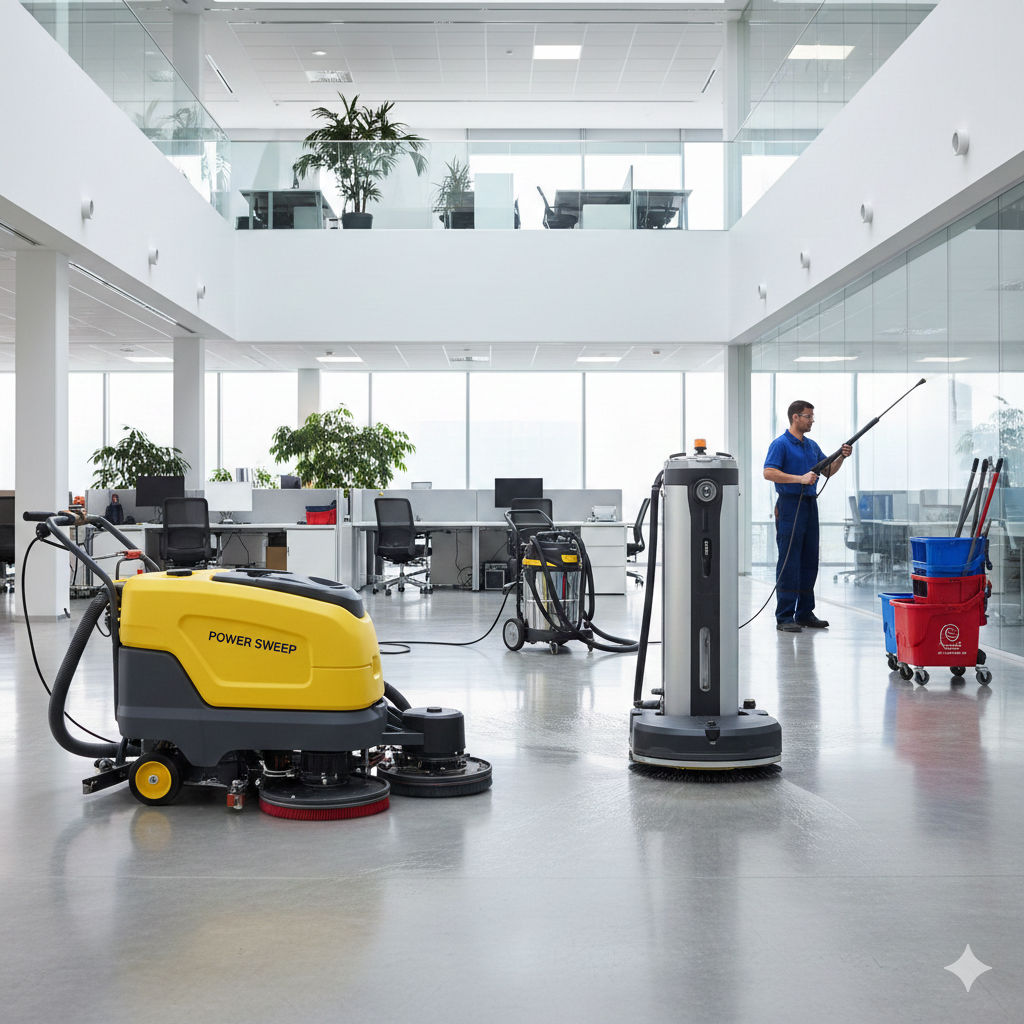
Industrial cleaning machines are built for heavy-duty, continuous operation. Here are the most essential categories:
1. Industrial Hot Water Extractors (Carpet Extractor Machines)
These machines use:
- Hot water
- Powerful suction
- Industrial cleaning solutions
They spray solution into carpet fibers and extract dirty water instantly.
Best for:
- Deep stains
- Grease removal
- Commercial carpets
- Office areas
2. Industrial Steam Cleaners (High-Pressure Steam Machines)
Steam machines use high heat (120°C–150°C) to:
- Kill bacteria
- Remove stains
- Deodorize carpets
- Sanitize upholstery without chemicals
Perfect for:
- Hospitals
- Hotels
- Restaurants
- Childcare facilities
3. Commercial Vacuum Cleaners (HEPA-Filter Grades)
HEPA vacuums eliminate:
- Fine dust
- Allergens
- Industrial debris
- Microfiber contamination
Recommended for industries with strict air-quality requirements.
4. Rotary Scrubbers & Industrial Floor Machines
These machines use:
- High-speed rotating brushes
- Heavy-duty scrubbing pads
They remove surface dirt and prepare the carpet for extraction.
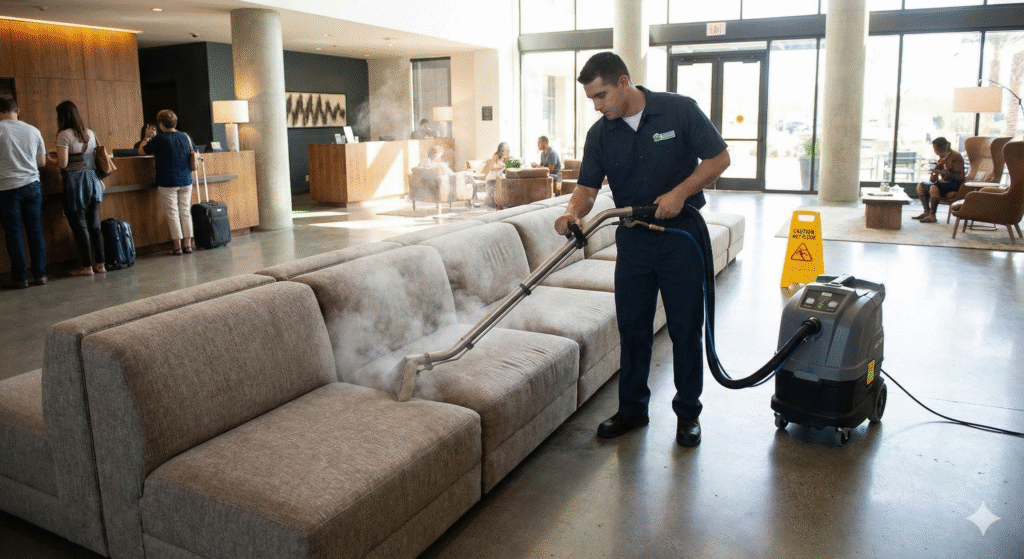
5. Industrial Upholstery Cleaning Machines
Specialized hand tools gently clean furniture fabrics such as:
- Sofas
- Office chairs
- Cushions
- Panels
- Headboards
- Restaurant booths
These tools are designed to avoid fabric damage while deep cleaning.
Industrial Cleaning Chemicals Used for Carpets & Upholstery
Industrial cleaners contain advanced formulas for:
- Stain removal
- Odor neutralization
- Disinfection
- Fiber protection
- De-greasing
Common Types of Industrial Cleaning Chemicals:
✔ Enzyme-based cleaners (break down organic stains)
✔ pH-balanced formulas (protect fiber integrity)
✔ Deodorizers (remove industrial smells)
✔ Anti-microbial agents (control pathogens)
✔ Grease solvents (restaurants, workshops)
✔ Detergent-free cleaners (eco-friendly industries)
Industrial Carpet Cleaning Methods (Explained)
Different industries require different cleaning methods. Here are the most effective:
1. Hot Water Extraction (Most Popular)
Also known as “steam cleaning,” this method uses:
- Hot water jets
- Cleaning solution
- Powerful vacuum extraction
Best for: offices, malls, schools, hotels.
2. Dry Cleaning (Low Moisture)
Perfect for industries where downtime is expensive.
Dry cleaning powders break down dirt and are vacuumed away.
Best for: retail stores, corporate buildings.
3. Encapsulation Cleaning
A polymer solution surrounds dirt particles and crystallizes them. Vacuum removes them afterward.
Benefits:
- Fast drying
- Energy efficient
- Eco-friendly
4. Shampooing (Rotary)
Uses foamy formulas scrubbed into carpets using a machine.
Works best for:
- Old carpets
- Heavy traffic areas
- Oil-soaked carpets
5. Industrial Steam Sanitization
Kills:
- Bacteria
- Pathogens
- Viruses
- Odors
- Mold spores
Essential for hospitals & food industries.
Upholstery Cleaning Methods
Fabrics like sofa upholstery, office chairs, and partitions require gentler cleaning techniques:
- Low-moisture extraction
- Fabric-safe detergents
- Hand-held brush tools
- Foam-based cleaning
- Steam sanitization
Special care is needed for materials like:
- Leather
- Velvet
- Microfiber
- Suède
- Woven fabrics
Also Read: How Often Should an Office Be Cleaned? The Essential Guide to a Healthier, Happier Workplace 2026
How Often Should Industrial Carpets & Upholstery Be Cleaned?
Carpets
| Space Type | Cleaning Frequency |
|---|---|
| Offices | Every 3–6 months |
| Restaurants | Every 1–2 months |
| Hospitals | Monthly sanitization |
| Hotels | Every 2–3 months |
| Factories | 2–4 times per year |
| Airports/Stations | Monthly |
Upholstery
| Upholstery Type | Frequency |
|---|---|
| Office chairs | 4–6 months |
| Sofas | Every 3–4 months |
| Restaurant benches | Monthly |
| Waiting areas | 2–3 months |
Source:
1. EPA Safer Choice Program – Safe Certified Cleaners
The official U.S. Environmental Protection Agency directory for approved, non-toxic, and safe cleaning chemicals.
EPA Safer Choice Program:
https://www.epa.gov/saferchoice
2. Environmental Working Group (EWG) Cleaning Guide – Non-Toxic Products
EWG’s cleaning product ratings, ingredient safety reviews, and recommendations for eco-friendly industrial cleaning.
EWG Cleaning Product Guide:
https://www.ewg.org/guides/cleaners
FAQs
1. What is the best industrial carpet cleaning method?
Hot water extraction is considered the gold standard for deep cleaning and stain removal.
2. Can industrial cleaners damage fabric?
Not if you use fabric-safe chemicals and proper machines.
3. How long does the carpet take to dry?
Industrial extractors reduce drying time to 1–4 hours.
4. Is steam cleaning safe for upholstery?
Yes—when using low-pressure steam and fabric-friendly attachments.
5. How often should industries deep clean carpets?
Every 1–6 months depending on traffic.
Final Thoughts
Industrial carpet and upholstery cleaning is essential for maintaining a clean, safe, and productive work environment. Whether you manage an office, hotel, factory, or healthcare facility, using the right industrial cleaning machines and methods ensures long-lasting carpets, hygienic upholstery, and an overall professional workplace image.
If you want to boost cleanliness standards, extend carpet life, and improve indoor air quality, investing in industrial-grade cleaning solutions—or hiring expert industrial cleaning services—is the smartest choice you can make.