






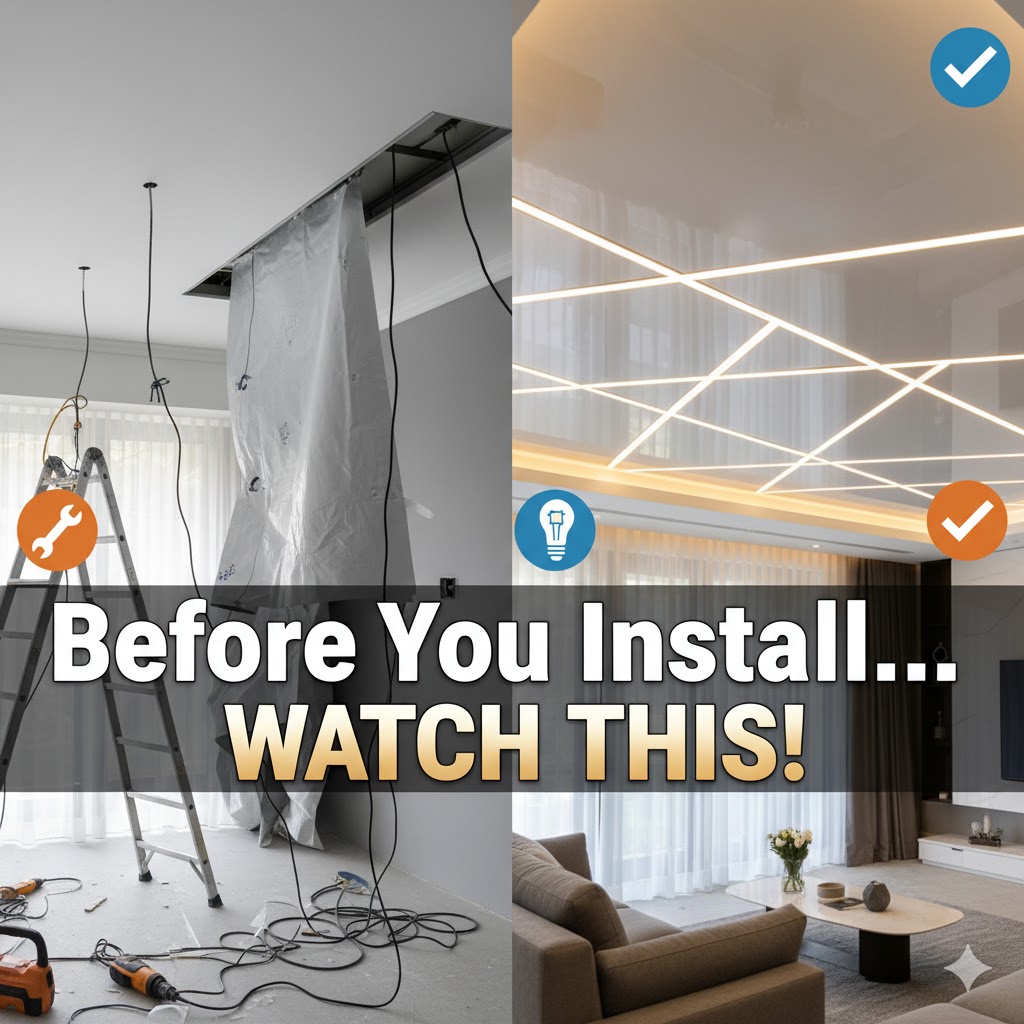
Introduction: Why Proper Stretch Ceiling Installation Matters
A stretch ceiling can instantly transform any interior — from homes and offices to hotels and retail spaces. However, even the most premium materials and designs can fail if installation mistakes occur.
Poor planning, incorrect temperature control, or careless fitting can lead to sags, seams, and safety issues. To help you achieve flawless results, this guide covers the top mistakes to avoid during stretch ceiling installation and provides pro-level solutions backed by expert insights.
(Must Read: Read our guide on “Luxury Interior Ideas with Stretch Ceilings” to see how professional installation affects final aesthetics.)

1. Ignoring Room Preparation Before Installation
One of the most common mistakes in stretch ceiling installation is failing to properly prepare the space.
What Happens:
Dust, moisture, or uneven wall surfaces can prevent proper film stretching and adhesion. Over time, these small issues can cause bubbling, wrinkles, or gaps along the perimeter.

Expert Fix:
- Clean and dry all walls before starting.
- Remove dust and debris from corners.
- Level surfaces and seal cracks.
- Ensure room temperature is stable at 20–25°C.

Source: ArchDaily recommends pre-inspection to avoid micro-defects that can compromise stretch membrane alignment.
2. Choosing the Wrong Ceiling Material (PVC vs Fabric)
Material selection is critical. Many clients and contractors select a material based only on color or gloss, ignoring humidity levels, lighting conditions, or acoustic needs.
Mistake:
Using PVC in humid, high-temperature rooms (like kitchens) can cause deformation or sagging, while using fabric in damp basements may cause mold growth.
Solution:
| Room Type | Recommended Material | Notes |
|---|---|---|
| Living Room | PVC (Gloss or Satin) | Reflective & aesthetic |
| Bathroom | PVC (Waterproof) | Moisture-proof |
| Bedroom | Fabric (Matte Finish) | Warm & acoustic-friendly |
| Office | Fabric | Noise reduction benefit |

3. Poor Measurement and Alignment
Accurate measurement is everything. Stretch ceilings are factory-manufactured based on exact room dimensions — even a few millimeters off can lead to installation issues.
Common Mistakes:
- Incorrect corner-to-corner measurements.
- Ignoring room irregularities or slopes.
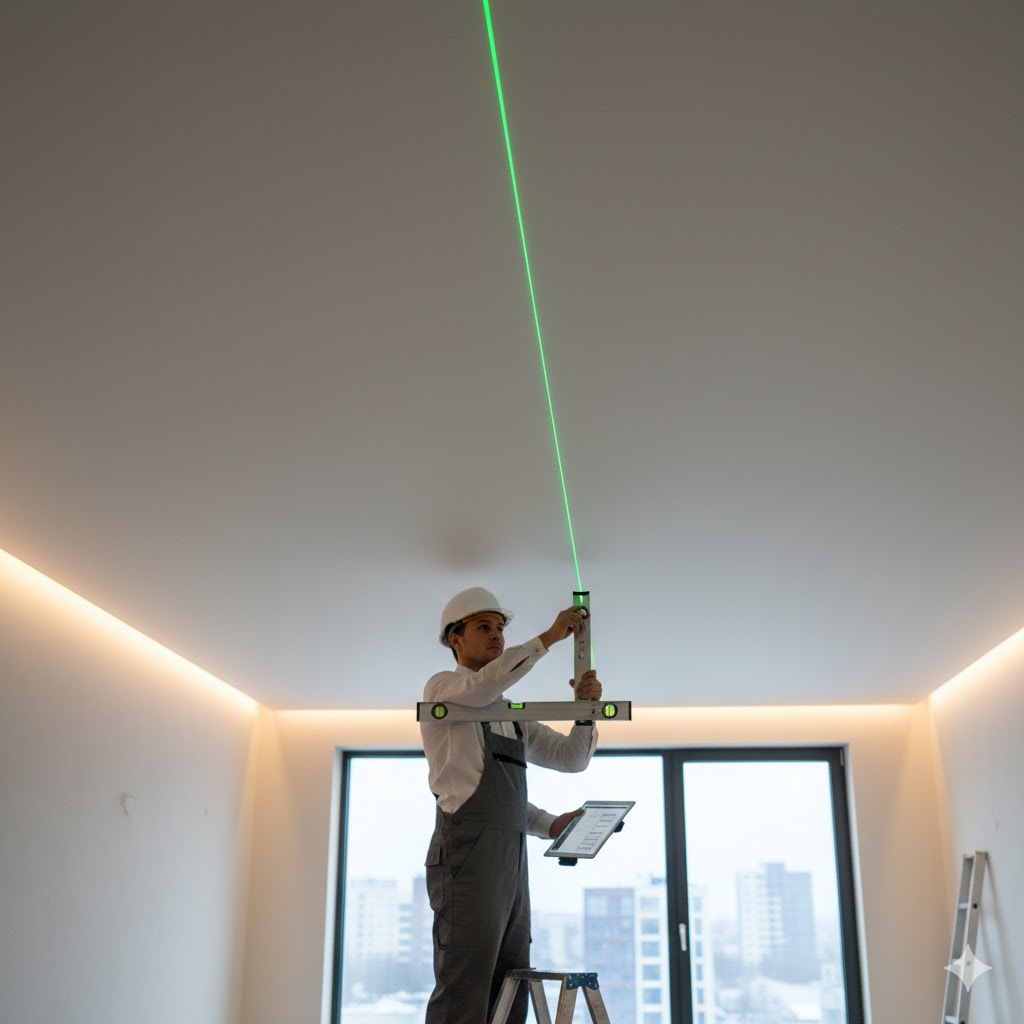
- Not marking the laser level line properly.
Solution:
- Use a laser leveling system for accurate marking.
- Measure diagonally to verify room symmetry.
- Double-check before sending specs for fabrication.
Source: According to BuildDirect precision cutting reduces installation time and material waste by up to 30%.
4. Improper Heating During PVC Ceiling Installation
PVC stretch ceilings require controlled heating (50–70°C) to expand properly before tensioning. Incorrect heat levels can ruin the entire material sheet.
Mistake:
Using a low-quality or uneven heat gun can cause burn marks, weak elasticity, or surface tension cracks.
Solution:
- Use industrial-grade heat cannons for even temperature distribution.
- Maintain distance of at least 30–40 cm between gun and material.
- Heat gradually, not abruptly.

5. Poor Lighting and Fixture Planning
Lighting placement plays a key role in stretch ceiling performance and visual effect. Many installers overlook how LEDs, spotlights, or chandeliers interact with ceiling tension.
Mistake:
Installing light fixtures after stretching causes burn damage or tears in the film.
Solution:
- Plan lighting layout before installation.
- Use thermal insulation rings for LED mounts.
- Avoid direct bulb contact with the stretch membrane.

6. Weak Frame or Profile Mounting
The stretch ceiling’s longevity depends entirely on the strength of its perimeter aluminum profile.
Mistake:
Using low-quality profiles or improper anchoring leads to loosened corners and eventual ceiling sagging.
Solution:
- Always use anodized aluminum profiles.
- Fix profiles securely to wall or ceiling with metal dowels.
- Check stability before mounting the film.
Source: The European Ceiling Association recommends profile strength testing before every installation project.
7. Skipping Air Ventilation
Lack of proper ventilation between the original ceiling and the stretch film can cause condensation buildup and unpleasant odors.
Fix:
- Include micro-ventilation grills every 10–15 square meters.
- Allow air circulation especially in humid or air-conditioned spaces.
Must Read: Learn maintenance tips in our “Cleaning Business Insurance Cost 2025” article — includes climate-related damage coverage.)

8. Ignoring Electrical Safety – Stretch Ceiling Installation
Poorly insulated wires or incorrect lighting connections are serious safety hazards.
Mistake:
Allowing power cables to touch the PVC film can cause melting or fire risk.
Solution:
- Use heat-resistant cables.
- Keep transformers and wires below 50°C.
- Insulate connections with protective caps.

9. Stretching Without Assistant or Team
Stretch ceiling installation is not a solo project. Attempting to handle large membrane sheets alone leads to uneven tension and creases.
Fix:
- Work with at least two trained technicians.
- Use temporary support clips during alignment.
- Stretch diagonally for uniform balance.
10. Neglecting Post-Installation Inspection
Even after installation, small defects may go unnoticed unless a final inspection is performed.
Mistake:
Skipping checks can lead to future sagging, seam gaps, or fixture misalignment.
Expert Checklist:
- Verify ceiling tension from all corners.
- Inspect lighting and temperature consistency.
- Ensure all profile joints are tight.
Stretch Ceiling Installation: Maintenance and Longevity Tips
Once installed correctly, your stretch ceiling can last 20–30 years. However, following a few maintenance habits ensures long-term performance:
- Clean with mild soap and microfiber cloth.
- Avoid sharp tools or abrasive cleaning agents.
- Inspect lighting and ventilation annually.
- Avoid direct heat exposure beyond manufacturer limits.
Source: HomeBuilding.co.uk notes that correct care extends ceiling lifespan by 50%.
Expert Review: Stretch Ceiling Installation
A stretch ceiling installation can dramatically enhance the luxury and comfort of any space — but only when executed with precision. By avoiding these top 10 mistakes, you ensure durability, elegance, and safety for years to come.
Whether you’re a homeowner, contractor, or designer, paying attention to material choice, heat control, lighting, and structure will guarantee a professional-grade finish worthy of any luxury interior.
FAQs: Stretch Ceiling Installation Mistakes and Fixes
- What’s the biggest mistake in stretch ceiling installation?
Improper heating and poor alignment are the most common. - Can I install a stretch ceiling myself?
It’s not recommended — always hire trained professionals. - Is fabric or PVC easier to install?
PVC is faster to install but needs precise heat management. - What causes sagging in stretch ceilings?
Weak profiles, improper tension, or temperature fluctuations. - Can lighting damage the ceiling?
Yes, if fixtures aren’t thermally insulated. - What’s the ideal installation temperature?
20–25°C for prep, and 50–70°C for stretching PVC. - Can stretch ceilings crack?
No, they expand with heat and retain elasticity. - How to fix air bubbles?
Use a heat gun to re-stretch and release trapped air. - Are seams visible in large rooms?
Not if installed by professionals with seamless film techniques. - Do stretch ceilings need special cleaning?
Only gentle wiping with soft cloths and mild detergent.







One Comment