





Introduction: Why Every Cleaning Business Needs Insurance
Running a cleaning business might look simple — mop, scrub, shine — but anyone in the field knows there’s more behind the sparkle. The Cleaning Insurance Guide you’re reading today is your complete, expert-driven roadmap for 2025.
Cleaning professionals face unique risks daily: slips, damaged property, or even allergic reactions from clients due to cleaning agents. The right cleaning insurance coverage isn’t just a safety net; it’s your brand’s armor in a competitive market.
Whether you’re a solo cleaner, managing a team, or scaling your startup, understanding coverage, cost, and claims will protect you from unexpected liabilities — and boost your credibility with clients.
(Reference: Allstate Business Insurance provides detailed coverage options for small cleaning firms.)
What Is Cleaning Insurance?
Cleaning insurance is a specialized business insurance policy designed to protect cleaning professionals against operational risks. From broken furniture to chemical spills, these incidents can cause financial or legal complications — and the right coverage ensures you’re never unprotected.
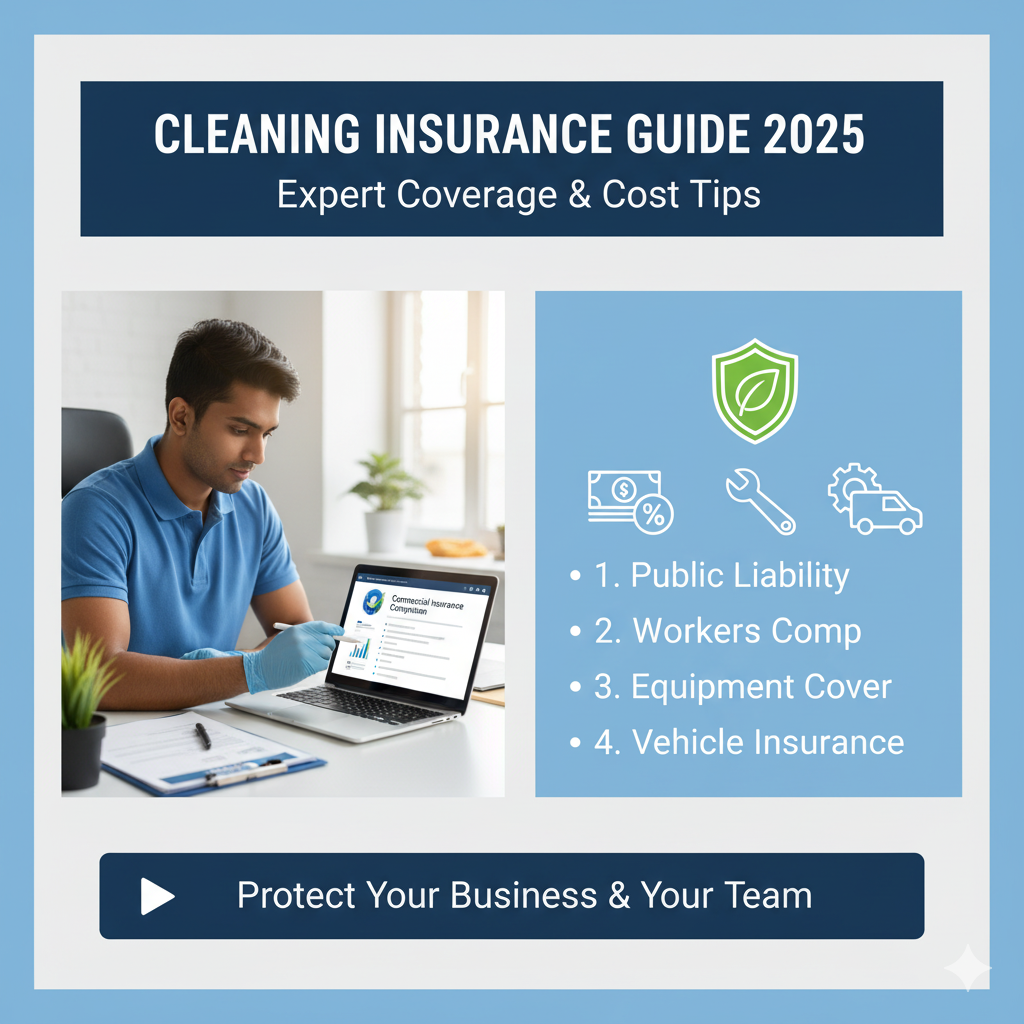
Most policies include:
- General Liability Insurance: Covers injury and property damage claims.
- Professional Liability: Protects against client disputes or negligence claims.
- Workers’ Compensation: Required if you employ cleaners.
- Commercial Auto Insurance: Covers company vehicles during operations.
(Learn more in our internal guide: Best Insurance for Cleaning Businesses in 2025

Why Cleaning Insurance Matters in 2025
The cleaning industry has evolved rapidly post-COVID. Clients expect insured professionals for residential and commercial cleaning projects. Having the right coverage is no longer optional — it’s essential for contracts, safety, and trust.
Top reasons why insurance is vital in 2025:
- Compliance: Many cities now require proof of liability insurance before issuing cleaning permits.
- Reputation: Insured businesses gain more clients through platforms like Thumbtack and Angi.
- Risk Reduction: One claim can cost thousands without coverage.
- Peace of Mind: Focus on cleaning — not legal battles.

💡 Types of Cleaning Business Insurance
1️⃣ General Liability Insurance
This is the backbone of any cleaning insurance guide. It covers injuries, damages, or claims that occur during service. For example, if a client trips over your equipment, this policy pays for medical expenses or legal fees.
2️⃣ Professional Liability Insurance
Also known as “Errors and Omissions (E&O),” this protects you if a client claims your work was unsatisfactory or caused harm (like using the wrong cleaning agent on marble surfaces).
3️⃣ Workers’ Compensation
If your staff gets injured on the job, this insurance covers medical bills and lost wages. It’s mandatory in most countries for cleaning firms with employees.
4️⃣ Commercial Auto Insurance
Covers accidents involving your company’s vans or cars used to transport cleaning materials and equipment.
5️⃣ Property Insurance
Protects your office, cleaning supplies, and storage area against theft or damage.
(Reference: Hiscox Cleaning Insurance Coverage offers tailored plans for small contractors.)
Cleaning Insurance Cost in 2025
Insurance costs depend on:
- Business size
- Services offered (residential vs. industrial)
- Employee count
- Risk exposure
| Coverage Type | Average Annual Cost (USD) |
|---|---|
| General Liability | $350 – $650 |
| Professional Liability | $400 – $900 |
| Workers’ Comp | $500 – $1,200 |
| Commercial Auto | $800 – $1,500 |

Claims Process Simplified
Filing a claim doesn’t have to be overwhelming. Here’s a simplified step-by-step process:
- Document the incident (photos, witness reports).
- Notify your insurance provider immediately.
- Fill out the claim form accurately.
- Submit supporting documents (receipts, invoices).
- Follow up regularly with your adjuster.
Pro Tip: Keep digital records of all cleaning contracts and before/after photos — they help resolve disputes faster.
🧾 Real-Life Example: When Insurance Saved a Cleaning Company
A small cleaning service in Texas accidentally spilled disinfectant on a client’s carpet worth $2,000. The client demanded full replacement. Thanks to General Liability Insurance, the insurer covered the cost and legal mediation, saving the business from closure.
That’s why this cleaning insurance guide stresses one key takeaway — even small accidents can cause massive financial loss if uninsured.

🌎 Cleaning Insurance Requirements by Country
🇺🇸 United States
Most states require liability coverage and workers’ compensation before registration.
🇬🇧 United Kingdom
Self-employed cleaners must hold public liability insurance to work legally.
🇦🇺 Australia
Public and product liability insurance are mandatory under Fair Work guidelines.
🇨🇦 Canada
Small business insurance covers third-party injuries, property damage, and legal costs.
🧠 Tips to Choose the Right Cleaning Insurance
- Compare quotes from 3+ providers.
- Check claim response ratings (fast payout = reliable company).
- Include employee coverage even if part-time.
- Bundle vehicle, liability, and equipment coverage.
- Review policies annually as your business grows.
(Learn more in our internal article: How to Get a Cleaning Business License Easily (2025 Guide)

FAQs (Optimized for Rich Snippets)
1. What is cleaning insurance?
Insurance that covers risks like property damage or injury during cleaning services.
2. Is cleaning insurance required by law?
Yes, most regions require general liability or workers’ comp for legal operation.
3. How much does cleaning insurance cost?
Between $350–$850 annually, depending on coverage and company size.
4. What are the best insurers for cleaning businesses?
Top providers in 2025 include Hiscox, Allstate, and AXA.
5. Can self-employed cleaners get insured?
Absolutely, individual plans are available for freelancers.
6. Does insurance cover accidental damage to client property?
Yes, under the general liability section of your policy.
7. What documents are needed to apply?
Business registration, employee list, and service scope.
8. Can I bundle multiple policies?
Yes, through a Business Owner’s Policy (BOP) for cost savings.
9. How do I file a claim?
Report the incident, gather proof, and submit a claim form to your provider.
10. What happens if I don’t have insurance?
You may face legal penalties, client loss, or even business suspension.
Expert Advice: Secure Your Business, Secure Your Future
The Cleaning Insurance Guide 2025 is your roadmap to building a safer, more resilient business. From liability to workers’ compensation, insurance coverage provides stability and confidence to grow without fear of loss.
Remember: cleaning businesses thrive not just on skill — but on protection. Get insured today, earn your clients’ trust, and focus on what you do best: making spaces shine.





One Comment